
William G. Witt

September 12, 2014

Anglican Reflections: What About Priests?

Filed under: Anglicanism,Theology — William Witt @ 12:01 am

Lamb of GodThe New Testament uses the words episkopos (“bishop”) and presbyteros (“elder”) to refer to those who exercised office in the church, along with diakonos (deacon). It uses the word hiereus, equivalent to English “priest” or Latin sacerdos to refer to Old Testament and Jewish priests (Matt.8:4; John 12:51, Acts 5:27, Heb. 7:14), to the High Priesthood of Jesus (Heb. 4:14), and to the priesthood of the entire church as the people of God (1 Peter 2:9, Rev. 20:6). The New Testament never uses the word hiereus to refer to persons who hold office in the church.

Nonetheless, Anglicans have continued to use the word “priest” to refer to those who hold the office of presbyter, to the consternation of some. Richard Hooker wrote that he preferred the word “presbyter” to “priest” because he would prefer not to offend those who are troubled by the word. The Anglican Reformers rejected the notion of eucharistic sacrifice, and so rejected any notion of priesthood that implied sacrifice. As Richard Hooker asked, “Seeing then that sacrifice is now no part of the church ministry how should the name of Priesthood be thereunto rightly applied?” Hooker believed that the term “priest” was permissible in reference to one “whose mere function or charge is the service of God,” and specifically in reference to the celebration of the eucharist: “The Fathers of the Church of Christ with like security of speech call usually the ministry of the Gospel Priesthood in regard of that which the Gospel hath proportionable to ancient sacrifices, namely the Communion of the blessed Body and Blood of Christ, although it have properly now no sacrifice.” In the end, Hooker did not think the word itself is very important: “Wherefore to pass by the name, let them use what dialect they will, whether we call it a Priesthood, a Presbytership, or a Ministry it skilleth not: Although in truth the word Presbyter doth seem more fit, and in propriety of speech more agreeable than Priest with the drift of the whole Gospel of Jesus Christ.” (Laws 5.58.2-3.)

There are two key aspects of ordained ministry that touch more directly on the “priestly” aspect of ordination in Anglican tradition than the use of the word “priest” as equivalent to “presbyter.”

(more…)

August 19, 2014

Anglican Reflections: What About the 39 Articles?

Filed under: Anglicanism,Theology — William Witt @ 8:33 pm

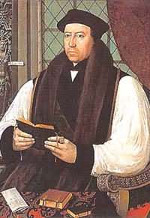
CranmerBroadly speaking, the 39 Articles stands within the tradition of Anglicanism as “reformed catholicism,” or, more specifically, a reforming movement within the western catholic church. (This contrasts with more radical Reformation movements, such as the Anabaptists, and, arguably, the Puritans,who viewed themselves as completely breaking with western catholicism to return to the pristine Christianity of the New Testament.)

The Articles are largely an ecumenical document, the majority of whose statements fall broadly within the parameters of “reformed catholicism.”

Arts. 1-5, 8 affirm historic creedal Nicene and Chalcedonian Christianity.

Arts. 9-10,12-13,15-18 affirm the positions of a moderate Augustinianism. Even art. 17 does not teach a specifically Calvinist doctrine of predestination. There is nothing about negative predestination (reprobation or double predestination). The election that is described is corporate and “in Christ.” (“In Christ” was added to the original 42 Articles.) “Arminians” such as Richard Hooker were able to affirm this article, to the chagrin of strict Calvinists.1

Arts. 6, 7, 11 affirm the sufficiency and primacy of Scripture as well as justification by faith, which are commonly held Reformation positions, although even here, an argument could be made that the position on Scripture is consistent with that of the patristic church, of Eastern theologians such as John Damascene, and Western theologians such as Thomas Aquinas. Anglican theologians such as Cranmer, Jewel, and Hooker make clear that (contrary to the Puritan hermeneutic), Anglicans do not understand the “Scripture principle” in a “regulative” sense.

The “controversial” articles are those articles, especially beginning with Art. 19, “Of the Church,” in which the position of the Church of England is set over against that of other contemporary Reformation-era churches, usually the Tridentine Roman Catholic position, but sometimes that of other Reformation churches, usually those of the Radical Reformation. (Arts. 38-39 are addressed against Anabaptists).

Which of the articles have been “controversial” in the history of Anglicanism and today? Art. 22, repudiating purgatory and icons; Art. 25, concerning the number of sacraments, and seemingly forbidding elevation of the consecrated host; Art. 28-29, which seem to reject any notion of bodily presence (not simply transubstantiation, but also the Orthodox or Lutheran positions) and elevation of the host; Art. 31, which appears to reject any notion of eucharistic sacrifice. Generally, Evangelical Anglicans have tended to be happy with these articles, and Anglo-Catholics unhappy. Conversely, Art. 27 seems on a literal reading to affirm baptismal regeneration, a position not embraced by a good many Evangelical Anglicans.2

(more…)

August 17, 2014

A Wedding Sermon

Filed under: Sermons — William Witt @ 5:55 pm

Song of Songs 2:10-13 and 8:6-7
Psalm 127
Revelation 21:1-7
Mark 10:6-9

For Paul Hunter and Christina Vance

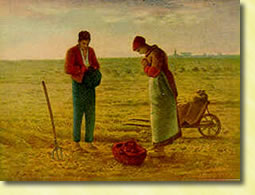
angelusI am honored to preach this morning for the wedding of two of my former students, both of whom I am exceptionally fond. Although faculty do not have favorite students, if they did, Christina and Paul would have been two of my favorite students when they were at Trinity School for ministry, where I teach.

I want to make just a few comments about the lectionary readings, beginning with the gospel. The gospel reading points back to the creation narratives of the first two chapters of Genesis, the first book in the Bible. The context is that Jesus is being asked about whether divorce is ever permissible, and he responds by quoting the 2nd chapter of Genesis: “From the beginning of creation, God made them male and female. Therefore a man shall leave his father and mother and hold fast to his wife. So they are no longer two but one flesh. What therefore God has joined together, let no one separate.” (Matt. 19:4-6; Gen. 2:24) The Bible begins with marriage. In Genesis 1 we are told that God said, “Let us make the human being in our image, after our likeness. . . . So God created the human being in his own image, in the image of God he created him; male and female he created them.” (Gen. 1:26-27) The first chapter of the Bible tells us that to be a human being is to be created in the image of God, and to be created in the image of God is to be male or female. It is only as male and female together that we as humans reflect what it means to be created in God’s image.

In Genesis 2, we are told that God created woman because the first human being was alone, and needed a partner. “Then the Lord God said, ‘It is not good that the human being should be alone.” (Gen. 2:18) In Hebrew, the word for “human being” is ha’adam, which is the same word as the name “Adam.” The English language has historically not made a distinction between human being and male human being. English often uses the word “man” for both. But Hebrew does use different words for generic “human being” and “male human being.” The Hebrew word “ha’adam” does not mean male human being, but simply “human being.” It is only when God brings the woman to the human being – to Adam – that we first find the use of the word for “man” or “male human being” in the Hebrew text: “This at last is bone of my bones and flesh of my flesh; she called be called woman, because she was taken out of man.” (Gen. 2:24) It is only when the female human being – the woman – comes into the picture that the original human being is recognized as a male human being – a man.

The point is this, both Genesis 1 and Genesis 2 make it clear that men and women are made for each other, and what it means to be a human being is defined by our relationship to other human beings. Those of us who are men – male human beings – are human beings only as we are in relation to women – female human beings. Women – female human beings – are human beings only as you are in relation to us – male human beings. God intended us to be with one another, and marriage makes this clear. It is marriage that is the foundation of all other human relationships. As human beings, we are not meant to be alone; we are not human beings alone, but only with one another. So the first thing that marriage teaches us is that human beings need one another. We are made to be together.
(more…)

August 4, 2014

If God is for Us: A Sermon

Filed under: Sermons — William Witt @ 12:12 am

Psalm 78
Nehemiah 9:16-20
Romans 8:35-39
Matthew 14:13-21

fishI begin my sermon this morning with a question: What’s going on in the lectionary? During the Season after Pentecost, what is sometimes called “ordinary time,” the lectionary practice is to read through one of the synoptic gospels chapter by chapter and an accompanying epistle the same way. Because the New Testament readings are sequential like this, there is not usually any evident connection between the gospel reading and the epistle reading. What Matthew is saying in his gospel may or may not have anything to do with what Paul is saying in the epistle to the Romans.

Whether it was intended by the lectionary compilers or not, I think that there is a parallel between the epistle and the gospel readings this morning. Let’s begin with the epistle. Romans 8:31-39 is the climax of everything Paul has been writing up to this point in the letter. The main theme in the lectionary reading is God’s love, and is a repetition of what Paul had already said in Romans 5:1-11. In Romans 5, Paul wrote, “[W]e rejoice in our sufferings . . . because God’s love has been poured into our hearts through the Holy Spirit who has been given to us. . . . God shows his love for us in that while we were still sinners, Christ died for us.” (5:2,5,8) In this morning’s reading, Paul says, “For I am sure that neither death, nor life, nor angels nor rulers, nor things present nor things to come, nor powers, nor height nor depth, nor anything else in all creation, will be able to separate us from the love of God in Christ Jesus our Lord.” What Paul writes here is a continuation of what we read in last week’s lectionary reading: “What then shall we say to these things? If God is for us, who can be against us? He who did not spare his own Son but gave him up for us all, how will he not also with him graciously give us all things?” (8:31-32)

If God is for us, who can be against us? Paul lists a number of things that might suggest that God is not for us. “Who shall separate us from the love of Christ? Shall tribulation, or distress, or persecution, or famine, or nakedness, or danger or sword?” (8:35) People often list just the kinds of things that Paul mentions here as proof that there is no God, or if there is a God, he is not for us, but against us. If I am suffering tribulation or distress, perhaps that means that God has abandoned me. If I cannot provide food for my family, perhaps that means that God does not care for me. If the world is full of violence and war, perhaps that means that there is no God, or God would prevent such things. If Christians suffer persecution, perhaps that means that there is no God because if there were a God, certainly he would protect those who claim to believe in him.

Paul has one response to all of this. We know that God is for us because of an event, something that has happened – the life, death, and resurrection of Jesus Christ. We know that God is for us because he has given us his Son. In giving us his Son, God has revealed his nature. God has show us in Jesus what he is like. God is love. (more…)

July 8, 2014

Anglican Reflections: What About Apostolic Succession?

Filed under: Anglicanism,Theology — William Witt @ 9:05 pm

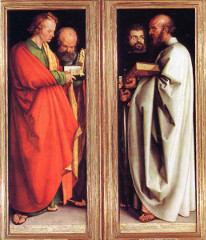
Four_ApostlesApostolic succession has had three different meanings in the history of the church.1

(a) In the second century, apostolic succession was important (over against gnosticism) because of the issue of historical continuity. A historical succession of bishops was one of the four marks distinguishing catholic Christians from their gnostic opponents. Those churches that recognized the canonical authority of Scripture, interpreted and summarized Scripture by the Rule of Faith, and worshiped in word and Sacrament were the same churches that could trace their history through a succession of bishops from the apostles. This is the argument used by Irenaeus in Against Heresies 3.3,4. The focus here is on succession of bishops as an assurance of orthodox teaching.

(b) The bishops are successors of apostles in the sense that they continue to exercise various functions exercised by the apostles: teaching, preaching, celebrating the sacraments, ordination.

(c) The most controversial understanding of apostolic succession is that the “grace” of ordination is handed down from the apostles from one generation of bishops to another through the laying on of hands.

(more…)

July 7, 2014

Anglican Reflections: What About Bishops?

Filed under: Anglicanism,Theology — William Witt @ 12:07 pm

I received the following question in my email and thought it worth sharing my response:

I am having a hard time wrapping my mind around the defense for episcopal church government. I can see the case for a plurality of elders in the New Testament, but this would seemingly lend itself to either a Presbyterian or Congregational polity. What is the best defense for the role of bishops? Can we defend it from the New Testament? And how do Anglicans account for the plurality of elders, such as revealed in Philippians 1:1?

The following is my own argument, but is a summary of arguments that can be found in numerous sources. A bibliography occurs at the end.

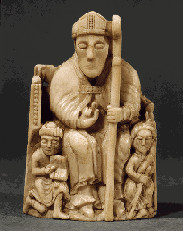
BishopAlmost immediately after the Reformation, Anglicans acknowledged that the distinction between bishops and presbyters is not clearly articulated in the New Testament. Episcopacy was still defended, and a number of similar arguments have been used and repeated, beginning at least from the time of Richard Hooker.

The first issue has to do with the difference between exegesis and hermeneutics, that is, the difference between what Scripture meant in its original historical setting and how the church applies Scripture to its life today. The fundamental difference between Richard Hooker and his Puritan opponents had to do with the issue of contemporary application. Both Hooker and the Puritans agreed that Scripture was the final authority for Christian doctrine and practices, but they differed on what that meant for the contemporary application of Scripture. The Puritans subscribed to the “regulative” principle of biblical interpretation: whatever is not specifically commanded in Scripture is forbidden. Accordingly, they were opposed to such practices as the exchange of wedding rings, written liturgies (such as the Book of Common Prayer), hymns (apart from the Psalms), vestments, and bishops, insofar as the Puritans noted correctly that the New Testament makes no inherent distinction between presbyteroi (presbyters) and episkopoi (bishops). To the contrary, Hooker embraced a permissive understanding of biblical hermeneutics: whatever Scripture does not explicitly forbid is permitted. Moreover, Hooker distinguished between matters of doctrine and morals (which are unchangeable), and matters of civil and ritual law (which are changeable by the church). The famous distinction between moral, civil and ritual law is not original to Hooker; it can be found in Thomas Aquinas, in the Lutheran Confessions, and in John Calvin. Hooker also insisted, however, that the distinction meant that churches were free to adopt ecclesiastical practices that were not explicitly commanded in the New Testament as long as they were not forbidden. This included written prayers (liturgical worship, including the Prayer Book), practices such as exchanging wedding rings, and retaining the historic catholic practice of the three-fold order of bishops, priests, and deacons – even if that order is not explicitly commanded or found in the New Testament. (more…)

March 28, 2014

Knowing the Light and Walking in the Light: A Sermon

Filed under: Sermons — William Witt @ 7:02 pm

1 Samuel 16:1-13
Ephesians 5:(1-7)8-14
John 9:1-13(14-27)28-38
Psalm 23

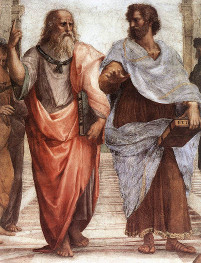
Plato and AristotleRecently, I have been reading a book about the influence of the philosophies of Plato and Aristotle in the history of Western civilization. It is a fascinating book that shows how these two Greek philosophers who lived approximately four hundred years before the birth of Jesus Christ have repeatedly influenced Western thought for over two milennia. The book is entitled The Cave and the Light: Plato Versus Aristotle and the Struggle for the Soul of Western Civilization.1 The title takes its name from Plato’s famous analogy of the cave. You’re familiar with the analogy? In Plato’s dialogue, The Republic, Socrates suggests that the human situation is something like that of a group of people who have been chained in a cave all of their lives facing a blank wall. Behind the people are a group of figures whose shadows are being cast on the wall in front of them by a fire –something like shadow puppets –and the people are trying to make sense of the silhouettes. These shadows are the only reality the people know. Socrates then asks what would happen if someone were to be released from the cave and were to venture out into the world above to see the sun and nature as it really exists. If such a person were then to return to the cave and tell what he or she had seen, the man or woman would not be believed. The people in the cave know what reality is. It is the shadows that they can see on the wall. They cannot imagine anything else.

Arthur Herman, the author of the book, contrasts Plato’s understanding of reality – knowing the unchanging truth that lies behind the illusory shadows – with Aristotle’s. In contrast to Plato’s focus on knowing the permanent and unchangeable, Aristotle insisted that we could find reality in the ordinary day to day world in the midst of which we live our lives. Where Plato wanted to leave the cave, Aristotle insisted that the cave was where we needed to get to work.

Each philosophy has its consequences for how we live. To be simplistic, Plato’s philosophy included an ethic that focused on knowledge, specifically, knowledge of that which is certain and permanent and about which one cannot be mistaken. Aristotle’s ethic focused instead on what he called “practical knowledge,” that is, how to get things done in a world that was not certain or permanent, and which changed constantly. So Plato’s prescription for how we should live focuses on “knowing.” Aristotle’s focuses on “doing.” There’s a silly joke that’s been around for awhile that gets the philosophers wrong, but basically gets the idea right, so I’ll adjust it by providing the correct names. Plato said: “To be is to do.” Aristotle said: “To do is to be.” Frank Sinatra said: “Do be do be do.” And, of course, Fred Flintstone said: “Yabba Dabba Do.” And Scooby Do said “Scooby Dooby Do.”

Both philosophies have their influences, and also their characteristic errors. The characteristic error of Platonism would be the Socratic fallacy. If we only know the right thing, we’ll be sure to do it. Of course, that is not the case. We all do things that we know we should not do. The characteristic heresies associated with Aristotle are perhaps Pelagianism and antinomianism. Although these are opposite heresies, they are both characterized by a focus on action, on what we do rather than on what we know, on, as we say, “pulling ourselves up by our bootstraps.” So today the descendents of Plato would be the ideologues, the people who spend hours on their computers typing comments on social media because someone on the internet said something that was wrong. The descendents of Aristotle are the activists. They can be do-gooders who try to change the world for the better, but they can also be the busy bodies who make everyone else’s life miserable by trying to straighten them out.

Why bring up Plato and Aristotle in a Lenten sermon? As we look at the lectionary readings these morning, we note that there is a common theme about “seeing” and “light,” especially when we compare the gospel and epistle readings. John’s gospel tells the story of Jesus healing a man born blind. Before Jesus heals the man, he says: “As long as I am in the world, I am the light of the world.” (John 9:6). At the end of the passage, Jesus says: “For judgment I came into this world, that those who do not see may see, and those who see may become blind.” (v. 39). The Ephesians passage contains the statement: “Walk as children of light . . . and try to discern what is pleasing to the Lord” and concludes, “But when anything is exposed to the light, it becomes visible. . .” (Eph. 5:8,14) The similarities to Plato and Aristotle are certainly intriguing. There is the same imagery of light and darkness. The John passage, like Plato’s analogy of the cave, focuses on “seeing.” To the contrary, while the Ephesians passage uses light imagery with its contrast between light and darkness, the focus is on “doing,” more like Aristotle. John seems to be focusing on knowing the light. Paul focuses on “walking in the light.” (more…)

January 16, 2014

Behold the Lamb of God! A Sermon on Sin and Freedom

Filed under: Sermons — William Witt @ 12:24 am

Psalm 40:1-10
Isaiah 49:1-7
1 Corinthians 1:1-9
John 1:29-41

Lamb of GodIn our gospel reading this morning, John the Baptist announces: “Behold the Lamb of God, who takes away the sin of the world.” (John 1:29). John’s statement is a brief summary of the heart of the Christian faith. Christian faith is about Jesus. Who is Jesus? He is someone who has a special relationship to God. “He is the Lamb of God.” He is also, according to John’s gospel, “the Word of God,” “the Son of God,” “the Christ,” “the Way, the Truth, and the Life,” the “Bread of life,” “the Water of life,” and a number of other things.

What does Jesus do? He takes away the sin of the world. These are the two central affirmations of Christian faith. Lose either affirmation – who Jesus is and what Jesus does – and you no longer have Christian faith. Yet both of these affirmations have become increasingly problematic in contemporary Western culture, and, significantly enough, I think, the second more than the first.

Let me illustrate what I mean by mentioning two incidents that happened in the last several weeks, one in secular culture and one in the church. The first is the notorious Duck Dynasty incident. Phil Robertson, the star of a reality television series about a family of self-styled backwoods Bible thumpers who became millionaires from making duck calls created a cultural firestorm when he answered a question addressed to him in a magazine interview: “What in your mind is sinful?” I am not going to repeat Robertson’s answer here. You are no doubt familiar with the story.

The second event was the appearance of a new Church of England baptismal rite. Supposedly the rite had been rewritten to put it in the language of East Enders in London, who apparently could not make sense of the current rite of baptism in the Church of England’s Common Worship liturgy. What is significant about the new rite is not that the language is simplified so that East Enders can understand it, but that the language changes the actual meaning of the rite. It removes all language of sin, and all references to Jesus as Savior from sin. The baptized no longer “die to sin,” but to “all that destroys.” The baptized do not renounce sin; they renounce evil. Throughout the new liturgy, in every case in which the word “sin” appears in the current rite, the word “evil” is substituted.

What both of these incidents have in common is that they reflect the discomfort our society currently has with the notion of sin. (more…)

January 8, 2014

The New Church of England Baptismal Liturgy

Filed under: Anglicanism — William Witt @ 7:14 pm

My brief (for me) comments on the new Church of England baptismal liturgy.

Evil is horizontal language. Sin is vertical language. An atheist can reject evil. Sin always has reference primarily to God. Dropping the language of sin is carried through to soteriology. The baptized no longer turn to Christ as “Saviour,” but simply “turn to Christ.” They no longer “submit to Christ as Lord” and Christ is no longer identified as “the way, the truth, and the life.” The extent of Christology is that the baptized “trusts” in Christ and promises to “follow him for ever.”

It is interesting that the baptismal prayer omits all language of sin. The apostles’ creed is dropped in preference to vague promises to trust God the Father, the Son, and the Holy Spirit. The prayers again omit any reference to sin or forgiveness of sin.

This strikes me as a Nestorian (or adoptionist) Christology an Abelardian soteriology, a Pelagian anthropology and an ethics that has only the second table of the law.

The formula itself does at least contain the traditional trinitarian names of Father, Son, and Holy Spirit, but if we take seriously the principle of lex orandi lex credendi, it is questionable whether this is even a Christian rite of baptism because the content of the faith in to which the person is baptized is not Christian faith.

January 3, 2014

On “Lutheran” Anglicanism

Filed under: Anglicanism,Spiritualty,Theology — William Witt @ 7:56 pm

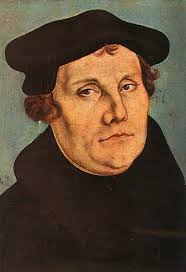
Luther"Last summer, my friend David Koyzis started a conversation about why there are so many Baptists who call themselves “Calvinists,” but no “Lutheran” Baptists.

David might be surprised to know that there are Anglicans who call themselves “Lutherans.” They have historical connection with Trinity School for Ministry in connection with a former Dean/President, and every year I discover at least one or two new students in my classes who identify with this “Lutheran” Anglicanism. The recent publication of this book reminded me that “Lutheran” Anglicanism is alive and well, and has prompted me to post my own assessment of “Lutheran” Anglicanism.

Before I give my own assessment of Lutheran Anglicanism, I should perhaps say a little about my own acquaintance with Luther and Lutheranism before I encountered the “Lutheran” Anglicans. During my years at graduate school, I came across Luther as part of my studies, and knew several Lutherans who were fellow students. I studied Luther primarily in courses on Christology and liturgy, and included a chapter on Luther in my dissertation. My assessment of Luther was mixed. I appreciated most Luther’s Christology and his sacramental theology, although I found his theology of the ubiquity of Christ’s ascended human nature problematic. I was less happy with Luther’s Bondage of the Will, where I thought he could have learned a thing or two from Thomas Aquinas or Augustine. Luther’s failure to distinguish adequately between natural and moral freedom combined with a failure to distinguish adequately between foreknowledge and predestination led to a determinist doctrine of human will and divine predetermination that made God responsible for sin. Luther’s way of stating the distinction between the “hidden” and “revealed God” was rightly repudiated by Karl Barth as undermining the fundamental theological thesis that God is in himself who he is in his revelation. I was also less than happy with Luther’s “law/gospel” hermeneutic, which, while it had some validity for interpreting certain passages in Paul’s letters to the Galatians and the Romans was largely a case of eisegesis if imposed on the Bible as a whole. As a Reformation Christian, I embraced Luther’s doctrines of sola scriptura, and justification by grace alone through faith alone, not because they were Luther’s but because I believe them correct – although I tended to understand the Reformation sola’s through Anglican eyes.

As part of my doctoral research, I read quite a bit in modern secondary literature on Luther. I read not only Luther, but became familiar with some of the key hallmarks of Lutheran theology – the Augsburg Confession, and much of the material in the Book of Concord. I also became familiar with a few modern Lutheran theologians: Soren Kierkegaard, Dietrich Bonhoeffer, Gustaf Aulen, Helmut Thielicke, and contemporary Lutherans such as Wolfhart Pannenberg, Carl Braaten and Robert Jenson, Gilbert Meilaender and David Yeago. Overall, my assessment of Luther and Lutheranism was mostly positive.

I discovered a very different “Luther” and approach to “Lutheranism” among the “Lutheran” Anglicans, a kind of Lutheranism I had never encountered before. This “Lutheran” Anglicanism was a variant on a way of reading Luther that Lutheran theologian Gilbert Meilaender calls “dialectical Lutheranism”1

Dialectical Lutheranism is distinguished by the following key characteristics: (more…)

« Newer Posts — Older Posts »

Non Sermoni Res — William G. Witt is proudly powered by WordPress