
William G. Witt

June 1, 2026

Richard Hooker On Law and Gospel Part Two: Grace, Sacraments, Worship and Polity

Filed under: Anglicanism,Justification,Methodology,Sacraments,Theology — William Witt @ 8:18 pm

Grace as Participation: Justification and Sanctification

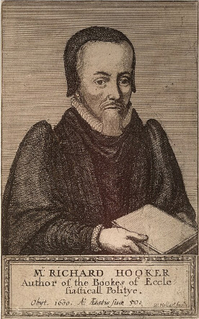
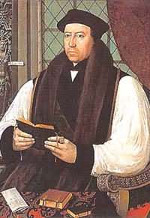
Richard Hooker

The means by which Richard Hooker understands Christians to participate in the incarnate, crucified, risen and ascended Jesus Christ would seem to be a “real mission” of the Holy Spirit (as opposed to an “appropriation” in which the common work of all three divine persons is ascribed to the Spirit). The anointing by Jesus by the Holy Spirit (at his baptism?) was not for himself only but so that we ourselves through the Spirit might share in that anointing:

Thus much no Christian man will deny, that when Christ sanctified his own flesh, giving as God and taking as man the Holy Ghost, he did not this for himself only but for our sakes, that the grace of sanctification and life which was first received in him might pass from him to his whole race as malediction came from Adam unto all mankind. Howbeit, because the work of his Spirit to those effects is in us prevented by sin and death possessing us before, it is of necessity that as well our present sanctification unto newness of life, as the future restoration of our bodies should presuppose a participation of the grace, efficacy, merit or virtue of his body and blood, without which foundation first laid there is no place for those other operations of the Spirit of Christ to ensue. So that Christ imparteth plainly himself by degrees. (Laws V.56.10)

The “whole church” is united to the “whole Christ” (in his humanity and divinity). The risen Christ is in every part of the church, which lives by his life through “participation.” Hooker writes:

And because the divine substance of Christ is equally in all, his human substance equally distant from all, it appeareth that the participation of Christ wherein there are many degrees and differences, must needs consist in such effects as being derived from both natures of Christ really into us, are made our own, and we by having them in us are truly said to have him from whom they come, Christ also more or less to inhabit and impart himself as the graces are fewer or more, greater or smaller, which really flow into us from Christ.

Christ is whole with the whole Church, and whole with every part of the Church, as touching his Person, which can no way divide itself, or be possessed by degrees and portions. But the participation of Christ importeth, besides the presence of Christ’s Person, and besides the mystical copulation thereof with the parts and members of his whole Church, a true actual influence of grace whereby the life which we live according to godliness is his, and from him we receive those perfections wherein our eternal happiness consisteth. (Laws V.56.10)

There are two ways in which we participate in Christ, partly by imputation (justification), but also partly by infusion (sanctification). We are not only justified or accounted righteous by faith, we also share in the risen Christ’s resurrection life. “Thus we participate Christ partly by imputation, as when those things which he did and suffered for us are imputed unto us for righteousness; partly by habitual and real infusion, as when grace is inwardly bestowed while we are on earth, and afterwards more fully both our souls and bodies made like unto his in glory.” Hooker states that the first thing “infused” into our hearts is the “Spirit of Christ,” from which everything else follows. The Spirit unites us to Christ our head thus enabling the church to become Christ’s body:

From hence it is that they which belong to the mystical body of our Saviour Christ, and be in number as the stars of heaven, divided successively by reason of their mortal condition into many generations, are notwithstanding coupled every one to Christ their Head, and all unto every particular person amongst themselves, inasmuch as the same Spirit, which anointed the blessed soul of our Saviour Christ, doth so formalize, unite and actuate his whole race, as if both he and they were so many limbs compacted into one body, by being quickened all with one and the same soul. (Laws V.56.11)

Hooker makes a clear distinction between justification and sanctification that had not yet appeared in Thomas Cranmer’s theology. Cranmer instead distinguished between “lively faith” and a “dead faith.”1 Hooker more helpfully uses the terminology that he found in John Calvin. He writes:

There is a glorifying righteousness of men in the world to come; and there is a justifying and a sanctifying righteousness here. The righteousness wherewith we shall be clothed in the world to come is both perfect and inherent. That whereby we are justified is perfect, but not inherent. That whereby we are sanctified, inherent, but not perfect. (Learned Discourse on Justification)

Hooker thus distinguishes between three kinds of righteousness. Eschatological righteousness, the righteousness of the world to come, will be perfect and inherent. When Jesus Christ returns and there is a new heaven and a new earth, we will be made inherently and completely righteous.

Concerning our present righteousness, Hooker distinguishes between justification and sanctification. The righteousness whereby we are justified by faith is perfect, but it is not an inherent righteousness because we continue to sin. The righteousness whereby we are sanctified is inherent, but it is not yet perfect. Sanctification thus involves a real ontological change, which is a progression in righteousness. We move forward, we fall back, we sin, we repent.

Concerning justification, Hooker writes:

Then, although in ourselves we be altogether sinful and unrighteous, yet even the man who in himself is impious, full of iniquity, full of sin, him being found in Christ through faith, and having his sin in hatred through repentance, him God beholdeth with a gracious eye, putteth away his sin by not imputing it, taketh quite away the punishment due thereunto, by pardoning it, and accepteth him in Jesus Christ as perfectly righteous, as if he had fulfilled all that is commanded him in the law: shall I say more perfectly righteous than if himself had fulfilled the whole law? I must take heed what I say; but the Apostle saith, “God made him who knew no sin to be sin for us, that we might be made the righteousness of God in him” [2 Cor. 5:21]. (Learned Discourse on Justification)

This is a Reformation understanding of justification as imputation. Hooker is saying that in God’s sight, when we exercise faith in Christ, God accepts us and considers us as righteous even though we are not (inherently) righteous in ourselves.

Such we are in the sight of God the Father as is the very Son of God himself. Let it be counted folly, or phrensy, or fury, or whatsoever. It is our wisdom and our comfort; we care for no knowledge in the world but this: that man hath sinned and God hath suffered; that God hath made himself the sin of men, and that men are made the righteousness of God. (Learned Discourse on Justification)

This is Hooker’s way of saying that justification by faith is really about justification by Christ (alien righteousness).

But then Hooker adds concerning sanctification, which is a real and inherent infused righteousness:

Now concerning the righteousness of sanctification, we deny it not to be inherent; we grant that, unless we work, we have it not; only we distinguish it as a thing in nature different from the righteousness of justification: we are righteous the one way by the faith of Abraham, the other way, except we do the works of Abraham, we are not righteous. (Learned Discourse on Justification)

Martin Luther made a distinction between two kinds of righteousness, which is similar to the point Hooker makes here.2 If justification is forensic alien righteousness, there nonetheless is also an inherent transforming righteousness in sanctification. (more…)

Richard Hooker on Law and Gospel Part One: God, Creation, Christology and Participation

Filed under: Anglicanism,Metaphysics,Methodology,The Trinity,Theology — William Witt @ 7:49 pm

1554 Born at Heavitree near Exeter
1577 Becomes fellow at Corpus Christi, Oxford (with Jewel’s help)
1579 Appointed Deputy Professor of Hebrew
1578 Ordained
1584 Appointed Rector of Drayton Beauchamp
1585 Appointed Master of the Temple (conflicts with Walter Travers, the Reader, and a Puritan)
1585/86 A Learned Discourse on Justification (sermon)
1588 Marries Jean Churchman
1591 Rector of Boscombe, Wilts
1593-1595 Publication of Books 1-4 of Laws of Ecclesiastical Polity
1595 Rector of Bishopsbourne, near Canterbury
1597 Publication of Book 5 of Laws
1648 Publication of Books 6 & 8
1662 Publication of Book 7

Richard Hooker

Richard Hooker is perhaps the most important theologian in the history of Anglicanism. His Laws of Ecclesiastical Polity provided the theological justification for the Prayer Book worship and polity of the Church of England during the Elizabethan settlement. At the same time, Hooker’s contribution is controversial. Partisan divisions within Anglicanism have contributed to his mixed assessment. Anglo-Catholics have tried to claim Hooker as one of their own, while Evangelical Anglicans who look to Thomas Cranmer as their source of inspiration have at the least neglected Hooker, perhaps fearing that he prepared the way for what they perceive as a falling away from Reformation principles in the following generation of the Caroline Divines. Paradoxically, a renewal of interest in Hooker’s theology over the last several decades has been led by Reformed scholars who have claimed Hooker as a Reformed theologian. What follows will recognize Hooker’s unique contributions to Anglican identity. At the same time, I think it mistaken to view Hooker as in discontinuity with the English Reformation that preceded him. On my reading, Hooker is in continuity with but also the logical conclusion of an Evangelical Catholic approach to Anglican theology that originated with Thomas Cranmer, was succeeded by John Jewel, and then passed on and developed in Hooker.

Hooker lived from approximately 1554 to 1600. It is believed that he was born in 1554 at Heavitree near Exeter. In 1577, Hooker became a fellow at Corpus Christi, Oxford, with the assistance of John Jewel. While Jewel was a protege of Cranmer, Richard Hooker was a protege of Jewel. In 1579, Hooker was appointed Deputy Professor of Hebrew. Hooker was ordained August 14, 1579 by Edwin Sandys, Bishop of London. In 1584, Hooker was appointed Rector at Drayton Beauchamp. In 1585, Hooker was appointed Master of the Temple in London, where he began having conflicts with Walter Travers, a Reader and a Puritan. Hooker would preach in the morning and Travers would preach in the afternoon, contradicting what Hooker had just preached. The controversy ended when Travers was silenced by Archbishop Whitgift in 1586.

Hooker’s Learned Discourse on Justification (published either in 1585 or 1586) was a sermon challenging the Roman Catholic position, but was nonetheless controversial among the Puritans for suggesting that Roman Catholics could still be saved. In 1588, Hooker married Jean Churchman. Hooker became the Rector of Boscombe, Wilts in 1591, and began writing the Laws of Ecclesiastical Polity. Books One to Four were published from 1593 to 1594. In 1595, Hooker became the rector of Bishopsbourne near Canterbury. In 1597, Book Five of the Laws was published. Hooker died in 1600. In 1648, Books Six and Eight were published, long after Hooker’s death. The publication of Book Seven did not take place until 1662.

The influences on Richard Hooker were primarily Thomas Aquinas, from whom he derived his understanding of law, the church fathers Irenaeus, Athanasius, and Cyril of Alexandria, whom he cites in his discussion of Christology, and John Jewel, when he discusses Anglican identity. Finally, Hooker was influenced by John Calvin for his understanding of the relationship between justification and sanctification as well as his Eucharistic theology.

As already noted, there has recently been a renewed interest in Hooker’s theology, primarily among Reformed theologians. This is ironic, as historically Hooker has been more admired by Anglo-Catholics, but the new interpreters are correct that although Hooker rejected Puritanism, he was nonetheless at least in conversation with a more moderate Reformed theology. I would suggest however that a better parallel would be provided by the conversation Jewel had with the Roman Catholic church. Although Jewel disagreed with Rome, he still wanted to argue that the Church of England was Catholic. Although Hooker disagreed with the Puritans, he did not simply reject the Reformation. As was the case with Jewel, I would suggest that Hooker’s own approach is Evangelical Catholic, a Reformed (in the sense of Reformation) or Evangelical (but not Calvinist) Catholicism. In particular, Hooker was in conversation with an earlier pre-Reformation Catholic tradition. Hooker especially engaged with the church fathers and the Christology and Trinitarian theology of the ecumenical councils. Hooker was also influenced significantly by the theology of the medieval Catholic theologian Thomas Aquinas. (more…)

April 9, 2026

John Jewel and the Catholicity of Anglicanism

Filed under: Anglicanism,Development of Doctrine,History,Sacraments,Theology — William Witt @ 1:40 pm

Dates (1522-1572)

1522 Born at Buden, Devonshire
1535 Enters Merton College, Oxford
1539 Transfers to Corpus Christi, Oxford
1540 Receives Bachelor of Arts
1545 Receives Master’s Degree
1548 Elected as Reader of Humanity and Rhetoric
1551 Receives license to preach at Sunningwell
1552 Accession of Mary Tudor; Jewel deprived of his fellowship at Corpus Christi
1554 Jewel signs articles agreeing with Roman Doctrine
1555 Jewel flees to Frankfurt, Strasbourg and later Zurich (with a letter from Cranmer); is deeply affected by disagreements among English exiles at Frankfurt
1558 Death of Mary and accession of Elizabeth; Jewel returns to England
1559 Jewel participates in disputation at Oxford against Roman clergy; Paul’s Cross “Challenge Sermon”

“If any learned man of all our adversaries . . . be able to bring any one sufficient sentence out of any old catholic doctor, or father, or out of any old general council or out of the holy scriptures of God, or any one example of the primitive church, whereby it may be clearly and plainly proved . . .”

1560 Consecrated Bishop of Salisbury
1562 Apologia Ecclesiae Anglicanae (Apology of the Church of England)
1565 Reply to Harding
1566 Defense of the Apology

“What mystical catholic ears M. Harding hath, that cannot abide the phrases and speeches of the ancient fathers.”

1570 Paul’s Cross Sermon against the Puritans (not published)

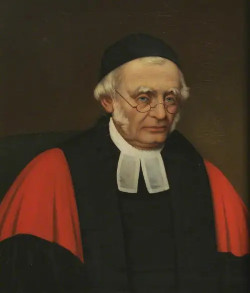
John Jewel

John Jewel (1522-1571) was a second-generation Anglican Reformer. He was a protege of Thomas Cranmer, and thus knew Cranmer personally. Later the great Anglican Divine Richard Hooker was a protege of Jewel’s. There is then something like a three-generation passing of the torch from Cranmer to Jewel to Hooker.

For a number of reasons, Jewel is unfortunately less well known than either Cranmer or Hooker. Cranmer is best known for his role in the creation of the Book of Common Prayer, which has provided the structure for Anglican worship for four hundred years. Richard Hooker is known for his writing of The Laws of Ecclesiastical Polity, which is probably the closest thing that Anglicans have to a systematic theology at the time of the Reformation. While his contribution is less, Jewel is nonetheless a significant figure, particularly for the development of Anglican ecclesiology – how Anglicans understand what it means to be a church, and, in that regard, how they address the question of the relationship between Anglicanism (or the Church of England) and the pre-Reformation western Catholic church.

In apologetic discussions, many Protestants and Roman Catholics agree in viewing the relationship between the medieval Catholic church and the post-Reformation Protestant churches as a simple break. This can be seen in such questions as “Did Henry VIII found the Church of England?” or “Where was your church before the Reformation?” or “Did the Church of England break with the Catholic church in order for Henry VIII to get a divorce?” Jewel’s approach to ecclesiology rejects this dichotomy. He refused to understand the Reformation as a simple break with the Roman Catholic church or to interpret the Reformation as a new beginning that leapt over sixteen hundred years of history to go straight back to Scripture, forgetting everything that had happened between the time of the death of the last apostle and Martin Luther’s 95 Theses.

At the heart of Jewel’s argument is the claim that Anglicanism was not the beginning of a new church; rather, the English Reformation was indeed a reformation, the reforming of the late medieval western Catholic church that Jewel claimed had in many ways departed from the historic church of the Patristic era and of the church of the New Testament Apostles before that. (more…)

March 21, 2026

Thomas Cranmer on the Sacraments and the Prayer Book

Filed under: Anglicanism,Ecumenism,Sacraments,Theology — William Witt @ 12:43 pm

Today is the Feast Day of Thomas Cranmer, who placed his hand in the fire when he died at the stake on this day 470 years ago. I thought it a fitting day to post this essay on his sacramental theology.

Thomas Cranmer

A previous essay focused on Thomas Cranmer’s Reformation theology, specifically the way in which Cranmer embraced but also gave his own interpretation to the three Reformation principles of Sola Scriptura (the normative authority of Scripture alone), Sola Gratia (justification by grace alone), and Sola Fide (through faith alone). Cranmer affirmed the primacy and sufficiency of Scripture over all church tradition, while nonetheless also affirming the significance of tradition as the proper context for the interpretation of Scripture. He also affirmed both the reading of Scripture translated into the common language along with a focus on the reading of Scripture as a means of edification (the “priesthood of all believers”). Cranmer interpreted justification by faith alone to mean justification by Christ alone, with faith understood as the “lively faith” that embraced the crucified and risen Christ’s righteousness in contrast to what he called “dead faith.”

This essay will address the two other areas where Cranmer contributed most to the history of Anglican theology: his doctrine of the sacraments, particularly the Eucharist, and his contribution as author of the 1549 and 1552 versions of The Book of Common Prayer, focusing specifically on the eucharistic rites in the two books.

Reformation Eucharistic Theologies

If there was a general consensus among Reformation churches concerning the primacy and normativity of Scripture as well as justification by grace alone through faith alone, no such agreement existed for sacramental theology, style of worship, or church polity. The Reformers disagreed as much among themselves as they did with the Roman Catholic church concerning their theology of the sacraments, liturgical worship, and church orders (ordination). Concerning the sacraments, areas of disagreement concerned whether sacraments are means of grace, whether the risen Christ is present in the Eucharist, and, if so, in what manner, whether infants should be baptized, and whether baptism regenerates. Concerning worship, whether the church should retain or discard the historic liturgical worship of the church (the Catholic “mass”), and if retained, to what extent should the liturgy be preserved or modified. Concerning orders, whether the church should retain episcopacy, and, if not, whether the church should be governed by elders (presbyterian) or democratically (congregational).

Concerning the sacraments, there has been a history of disagreements in the Western church about the Eucharist – of how it is that the consecrated elements become the body and blood of Christ or how they unite the believer to Christ – that precedes the split between the Eastern and Western church. This has not been so much a concern in Eastern theology, and it may well have something to do with the Western understanding of how Christ makes himself immediately present in the Eucharist rather than the Eastern understanding that Christ is mediately present through the invocation of the Holy Spirit in the epiclesis.1 This fundamental difference between West and East concerning what can be designated as two separate “models” of Eucharistic presence has not been sufficiently recognized in discussions of Eucharistic theology, but is arguably as fundamental for understanding the Reformation-era disagreements as the disagreements themselves.2

The standard Western model of the Eucharist has a Christocentric emphasis. In the Western understanding, Jesus Christ as the risen and ascended Son of God acts directly and immediately to make himself present in the sacraments. During the Eucharistic prayer, the celebrant (or priest) represents the risen Jesus Christ. In Latin, the expression in persona Christi (in the person of Christ) means that the celebrant acts as a visible representation of the invisible risen Christ. When the celebrant pronounces the “Words of Institution” – “This is my body” and “This is my blood” – the physical elements of bread and wine are transformed to “become” (or make present) the body and blood of Christ.

The role of the Holy Spirit tends to be minimized. Insofar as the Spirit is present, the Spirit is present in either of two ways. First, by “appropriation.” That is, the Holy Spirit is present along with the risen Christ in the same manner in which the one God as the undivided divine nature acts throughout creation but specific divine acts are “appropriated” to a particular person because of a special fittingness. The phrase “all acts of the Trinity ad extra are one” (Opera Trinitatis ad extra indivisa sunt) means that all acts of the triune God outside God’s own nature (ad extra) are common to all three persons as to a single principle of action with the exception of acts specific to the mission of a specific person.

(more…)

July 4, 2025

Sermon for the Feast Day of George Herbert

Filed under: Anglicanism,Sermons,Spiritualty — William Witt @ 12:36 am

Preached on February 27, 2025

George Herbert

I

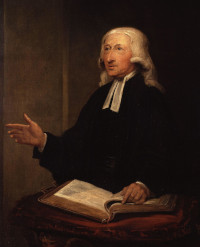
t is my normal policy when I preach to focus on the lectionary readings. I am going to make an exception today because this is the Feast Day for George Herbert, and I want to say a few things about Herbert. As a theologian, my favorite Anglican authors are from the period in which the Church of England began to settle into its identity following the English Reformation and the Elizabethan Settlement: Richard Hooker and his Laws of Ecclesastical Polity and the period of the Caroline Divines following Hooker: John Donne, Lancelot Andrewes, Thomas Traherne, and, of course, George Herbert. I have more than once used the period of Lent to read through some of John Donne’s sermons or Herbert’s poetry. As Lent begins, I might encourage you to spend some time doing the same.

Who was George Herbert? Herbert was an Anglican priest who was born in 1593 and died of tuberculosis in 1633 at the age of only thirty-nine. He is an example of how to live a meaningful Christian life in the midst of troubled times. Herbert spent his early years trying to pursue a career in politics, and he even served in Parliament for a time. However, with the death of King James, Herbert became disillusioned with politics, and he abandoned the world of public influence to serve in a small village church. Herbert spent the last three years of his life as the rector in the rural parish of St. Andrews, Bemerton, and it is these three years Herbert spent as a priest for which he is remembered four hundred years later. Izaak Walton summarized his life: “Thus he lived and thus he died like a saint, unspotted of the world, full of alms’ deeds, full of humility, and the examples of a virtuous life.”

If I were to summarize the chief characteristic of these Anglican writers known as the Caroline Divines, I would say that they brought together a combination of theology and spirituality. Herbert left us two writings: a guide for priests entitled The Country Parson, and a collection of poems titled The Temple. In a short sermon, I cannot do more than give you a brief introduction to the theology and spirituality of George Herbert, but I will mention what I will call four pillars of the spiritual life according to George Herbert.

The first two pillars are a combination of word and sacrament in contrast to a spirituality that centers only on Scripture – the Word without the sacrament – or only on worship – the sacrament without the Word. One of the characteristics of Anglican spirituality of this period was that it was a way of prayer and worship that was informed by two books – first, the English Bible that appeared as the Great Bible of Henry VIII 1539 and later the Authorized Version of King James translated under the leadership of Lancelot Andrewes published in 1611, and, second, the third Elizabethan edition of the Book of Common Prayer of 1559.

This two-book spirituality is found throughout Herbert’s prose and poetry. First, the Bible. Herbert writes in The Country Parson that the chief source of the pastor’s knowledge is the “book of books, the storehouse and magazine of life and comfort, the Holy Scriptures. There he sucks and lives” (The Country Parson, 4). The lights of Scripture shine not only individually, but form constellations of the one Christian story. In Herbert’s poem, “The Holy Scriptures,” he writes:

Oh that I knew how all thy lights combine,
And the configurations of their glory!
Seeing not only how each verse doth shine,
But all their constellations of the story (“The Holy Scriptures II”).

(more…)

September 6, 2022

Thomas Cranmer’s Reformation Theology

Filed under: Anglicanism,Justification,Theology — William Witt @ 3:02 am

Dates (1489-1556)

1489 Born at Aslockton, Nottinghamshire.
1510 Educated Jesus College, Cambridge.
1515 Receives MA; marries Joan some time after, who dies in childbirth.
1523 Ordained priest.
1529 Favored Henry VIII’s annulment of marriage to Catherine of Aragon.
1532 Secretly married Margaret Ossiander, niece of Andreas Osiander, while on embassy to Charles V.
1533 Became Archbishop of Canterbury; Henry’s marriage declared void.
1535 Coverdale Bible published (a revision of Tyndale).
1536 The Ten Articles (Mildly Catholic).
1537 Bishops’ Book (replaces the Ten Articles).
1539 Six Articles (Cranmer opposed – sent his wife back to Germany).
1540 “Preface to the Great Bible.”
1543 The King’s Book (revised version of the Bishops’ Book).
1544 The Great Litany.
1547 Death of Henry VIII.
1549 First Book of Common Prayer of Edward VI.
1552 The Ordinal; Second Prayer Book.
1553 Forty-Two Articles.
1553 Death of Edward VI, Accession of Mary Tudor.
1556 Cranmer burned at the stake.

Thomas Cranmer

As noted in my essay “What is Anglican Theology?,” Anglicanism does not have a distinctive founder to whom it appeals for identity in the way that Lutherans look to Martin Luther, for example, or the Reformed look to John Calvin. Even if we look to the Reformation era for roots, the English Reformation covers the entire period from the initial Catholicism of Henry VIII to the more distinctively Protestant era of his son Edward VI, which would be the period of Thomas Cranmer and other figures such as Hugh Latimer and Nicholas Ridley, and concludes with the Elizabethan settlement of the following generation, whose chief figures were John Jewel and Richard Hooker. Even then, one could make the case that it was really only in the following generation of the Caroline Divines that Anglicanism finally arrived at a settled identity. This extended beginning means that subsequent Anglicans have been able to appeal to different figures in this initial period as exemplars of Anglican identity, certainly Cranmer, but also Hooker or various figures among the Caroline Divines.

This essay and the next will examine themes in Thomas Cranmer’s theology. If Cranmer is not a figure of the stature of Luther or Calvin, he is nonetheless the most significant figure of the initial period of the English Reformation, not only because he was the primary author of the first two versions of the Book of Common Prayer of 1549 and 1552, but was also a major author of the Forty-Two Articles, which later became the Thirty-Nine Articles. Cranmer also wrote a number of homilies in the Book of Homilies. These three sets of documents – the Prayer Book (and the Ordinal), the Thirty-Nine Articles, and the Book of Homilies – are sometimes referred to as the Anglican Formularies, and have been appealed to (especially by Evangelical Anglicans) as definitive doctrinal sources for Anglican identity.

Because of Cranmer’s historical significance, not only as the Archbishop of Canterbury during the reign of Henry VIII and his son Edward VI, as the author of the Prayer Book, and a major contributor to the Thirty-Nine Articles and numerous Homilies, the question of how to interpret his theology is not only important for Anglican theology, but also controversial. While no one would claim that Cranmer was what would later be called an Anglo-Catholic, theologians have pointed to numerous “catholic” themes in Cranmer’s theology: the modeling of the Book of Common Prayer on patristic liturgies, the medieval Sarum liturgy, and historic Catholic collects; Cranmer’s modeling of Morning and Evening Prayer on the Benedictine Daily Office; Cranmer’s regular appeal to the church fathers, and, finally, a conciliatory tone that perhaps echoes more the humanist Catholic Desiderius Erasmus than Luther or Calvin. At the same time, Evangelical Anglicans often have looked to Cranmer as a definitive authority, and have appealed to the Anglican Formularies as normative for Anglican identity. If earlier interpreters tried to recover a more “catholic” or ecumenical Cranmer, in recent decades there has been a resurgence of the more “Protestant” interpretation of Cranmer’s theology.1 In this and the following essay, I will attempt a balanced interpretation of Cranmer’s theology to show why he can be appealed to by many different interpreters. In this chapter, I will summarize Cranmer’s Reformation theology; in the next, I will look at his sacramental theology and his liturgical contributions.


(more…)

November 20, 2021

My Lecture on An Anglican Reflection on the Filioque

Filed under: Anglicanism,The Trinity,Theology — William Witt @ 3:59 am

Friends,

I was invited to give a lecture on November 17, 2021 at the Evangelical Theological Society 2021 meeting in Fort, Texas, on the subject of “An Anglican Reflection on the Filioque Controvery.” That lecture is now available here.

March 5, 2021

What I Wish the Bishops Had Said

Filed under: Anglicanism,Ethics — William Witt @ 1:12 am

I wish to preface the following as carefully as I can. I am a member of the ACNA; I know many of its bishops, and I have the highest respect for them. It pains me to find myself in disagreement with them. In light of recent heated controversy, I at first thought it would be best not to contribute further to the acrimony. However, I have reluctantly come to conclude that I need to clarify my own position because of misrepresentations, indeed outright lies, that have begun appearing on the internet. I would beg that none of what follows should be considered an “in your face” affront to those who wrote the College of Bishops statement.

My real concern with the ACNA College of Bishops statement on Sexuality and Identity is that difficult issues in the church need to be addressed through extended charitable public conversation, not simply through edicts delivered from on high. It is not helpful simply to lay down the law. If the bishops had released a pastoral letter saying the following, I think it would have been more helpful:

1) A conversation needs to take place and clarification is needed about how the church ministers to celibate Christians who “experience same-sex attraction.”
2) The adjective “gay” seems to be used with different understandings, and that is leading to confusion.
3) Those who use the adjective to describe themselves claim that it is simply an adjective, and has value in the pastoral context.
4) Some who do not use the adjective are concerned that it is defining an “identity” that is in competition with Christian identity.
5) Both sides need to be clear that our identity is in Christ, but also that Christian identity can be expressed using different vocabulary.
6) Orthodox Christians can and do disagree about many things, but when such issues are not church-dividing, we need to exercise charity and assume the integrity of those who view things differently.
7) Those who use the term “gay Christians” need to be aware that some are confused because of the way that the term is used in the secular culture. They need to be clear that their identity is in Christ and Christ alone, and they need to exercise caution in their use of language so as not to confuse or scandalize others.
8) Those who are uncomfortable with the term need to recognize that those who use it are committed to Christ above all and to being faithful Christian disciples. They are clear that their identity is in Christ alone, and they have affirmed repeatedly that they are committed to traditional Christian sexual morality and are trying to do the best they can to minister to sexually broken people. Those who use the term “gay Christian” are clear that they are using the term as a descriptor for Christians who experience same-sex attraction who are either committed to celibacy or are in opposite-sex marriages. While their vocabulary might not be that which others would prefer, the church needs to support them and to understand that they are members of Christ’s body about whom we must not say “We have no need of you.” We need to be clear that Christ died for sexually broken people, and that we are all sexually broken people. We need to preach the gospel in such a way that it will be heard as “good news” to all, whatever might be the particular sins and temptations with which we struggle. (more…)

Why I signed “Dear Gay Anglicans”

Filed under: Anglicanism,Ethics — William Witt @ 12:25 am

I have hesitated to say anything public about the current discussion concerning the ACNA College of Bishops Statement on “Sexuality and Identity,” which has become acrimonious very quickly. However, in recent days I have become more concerned as cases of “false witness” have begun to appear in regard to those who signed the “Dear Gay Anglicans” response. To say nothing might seem to confirm the truth of the suspicions.

Before addressing the ACNA College of Bishops Statement on “Sexuality and Identity: A Pastoral Statement from the College of Bishops,” it is important to be clear that my position on sexuality and sexual ethics has not changed. I first came to teach at Trinity School for Ministry two years after my entire church was taken over by my bishop because of our challenging the bishop over the ordination of Gene Robinson, who became the first sexually-active gay bishop in the Episcopal Church. I often point out that I did not leave the Episcopal Church. I was kicked out.

On my blog I posted an essay in 2012 on “The Hermeneutics of Same-Sex Practice: A Summary and Evaluation.” I still stand by every word I wrote in that essay.

I teach the introductory course in Christian Ethics at TSM, and in that course I affirm and teach the church’s historic position on sexuality. TSM has a doctrinal statement which every faculty member has to affirm every two years, and I affirm it without hesitation.

I first began reading the ACNA College of Bishops Statement “Sexuality and Identity: A Pastoral Statement from the College of Bishops” with a certain amount of hope. The “Preamble” of the Document outlines a biblical theology of sexuality with which I am in fundamental agreement. I would want to add to the one-sentence statement that “God established marriage between male and female to fill the earth through procreation (Genesis 1:28).” The crucial theological account of the purpose of marriage occurs not in Genesis 1 but in Genesis 2 where it becomes clear that “man” and “woman” are created as complementary opposites whose primary purpose is to provide companionship for one another. Certainly the document is correct in its overall summary of the biblical account of marriage – that God intends marriage as a lifelong exclusive commitment between one man and one woman, that a key (not the exclusive) purpose of marriage is raising and caring for children, and that marriage between man and woman is parallel to the union between Christ and the Church. I am a member of ACNA (among other reasons) because it affirms the historical biblical, catholic, and evangelical understanding of marriage.

The document also correctly affirms that human sinfulness is universal and is manifested in a variety of ways, including sexual brokenness and temptation. Among personal friends and family members, I would say that adultery (inevitably accompanied by divorce) is one of the worst offenders – continuing to create ongoing trauma and pain even for the grown children of those who have had to live through it in their families. A quite serious related area of sexual sin not mentioned in the document would be that of sexual, physical, or emotional abuse within a marriage, and sexual harassment or abuse by those in positions of authority in work places, social organizations, and, even in the church. Certainly ACNA as well as other churches and church related organizations have begun to take steps to recognize and address these issues in recent years. The point here is that sexual sin is not limited to those who experience same-sex attraction, and heterosexuals need to recognize and acknowledge our own sexual brokenness if we hope to be heard when we address concerns related to same-sex orientation.

I especially appreciate that the document correctly acknowledges that there are Christians who experience same-sex attraction, and who intend to lead lives of Christian chastity, while also acknowledging that only a minority of such people change their orientation. A very important acknowledgment is that “conversion therapy” is unhelpful and indeed “distressing” and “traumatizing.” Throughout much of the 1990s, many traditional Christians placed their hopes in “conversion therapy” as a catchall solution to the problem of homosexuality, a solution based more on dubious principles of Freudian psychology than on either biblical or historically Christian understandings of spiritual formation. The failures of “conversion therapy” in recent years, including public exposure of abusive and bizarre “therapies,” has tended to discredit those in the churches who uncritically supported it. That it abused and traumatized so many should be a cause for repentance.

The first part of the document concludes by acknowledging that there are members of ACNA who experience same-sex attraction, who want to be faithful to a biblical ethic, who find themselves not belonging in “progressive” denominations, but who feel “alienated” by fellow orthodox Christians. The bishops acknowledge that there are those within ACNA who are “Christians with same-sex attraction,” who “experience same-sex attraction,” that some of these (an acknowledged minority) may experience a change of sexual orientation, that others will experience only a “change of will,” while others will face an “ongoing struggle” along with a hope for the resurrection. All three are told that they are “fighting the good fight to become more like Jesus,” and are advised: “Please hear this: we love you, respect you, and pray that this statement will encourage you.” The document concludes with a single paragraph calling for “care and sensitivity” for those struggling with same-sex attraction.

I want to be absolutely clear that I am in fundamental agreement with this first half of the COB document. Why then wouldn’t orthodox Christians within ACNA, whether “experiencing same-sex attraction” or not, be encouraged by this document? I confess that I was disappointed at the material that followed. This should have been the point for some discussion of what such pastoral care and sensitivity would look like. Instead, the document shifts to a fourteen-paragraph discussion about the term “gay Christian” and why this term should not be used because it causes “confusion.”
(more…)

May 5, 2019

New Essay on the Anglican Spirituality of Thomas Traherne

Filed under: Anglicanism,Spiritualty — William Witt @ 6:16 am

Here is a link to an essay on the Anglican spiritual divine Thomas Traherne, which I just posted to my list of “Pages” on the right of my blog. This was originally published in Pro Ecclesia: A Journal of Catholic and Evangelical Theology, Vol. 25, No. 4, Fall. 2016. I thought this might be suitable for the Easter season.

Older Posts »

Non Sermoni Res — William G. Witt is proudly powered by WordPress