January 8, 2026

Just War Theory and the Venezuela Invasion

Filed under: Christianity and Politics,Ethics — William Witt @ 2:27 am

I posted the following on Facebook. As I noted, I was reluctant because I I have learned that such posts “seldom changes any minds,” and I was not surprised to find that responses made that clear. At the same time, because of the number of responses and the length required for a response, I decided to put everything in a blog post. My lengthy response to comments can be found at the end.

I try to avoid commenting on political or ecclesial issues on Facebook because I know that it seldom changes any minds. I have definite opinions on the current “bishop” troubles in the ACNA but I have sat on my hands.

Nonetheless, I taught Christian Ethics for eighteen years and one of the topics I covered every time I taught the course was the Christian understanding of the use of force by the state. Historically, there have only been two morally permissible stances for Christians concerning war: pacifism and “Just War” theory.

Just War (actually justified war) is not a permission for Christians to endorse the use of force in international relations. Rather, just war lays out certain restrictions (all of which must be met) before countries can go to war. Just War shares with pacifism a common assumption: Force is never permissible unless and only permissible if certain requirements are first met – and every single one of them must be (jus ad bellum).

The requirements are: Just Cause, Right Authority, Right Intention, Last Resort, Proportionality, and Probability of Success.

Second, there are certain restrictions on what actions are permissible within war (jus in bello):

Discrimination (no targeting of civilians)

Proportionality (military advantage must outweigh harm done – including long term harm)

Necessity (only use the force necessary to achieve legitimate military objectives)

No intrinsically evil means (weapons of mass destruction, rape, etc.)

No reprisals (no violations of just war principles just because the enemy has done so).

From a Christian perspective, the invasion of another sovereign nation (with which we are not even in a previously declared war) and the kidnapping of its leader is a violation of the principles of both pacifism (obviously) but also Just War.

From any possible Christian perspective, the invasion of Venezuela and the kidnapping of its president is immoral and must be condemned. It does not matter if Maduro was a “bad guy.”


A second post responded to a request for a bibliography:

(more…)

January 3, 2026

I Get Mail: An Egalitarian Ontology of Women and Men

Filed under: Theodicy,Women's Ordination — William Witt @ 2:15 am

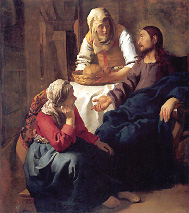
Christ in the House of Martha and MaryI received an email recently that asked for clarification in light of a concern that regularly appears in complementarian criticisms of egalitarian theology — that egalitarianism presumes that there simply are no differences whatsoever between men and women. Behind this also lurks another unspoken (but sometimes spoken) criticism — that egalitarian theology inevitably leads to various kinds of sexual anarchy and licentiousness. (I don’t suggest that the writer harbors this assumption.)

The email’s title was: 

“Looking for ontological exploration of men and woman from an egalitarian worldview”

“Most of the books I have read state that Egalitarians do not believe that men and women are exactly the same, but I haven’t found a book yet that offers any theories or descriptions of the categories of men and women from a mutualist/egalitarian perspective. I haven’t yet found an egalitarian that explores the difference (traits, purposes within those traits distinct between the two) in light of equality.”

“I was wondering if you had any writing on the subject or any guidance on where I might find such an exploration.”

Mxxxxx,

I have not been able to spend much time on these issues for the last year or so as I have been working on other things. I need to get back to addressing some of these questions.

Since your subject title concerns ontology, I would refer you to chapter 14 and the conclusion of Icons of Christ (Baylor University Press, 2020) where I lean on Roman Catholic philosopher Norris Clarke’s trinitarian ontology, Karl Barth’s relational understanding of sexuality, and on Dorothy L. Sayers’s essay “Are Women Human?”

Crucial to Clarke’s position is (as he titles an essay) “To Be Is To Be Substance-in-Relation,” in Explorations in Metaphysics (University of Notre Dame Press, 1994). Also see his Person and Being (Marquette University Press, 1998), which I cite in ch. 14.

According to Clarke, every being has both an itself dimension (substance) and a toward other dimension (relation). For human beings, substance is tied both to rationality and embodiment – Aristotle: “the human being is a rational animal” – and it is this element of rationality on which Boethius focused in his definition of personhood – “an individual substance of a rational nature.” However, one of the great contributions of patristic christology and trinitarian theology is that it is crucial to distinguish person and nature – something lacking in Boethius’s definition.

Drawing on Trinitarian theology, all persons have a rational nature (Boethius) but to be a person simply is to be in relational orientation to other persons. In the Trinity, the Father simply is the one who generates the Son and who with the Son brings forth the Spirit through procession. The Son simply is the person who is generated by the Father and who with the Father gives being to the Spirit, and the Spirit simply is the person who proceeds from the Father and the Son.

Applied to humanity, in the realm of substance or essence, there can be no ontological difference whatsoever between men and women as it is the common essence of rational embodiment that makes human beings human. If there were any ontological difference of essence/nature/substance as far as humanity, men and women would each be a distinct species, and the Word would have to have become incarnate twice (once as a male and once as a female) in order to redeem humanity. The orthodox doctrine of the Incarnation is not that the Word assumed a male human nature but that the Word assumed a human nature common to men and women; however the manner in which the incarnate Word exists as human is as the male Jesus of Nazareth.

As with the Trinity, I would suggest that the fundamental ontological distinction between men and women exists at the level of relation, not substance (or essence). To be a human being means to share in the common rational equality that is essential to human nature, but to be a male human being is to exist as relationally oriented to the female, and to be a female human being is to exist as relationally oriented toward the male. To be a human being means to exist either as a male or as  a female and to exist in equal partnership in relation to the other.

(more…)

December 24, 2025

Can We Trust the Bible?

Filed under: Scripture,Theology — William Witt @ 9:43 pm

Systematic Theology: Chapter Three (Appendix)

The Road to Emmaus

Perhaps the most heated point of controversy concerning the Bible in contemporary culture concerns whether we can trust the Bible. In previous generations, even those who never read the Bible commonly referred to it as the “Good Book.” In contemporary culture, more and more people view the Bible as an “evil book” because they view the God of the Bible as an oppressive threat – a bully who is fundamentally opposed to human flourishing. The crucial disagreement concerns the divide between a hermeneutic of continuity and a hermeneutic of discontinuity, and a divide between a hermeneutic of trust and a hermeneutic of suspicion.

The trustworthiness of Scripture has been challenged at all three levels of knowing and being. The Christian story and symbols have been challenged as either incoherent or as hostile to human flourishing. The historical witness of Scripture has been challenged as fundamentally unreliable, as not giving an accurate account of either the history of Israel or of the “historical Jesus.” At the level of ontology, it has been claimed either that the God of the Bible does not exist, or that if some kind of spiritual reality exists, it bears little or no resemblance to the God described in the Old and New Testament Scriptures.

The crucial issue of continuity over against discontinuity concerns whether God is in himself who he has revealed himself to be in the history of revelation. As noted in the previous paragraph, this is often posed in terms of either the historical reliability of the Scripture or their incompatibility with the findings of modern science, or the God whose story is told in the Bible is rejected as a morally repugnant character. I would suggest that two more pressing concerns lie behind the current challenges; first, the loss of transcendence and, second, distinct from, but connected with this, a moral challenge. Third, and related to both of the above is the more recent issue of the loss of faith among a younger generation of primarily “Exvangelicals” labeled “deconstruction.”

Loss of Transcendence

Key to the loss of transcendence in contemporary culture is what Charles Taylor in his book The Secular Age has designated as the “immanent frame,” a constructed social space that frames the lives of contemporary Western people within a natural (rather than supernatural) order. Taylor refers to this social space as a secular “social imaginary” that excludes transcendence. A “social imaginary” is different from an intellectual system in that it is the way that people unreflectively “imagine” or “feel” about their social surroundings. Social imaginaries are expressed more in terms of “stories,” images, and legends rather than in articulated intellectual beliefs. The secular “social imaginary” is thus similar to Thomas Kuhn’s notion of “paradigms,” but in contrast to the theoretical and reflective nature of paradigms, the secular “social imaginary” is rather a “take,” a way of construing the world as without transcendence that the contemporary person brings to experience rather than derives from it.54

Given the assumptions of an a priori secular social imaginary, interpretation of the Bible becomes problematic insofar as the subject matter of the biblical story is from beginning to end an account of the transcendent God who has created and redeemed the world, a God who speaks and acts. (more…)

Revelation and Scripture

Filed under: Scripture,Theology — William Witt @ 9:38 pm

Systematic Theology: Chapter Three

FourApostles

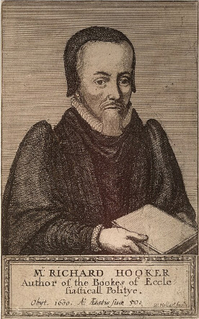
The two previous chapters dealt with the subject matter of theology (what theology is) and the task of theology (what theologians do). This chapter and the next deal with the sources of theology. Traditionally, these are Scripture (sola scriptura; Reformation Protestant), Scripture and tradition (Council of Trent; Roman Catholic), Scripture, tradition, and reason (Anglican; Richard Hooker), Scripture, tradition, reason, and experience (Methodism; the Wesleyan Quadrilateral; liberal Protestantism).

In terms of the three levels of knowing and being (ordo cognoscendi and ordo essendi), these sources of theology belong to the first level, the order of knowledge. Scripture, tradition, reason, and experience provide the sources and context within which Christians come to know what Christian faith is, and what it means to live as Christians. At the same time, it is important to distinguish between the first source – Scripture – and the other three sources in that historically Scripture has provided the primary source of the knowledge of Christian faith while reason, tradition, and experience are not in themselves independent sources of knowledge of Christian faith, but rather provide the ecclesial context in which Christians come to know and interpret Scripture.

Historically, tradition is not a separate and distinct source of knowledge of God, but the context in which Christian faith takes place. Patristic theologians like Irenaeus were expositors of Scripture, and the second century Rule of Faith is both a summary of the content of Scripture and a hermeneutical guide for interpreting Scripture. For theologians like Anglican Richard Hooker, reason was not a separate source for knowledge of God, but a hermeneutical tool to use in interpreting Scripture. For founder of Methodism John Wesley, experience did not provide additional knowledge about God, but was rather an ecclesial context in which the church appropriates the truth of Scripture.

At the same time, Reformation Protestants did not understood sola scriptura to mean that the church reads Scripture in an interpretive vacuum (nuda scriptura, “biblicism”). Protestants continued to recite the Creeds and to endorse the theological teaching of the ecumenical councils because they understood them to be summaries of and interpretive guides to the clear meaning of Scripture. Affirming sola scriptura did not prevent historic Protestants from endorsing confessional statements such as the Lutheran Augsburg Confession, the Reformed Westminster Confession, the Anglican Thirty-nine Articles or reading Scripture through interpretive guides such as the Lutheran Book of Concord or confessional catechisms.

In terms of the threefold level of knowing and being, Scripture has a unique role because of its place in the threefold structure. Although contemporary Christians read Scripture as the primary source of Christian knowledge and spiritual and moral formation (level 1), Scripture’s origins lie in the second level of the order of knowing and being – the level of history (level 2). The Bible is not a single “book,” but the collected writings of prophets and apostles who bear witness to the economy of salvation – the revelation of God as Father, Son, and Holy Spirit in the history of Israel, the incarnate Jesus Christ, and the New Testament church. As noted in the two previous chapters, this history of the economic Trinity (level 2) points beyond itself to the ontological reality of God’s nature in itself (the immanent Trinity, level 3). Our knowledge of God as Trinity thus follows from our knowledge of God in the history of salvation, and our contemporary appropriation of this knowledge in prayer, worship, and Christian ethics is dependent on this historical source of the Scriptures of the Old and New Testaments.

(more…)

December 13, 2025

The Discipline of Theology: What Theologians Do

Filed under: Methodology,Theology — William Witt @ 12:38 am

Systematic Theology: Chapter Two

Durer Jerome in his Study

The previous chapter discussed the subject matter of theology: what theology is. This chapter deals with the discipline of theology: the work that theologians do. The study of theology has a number of names: “Christian doctrine” is the most general term. Doctrine can reflect the position of a particular theologian, church, or denominational group, or an account of one particular aspect of theology, for example, Thomas Aquinas’s or Karl Barth’s “doctrine of the Trinity” or the Reformed doctrine of Presbyterian polity or the Roman Catholic doctrine of the papacy.

“Dogmatics” refers to “authorized church teaching,” and is usually distinguished from doctrine by its universality and normativity. For example, while the universal church has never officially endorsed a specific interpretation of the atonement – there is no universally agreed doctrine of the atonement, but rather there are numerous theologians’ doctrines of the atonement – there is a universally acknowledged understanding of the doctrines of the Trinity and Christology, approved at the Councils of Nicea, Ephesus, and Chalcedon. We thus refer to the “dogmas” of the Trinity and Christology. Thus, all dogmas are doctrines, but not all doctrines are dogmas.

Finally, systematic theology is concerned generally with Christian claims about reality, especially the scope, unity and coherence of Christian teaching: “Systematic theology attempts a conceptual articulation of Christian claims about God and everything else in relation to God, characterized by comprehensiveness and coherence.”1 On the one hand, systematic theology is more comprehensive than “doctrine” because of the universality of its scope. On the other hand, systematic theology does not claim the definitiveness of dogma because it deals with every aspect of theology, not simply those central theological doctrines over which there is substantial agreement among the majority of Christians. Systematic theology is also the work of individual theologians, or reflects the theological commitments of specific ecclesial traditions.

Historical Development of Theology

John Webster points out that “Conceptual reconstruction of Christian teaching is a post-apostolic enterprise. . .” Early Christian writers did not distinguish between exegetical, doctrinal, moral, and pastoral theology.2 For example, Irenaeus’s Against Heresies is an apologetic work written against Gnostic heretics that also includes as part of the discussion throughout the five books fairly comprehensive discussion of Christian doctrines of the triune God, of creation, fall, and redemption. Augustine’s Confessions is a spiritual autobiography that also addresses numerous theological topics, for example, the doctrine of creation and the nature of evil. Much patristic theology is found in the form of sermons, whose primary purpose is the exposition of Scripture within the context of Christian worship.

The following factors led to the development of Christian theology:

(more…)

December 11, 2025

Introduction: What is Systematic Theology?

Filed under: Theology — William Witt @ 3:00 am

Systematic Theology: Chapter One

Christ Enthroned

Theology as Faith Seeking Understanding

The word “theology” is derived from the combination of two Greek words: θεός (theos) + λόγος (logos), meaning the “study of God.” In its broadest sense, systematic theology is that branch of Christian theology that has to do with systematic and organized reflection on the subject matter of Christian faith. Augustine of Hippo is known for the saying “Crede ut intelligas” (“Believe that you may understand”).1 Anselm of Canterbury modified this as “Credo ut intelligam” (“I believe in order to understand”), and Anselm’s motto fides quaerens intellectum (“faith seeking understanding”) is a helpful definition of theology.2 Thomas Aquinas identified Sacra Doctrina (Holy Teaching or Sacred Doctrine) as the “science of God” and of all other things insofar as they have reference to God. Sacra Doctrina is the “highest wisdom” because it deals with the Highest Cause insofar as God (meaning the triune God) has made himself known in revelation.3 John Calvin wrote in his Institutes of the Christian Religion that theology had to do with the knowledge of God and of ourselves that leads to immortality.4

More recently, Thomas Oden writes that the subject matter of theology is the “Living God,” YHWH, “known in the faith of the worshiping Christian community” which lives out of Jesus Christ’s resurrection, and of all things as they relate to God. God is a personal Subject, a You or Thou, not an it. Theology is the “investigation and clarification of the internal consistency of [the church’s confessional] assertions . . . and the way they relate to the problems of daily life.”5

Karl Barth adds that the task of theology is in the service of the church. Theology exists in “the realm between the Scriptures and their exposition and proclamation.” Theology “is based upon the fact that God has spoken to humanity and that humanity may hear God’s word through grace.” Theology reminds the church that its life and work are “under the authority of the gospel and the law, that God should be heard.”6

The language of the previous paragraphs helps to unravel the meaning of theology. First, faith: In Greek, the single word πιστεύω (pisteuō)) can be translated either “I believe” or “I have faith,” and the corresponding noun πίστις (pistis) can be translated as either “belief” or “faith.” This ambiguity explains the contradiction that is not really a contradiction between the apostle Paul in his letters to the Romans and the Galatians and the epistle of James concerning justification by faith. Paul states in Romans 3:28 “that a human being is justified by faith apart from the works of the law (δικαιοῦσθαι πίστει ἄνθρωπον χωρὶς ἔργων νόμου, dikaiousthai pistei anthrōpon chōris ergōn nomou),” while James writes that “a human being is justified by works and not by faith alone” (ἐξ ἔργων δικαιοῦται ἄνθρωπος καὶ οὐκ ἐκ πίστεως μόνον, ex ergōn dikaioutai anthrōpos kai ouk ek pisteōs monon, James 2:24).

That the contradiction is only verbal becomes clear in James 2:19 when James writes: “You believe (πιστεύεις, pisteueis) that God is one; you do well. Even the demons believe (πιστεύουσιν, pisteuousin)—and shudder.” As the English translation makes clear, James is understanding “faith” in the sense of an intellectual conviction: the demons believe that God exists. To the contrary, the apostle Paul uses the word “faith” in the sense of “trust,” not mere intellectual conviction. The demons may believe that there is a God, but they have not placed their complete trust and reliance on him in the manner in which Paul talks about justification by faith. In English, we mark the same distinction as one between “belief that” and “belief in.”

Latin distinguishes between fides qua and fides quae. Fides qua means “the faith which believes.” It refers to the subjective activity of “believing in” or “having faith.” This is the faith that justifies by trusting in Jesus Christ alone for salvation. Fides quae means “the faith which is believed.” This is the objective reality in which we place our faith. When the presiding minister says at the celebration of the Eucharist, “Let us confess our faith in the words of the Nicene Creed,” he or she is referring to faith in the sense of fides quae. The Apostles’ and Nicene Creeds are summaries of this subject matter of the Christian faith: “God the Father Almighty, Maker of heaven and earth,” “one Lord Jesus Christ, the only Son of God,” “the Holy Spirit, the Lord and giver of Life.” Father, Son, and Holy Spirit – these are the three triune persons who simply are the one God. This triune God is the objective reality in whom Christians place their faith, and the Creeds provide a short outline of who this God is, and what this God has done. Theology thus includes both fides qua and fides quae. “Faith seeking understanding” is the process by which those who have faith in the subjective sense (fides qua) come to understand and reflect about the object (or subject matter) of that faith (fides quae), that triune reality in which faith puts its trust.

What Faith Is Not

A description of theology as “faith seeking understanding,” helps to clear up some all too prevalent misunderstandings of the nature of both theology and faith. First, faith is not “fideism,” the common misconception that “faith” means implausible belief divorced from reason, that faith is mere credulity, or, in the words of the White Queen in Alice Through the Looking Glass, believing in “impossible things.”7

(more…)

August 1, 2025

Icons of Christ: A Sermon

Filed under: Sermons — William Witt @ 1:26 am

Sheperd IconBefore I begin I want to thank the graduating seniors for asking me to speak to them at what would normally be baccalaureate but because of the dedication of the Trophimus Center has been shifted to Wednesday chapel. Since I am retiring, this is a sermon to mark not only your own graduation from Trinity, but also in some sense mine. It has been a great honor to teach and to get to know hundreds of seminary students in these last eighteen years. It has been my great pleasure to get to know those of you who are graduating as well as those of you who will not graduate this year, but will be here awhile longer. I will miss you.

I also want to express my appreciation to my fellow faculty and to the staff. One of the wonderful things about teaching at Trinity has been the people who have dedicated themselves to what we do here. I especially want to express my appreciation to Don Collett, who arrived the same year I did, and to my fellow author Joel Scandrett for his collaboration on our book on the atonement. I just wish more people would buy it.

Two of the faculty, my dear friends the Rev. Drs. Martha Giltinan and Rod Whitacre, have now joined the celestial choir, where Rod no doubt plays ukelele, and Martha sings. By now I assume that they have resolved their disagreements about women’s ordination. Bishop Grant LeMarquand who was here when I arrived, and Dr. David Yeago, our first Lutheran theologian, have recently retired. Three of my dearest friends the Rev. Dr. Leander Harding, the Rev. Dr. Wes Hill, and the Rev. Tina Lockett are now serving the church elsewhere.

I also want to thank those who to me will always be the new faculty, Jack Gabig, David Ney, Brad Roderick, and Jacob Rodriguez. I cannot forget our Lutheran friends David Luy and Alex Pierce or our Presbyterian Rich Herbster. And of course, without our librarian Susanah Wilson, neither of my two books would have been written.

I have known four Dean Presidents and numerous Board Members, and there would be no seminary without them, so thank you to Dean Presidents and the Board. But the heart of seminary life is the faculty, the staff, and the students, and they are the ones I will remember with the greatest joy. Thomas Aquinas famously reinterpreted the virtue of charity as friendship, friendship with God and friendship with our fellow Christians. I am immensely grateful for the friends I have found at Trinity.

I am a layperson, which means that I am a sheep, not a shepherd. In what follows, I’d like to give some advice to those of you who as shepherds are about to be turned loose on the flock. The Anglican Divine George Herbert In The Country Parson defines your future role this way: “A Pastor is the Deputy of Christ for the reducing of Man to the Obedience of God.” Herbert goes on to say that, after Christ’s resurrection and ascension, “Christ being not to continue on earth, but after he had fulfilled the work of Reconciliation, to be received up into heaven, he constituted Deputies in his place, and these are Priests.” In typical Anglican fashion, Herbert gives us the titles of both “pastor” and “priest.” What is important for Herbert is not the title, whether “pastor” or “priest,” but what he means when he says that a pastor is a “deputy” of Christ.

Another way of saying that a pastor is a “deputy of Christ” is to compare the pastor to an icon of Christ. I preached an earlier version of this sermon at an ordination when I first came to Trinity, which was published in The Living Church. That sermon later led to my publishing a book about ordination. In both cases, it was the publishers who chose to give the sermon and the book the title Icons of Christ.

(more…)

July 6, 2025

Believing Thomas: A Sermon

Filed under: Sermons — William Witt @ 7:19 pm

I gave the following sermon in chapel the Wednesday following the Second Sunday of Easter, where the Gospel reading is always the story of Jesus’ appearing to the apostle Thomas in John’s Gospel. Trinity Seminary also annually celebrates a “high church” service, with incense, bells, and chanting. Since Trinity is an “evangelical” seminary, some students would not be familiar with this kind of worship, usually associated with Anglo-Catholicism. I confess that I have spent my entire adult life since becoming Episcopalian/Anglican worshiping in “high church” congregations. I would identify as “Evangelical Catholic” or “Catholic Evangelical” rather than Anglo-Catholic.

John 20:19-31

Durer Thomas

The second Sunday of Easter is known as “Low Sunday.” I find myself with a bit of liturgical whiplash this morning as we celebrate our “High Church” service with the readings from “Low Sunday.” I thought about asking the experts at Nashotah House if this was okay, but I imagine they’d just respond “What’s a low Sunday”? No one knows quite why the second Sunday of Easter is called “Low Sunday,” although it is speculated that “Low Sunday” contrasts with the “High Sunday” of Easter itself. It is not called “Low Sunday” because of the low attendance in church the Sunday after Easter, although perhaps it should be. The Sunday is also known as “Thomas Sunday” because of the Gospel reading for the Second Sunday of Easter, which is the selection we heard this morning, the story of Jesus’ resurrection appearance to Thomas the apostle.

Poor Thomas has received a bit of a bad rap because of this familiar story. He is known as “Doubting Thomas,” although no one uses names like “Denying Peter” or “Overly Ambitious James and John.” Despite his bad nickname, there are sermons that turn Thomas into a kind of apology for our own questionings. “Do you sometimes have doubts about whether this Christianity thing is true or not? That’s okay. Jesus’ disciple Thomas had doubts too.”

I once heard a sermon on Easter Sunday (not Low Sunday) where the Episcopal priest reassured those of us who were attending: “If you’re here this morning, and you’re not sure whether you really believe in the Easter stories, don’t worry. Modern biblical scholars assure us that we do not really have to believe that Jesus rose bodily from the dead.” So that was the good news of Easter. We don’t have to believe that Jesus rose from the dead after all. That was the last Sunday I attended that church.

I am going to focus on the Gospel story for my sermon this morning, but I want to claim that it is a misreading of the story to assume that the story is a story about Thomas’s doubt or even about Thomas at all. First, the name “Doubting Thomas” is misleading because the English translations are misleading. In the NIV translation, Jesus says to Thomas “Stop doubting and believe” (John 20:27). The NRSV reads “Do not doubt but believe.” However, there is no Greek word for “doubt” in the text. The actual contrast is not between doubt and believing, but between believing and not believing. The ESV translation actually gets this right. When Jesus appears to Thomas, he does not say to him “Do not doubt,” but “Do not disbelieve, but believe.”

In addition, Thomas’s position is not all that different from the other disciples. In each case, the movement of the appearances is from not believing to seeing to believing. When Jesus appears to Mary Magdalene, she does not recognize him at first, but thinks he is the gardener. It is only after he speaks to her that she recognizes him. She then goes to the disciples and announces “I have seen the Lord” (John 20:11-18).

(more…)

July 4, 2025

Sermon the Feast Day of George Herbert

Filed under: Anglicanism,Sermons,Spiritualty — William Witt @ 12:36 am

Preached on February 27, 2025

George Herbert

I

t is my normal policy when I preach to focus on the lectionary readings. I am going to make an exception today because this is the Feast Day for George Herbert, and I want to say a few things about Herbert. As a theologian, my favorite Anglican authors are from the period in which the Church of England began to settle into its identity following the English Reformation and the Elizabethan Settlement: Richard Hooker and his Laws of Ecclesastical Polity and the period of the Caroline Divines following Hooker: John Donne, Lancelot Andrewes, Thomas Traherne, and, of course, George Herbert. I have more than once used the period of Lent to read through some of John Donne’s sermons or Herbert’s poetry. As Lent begins, I might encourage you to spend some time doing the same.

Who was George Herbert? Herbert was an Anglican priest who was born in 1593 and died of tuberculosis in 1633 at the age of only thirty-nine. He is an example of how to live a meaningful Christian life in the midst of troubled times. Herbert spent his early years trying to pursue a career in politics, and he even served in Parliament for a time. However, with the death of King James, Herbert became disillusioned with politics, and he abandoned the world of public influence to serve in a small village church. Herbert spent the last three years of his life as the rector in the rural parish of St. Andrews, Bemerton, and it is these three years Herbert spent as a priest for which he is remembered four hundred years later. Izaak Walton summarized his life: “Thus he lived and thus he died like a saint, unspotted of the world, full of alms’ deeds, full of humility, and the examples of a virtuous life.”

If I were to summarize the chief characteristic of these Anglican writers known as the Caroline Divines, I would say that they brought together a combination of theology and spirituality. Herbert left us two writings: a guide for priests entitled The Country Parson, and a collection of poems titled The Temple. In a short sermon, I cannot do more than give you a brief introduction to the theology and spirituality of George Herbert, but I will mention what I will call four pillars of the spiritual life according to George Herbert.

The first two pillars are a combination of word and sacrament in contrast to a spirituality that centers only on Scripture – the Word without the sacrament – or only on worship – the sacrament without the Word. One of the characteristics of Anglican spirituality of this period was that it was a way of prayer and worship that was informed by two books – first, the English Bible that appeared as the Great Bible of Henry VIII 1539 and later the Authorized Version of King James translated under the leadership of Lancelot Andrewes published in 1611, and, second, the third Elizabethan edition of the Book of Common Prayer of 1559.

This two-book spirituality is found throughout Herbert’s prose and poetry. First, the Bible. Herbert writes in The Country Parson that the chief source of the pastor’s knowledge is the “book of books, the storehouse and magazine of life and comfort, the Holy Scriptures. There he sucks and lives” (The Country Parson, 4). The lights of Scripture shine not only individually, but form constellations of the one Christian story. In Herbert’s poem, “The Holy Scriptures,” he writes:

Oh that I knew how all thy lights combine,
And the configurations of their glory!
Seeing not only how each verse doth shine,
But all their constellations of the story (“The Holy Scriptures II”).

(more…)

May 16, 2025

Biographical Statement

Filed under: Personal,Theology,Trinity School for Ministry — William Witt @ 1:24 am

With my retirement, I thought it might be helpful to provide a short summary of who I am, my life in the church, how I became theologian, and my teaching career. If you find it interesting, enjoy! If not, that’s fine too.

ship

I cannot remember a time when I did not have faith in Jesus Christ. Evangelical (or fundamentalist) Christianity goes back several generations on both sides of my family, although the name we preferred was “born-again” Christian, or, simply, “Christian.” When I was five years old, I “asked Jesus to come into my heart” and forgive my sins. I was baptized at the age of seven. Luther used to say, “Remember your baptism!” I am glad that I can remember mine.

My family went to church Sunday mornings and evenings and to Wednesday night prayer meetings. There were occasional week-long revival meetings, and Vacation Bible School in the summers. I used to set up my toy box as a pulpit, and preach sermons to my younger sister and her dolls. I read the Bible constantly. I used to worry that my school-mates were not “saved,” and felt guilty that I did not “witness” to them, i.e., tell them about Jesus.

Aside from a certain amount of guilt, my Baptist upbringing gave me a spirituality focused on a personal relationship with Jesus Christ, a sense that Christians had to be different from other folks, a knowledge and love of the Scriptures, a regular practice of daily prayer, and a way of responding to certain types of worship. Hymns like “Amazing Grace” can still give me goose bumps.

At the age of sixteen, I attended a church camp retreat where I “came under conviction” (to use the revivalist terminology) that God was calling me to be a pastor. From this point on, I assumed as a matter of course (as did my family, friends, and pastor) that I was going to be a “preacher-boy.” This decision marked a definite transition in my Christian experience. I think it was the time at which I first affirmed an adult Christian faith.

Throughout my high school years, I was constantly involved in church activities. I was president of my church youth group. I shared tracts with people in the city park. I earned a reputation in high school for being a “Jesus Freak.” (This was at the height of the “Jesus Movement.”) I attended a Campus Crusade for Christ evangelism conference with 100,000 other teenagers in Dallas, TX called “Explo’ 72,” where I heard Billy Graham preach.

But I also began a gradual intellectual and spiritual awakening. I discovered the writings of C. S. Lewis and J. R. R. Tolkien, and their literary circle – George MacDonald, Charles Williams, Dorothy L. Sayers, G. K. Chesterton. During my senior year in high school, I somehow found time to read through Tolkien’s Lord of the Rings, and the central writings of Lewis’s literary corpus, both fiction and non-fiction.

During my college years, I attended a small evangelical liberal arts college. My sophomore year in college, I took a required introductory philosophy course, and discovered that I loved philosophy. I majored in philosophy, which led me to discover not only the classical pagan philosophical tradition (Aristotle, Plato), but also the western Catholic philosophical and theological tradition, especially Augustine and Thomas Aquinas. I read modern Thomists like Etienne Gilson, and Eric L. Mascall. I also discovered the twentieth century theological tradition, especially the critical orthodoxy of Karl Barth, Emil Brunner, Dietrich Bonhoeffer, and the Niebuhr brothers, but also Wolfhart Pannenberg (whom I especially liked at that time), and the “biblical theology” of figures like Walther Eichrodt, John Bright, Oscar Cullmann, and Joachim Jeremias. A small group of like-minded friends and I used to spend hours discussing philosophy and theology (along with a couple of influential faculty members), both inside and outside regular classroom hours.

(more…)

Older Posts »

Non Sermoni Res — William G. Witt is proudly powered by WordPress