William G. Witt

June 5, 2013

Taste and See that the Lord is Good! A Sermon on Doubt

Filed under: Sermons,Theodicy — William Witt @ 4:21 am

Psalm 138
Hebrews 10: 32-39
Matt. 24:9-14

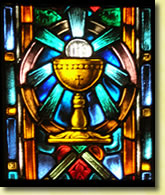
chaliceToday’s lectionary readings are for the feast day of the Martyrs of Uganda. These were a group of Roman Catholic and Anglican men who were killed by King Mwanga on June 3, 1886 for their refusal to renounce their Christian faith. The martyrs went to their deaths singing hymns, and praying for their enemies. The bravery of these young men so impressed the bystanders that many converted to Christianity, and the deaths of the martyrs of Uganda is considered the real beginning of the spread of Christianity in Uganda. There are today around nine million Anglicans in Uganda, and Trinity School for Ministry has close relations with them, especially with Uganda Christian University, and also with their Archbishop, Stanley Ntagali.

Given that today’s lectionary readings are for the feast day of martyrs, it is not surprising that the focus of the readings is on holding on to faith in the midst of doubt. The Matthew and Hebrews passages specifically mention persecution. In Matthew, Jesus says, “Then they will deliver you up to tribulation and put you to death, and you will be hated by all nations for my name’s sake.” (Matt. 24:9). Hebrews speaks of “the former days,” when the hearers were “publicly exposed to reproach and affliction.” Some were imprisoned, and some were “plundered” of their property. (Heb. 10:33-34). The Psalmist mentions another kind of threat to faith: “Though I walk in the midst of trouble, you preserve my life.” (Ps. 138:7). Jesus’ Parable of the Sower mentions a third threat to faith: those who are distracted by the “cares of the world and the deceitfulness of riches and desires for other things.” (Mark 4:18).

These passages might be discouraging. They indicate that it is a normal part of the Christian life to experience doubt, to be tempted to abandon one’s faith, to just give up on being a Christian. I would suggest that these passages are actually cause for encouragement. They give us advance warning that being a disciple of Jesus is not all picnics in May, or singing “I’ve got peace like a river in my soul” when we’re at summer camp, or the first day of June Term at seminary. They tell us that if you are a Christian, and you take the thing seriously, there is going to come a time when you are going to wonder, “What was I thinking?” And, “Is it too late to get out of this?” They also tell us that when it comes to reasons for doubting your faith, there is nothing new under the sun. (more…)

March 1, 2013

Grace That is Greater Than All our Sin: A Lenten Sermon

Filed under: Sermons — William Witt @ 10:03 pm

Exodus 3:1-15
Psalm 103
I Corinthians 10:1-13
Luke 13:1-9

The Prodigal SonWhen I was a doctoral student at the University of Notre Dame, there was a less than charitable joke among the graduate students about one of the the priests at the local church many of us attended – that he had only two sermons, a love sermon and a sin sermon, that he was for the first and against the second, and he would preach one or the other every Sunday. If I were that priest this morning, the readings would leave me with a dilemma. I could preach my love sermon, in which case I would preach on the Old Testament readings. Or I could preach my sin sermon, in which case I would preach on the New Testament readings. But I couldn’t preach on both.

However, if I am going to be responsible to my task as preacher, I think I need to be honest with the readings the lectionary gives me. That means I have to preach on both. And I have to ask how what the Bible says about love is connected to what the Bible says about God’s judgment of sin – because that’s what the passages are about. My starting point will be Psalm 103, where we find a clue in the Hebrew word hesed,which is usually translated in English as “loving kindness” or “steadfast love” and appears several times in the Psalm. The Psalm begins: “Bless the Lord, O my soul, and all that is within me, bless his holy name!” It continues in verse 4, “who crowns you with steadfast love and mercy.” In verse 8, “The LORD is merciful and gracious, slow to anger and abounding in steadfast love.” In verse 11, “As high as the heavens are above the earth, so great is his steadfast love toward those who fear him.” In verse 17, “The steadfast love of the Lord is from everlasting to everlasting on those who fear him.” This word translated “steadfast love” is not the sentimental love of pop ballads: “What the world needs now is love, sweet love, It’s the only thing that there’s just too little of.” Or the Beatles’ “All you need is love.” It is certainly not what our culture currently means by “tolerance” or “inclusiveness.” (more…)

January 14, 2013

It’s about communion! But communion with whom??

Over at Church of the Holy Communion in Charleston, South Carolina, Fr. Dow Sanderson speaks about his decision to remain in the Episcopal Church:

I especially urge those of you who feel that you must leave your church home, in these difficult times, and seek another Anglican “safe haven”. Like so many things in this broken and highly polarized world, some would frame this discussion as simply a choice between Biblical, Orthodox Truth on the one hand, and very progressive, liberals on the other.   This simply is not true.  In fact, the overwhelming majority of Anglo-Catholics in the United States remain a part of the Episcopal Church and have absolutely no intention of doing otherwise.  These would include, of course, very famous places like St. Paul’s in Washington, Church of the Advent in Boston, St. Thomas, Fifth Avenue in New York, St. John’s in Savannah, to name just a few.

What is at stake here is Communion. Anglicanism, in all its expressions, has always claimed to be something more than just a church of the Reformation.  Reformed, yes, but through our ties to the ancient See of Canterbury, we have depth of Tradition and continuity with the Apostolic Church that has always been highly valued.

I certainly think that people of good conscience can remain in The Episcopal Church. At the same time, Fr. Sanderson begs a number of questions. Foremost, he states that the question is one of “communion.” But this begs the question, “communion with whom?” The Catholic tradition is quite clear that communion is only possible with those who hold the Catholic faith. One of the better books on this subject is Werner Elert’s Eucharist and Communion in the First Four Centuries (Concordia Publishing House, 2003). St. Athanasius was not in communion with the heretic Arius. St. Cyril of Alexandria was not in communion with Nestorius. St. Augustine was not in communion with the Donatists. After the ecumenical councils of the early centuries, those who refused to subscribe to them were no longer in communion with the Catholic Church. For example, the Copts refused to recognize Chalcedon, and have been out of communion with the Orthodox churches to this day. Rome and Orthodoxy do not agree on the role of the pope, and so they have been out of communion since 1054. And, of course, Anglicans have been out of communion with Rome since Henry VIII.

The second question that Fr. Sanderson fails to address has to do with canon law and the role of the bishop in a diocese. As a priest in a diocese, what is one’s obligation when one’s bishop is deposed for “abandoning the communion” when he has not in fact done so? Bishop Mark Lawrence did not leave the Episcopal Church. He was kicked out. He was kicked out based on the misuse of a canon that was intended to be used for clergy that really had left the Episcopal Church and joined another denomination. But Bishop Mark was actually trying to keep the Diocese of South Carolina in TEC, not leave. In a case of double jeopardy, Bishop Lawrence was re-tried (without a trial or representation) on charges that had already been dismissed a year ago. Presiding Bishop Katharine Jefferts Schori stated that she had accepted “the renunciation of the ordained ministry in the Episcopal Church of Mark Lawrence,” although TEC’s canons state that such renunciation must be received in writing, and Bishop Lawrence has denied that he made such a renunciation.

So the Presiding Bishop’s claim that Bishop Mark had “abandoned the communion,” was, at the least, a very creative interpretation of TEC’s canon law.. To be blunt, Bishop Mark did not abandon communion. TEC broke communion by deposing him. It was only after TEC violated its own canon law by deposing Bishop Mark that South Carolina left TEC. Moreover, the Global South bishops (who represent the majority of bishops in the Anglican Communion) have refused to recognize the deposition of Bishop Lawrence, and they continue to recognize Bishop Lawrence as the legitimate bishop of South Carolina: “We want to assure you that we recognize your Episcopal orders and your legitimate Episcopal oversight of the Diocese of South Carolina within the Anglican Communion.” So the question of “communion” is not a straightforward one.

Given that Bishop Mark’s deposition was contrary to TEC’s own canons, it would seem that Bishop Mark still the legitimate bishop of the Diocese of South Carolina, and, as a priest in that diocese, Sanderson either acknowledges the legitimacy of TEC’s deposition, or not. By placing himself under TEC’s authority in South Carolina, Fr. Sanderson is making a choice. He is choosing to be in communion with TEC. But he is also choosing to refuse to be in communion with Bishop Lawrence, who, until TEC wrongfully deposed him, was Fr. Sanderson’s bishop.

When I lived in Boston, I attended Church of the Advent, which Fr. Sanderson mentions, for a year or so. Fr. Sanderson finds it significant that the Church of the Advent remains in TEC. However, I know something of that story. During the time I lived in Boston, Advent survived a near schism when the unique governing board at Advent (a “corporation,” not an elected vestry) attempted to leave TEC (not over doctrine) and take the building with them. But the majority of the congregation did not agree with the corporation, and the matter went to court. The congregation won. The corporation lost. But that set a legal precedent. The building belonged not to the corporation, but to the diocese. The current congregation at Advent has not left, and could not leave, because they would lose their building to the diocese.

When I attended Advent, the average Sunday attendance (ASA) was around 400. TEC’s statistics page indicates that it is now around 250. So the Church of the Advent has not left TEC. But somewhere around a third of its Sunday attendees have. When I attended, Advent had two kinds of members, those who were serious Anglo-Catholics, and those who attended because they liked the beautiful music and liturgy. I cannot be certain, but I would imagine that the vast majority of those who no longer attend Advent on Sunday mornings were the serious Anglo-Catholics. Those ones who still keep coming are likely those who come for the music.

So what’s my point? My point is not to criticize Fr. Sanderson for his decision to remain in the Episcopal Church. For those of us who are committed to orthodox Anglicanism, and have struggled with the Episcopal Church crisis over the last decade or more, where we end up is never simple. People can stay, and they can leave, and both decisions can be made in good conscience.

At the same time, Communion is important. But communion is also a choice, and a necessary choice that we all must make. To choose to be in communion with some is by necessity to choose not to be in communion with others. If one stays in the Episcopal Church, one has not chosen “communion” over non-communion. One has chosen communion with some (such as Presiding Bishop Katharine Jefferts Schori) over others (such as Bishop Mark Lawrence). Unfortunately, it is impossible to choose both, and I would suggest that it is the Episcopal Church that has forced that decision on the orthodox, not the reverse.

January 5, 2013

New Article: What is Anglican Theology?

Filed under: Anglicanism,Theology — William Witt @ 10:06 pm

After a lengthy absence — Busy semester! Lots of grading! — I’ve posted a new article entitled “What is Anglican Theology?” Because of its length, I have posted it as a “page” rather than a blog post.

It can be found here. Enjoy!

October 27, 2012

Living Under Judgment: A Sermon

Filed under: Sermons — William Witt @ 5:19 pm

59:1-19
Psalm 13
Hebrews 5:12-6:121
Mark 10:46-52

Christ the JudgeThere are times when the preacher looks at the lectionary readings and prefers to preach on the gospel text, but knows that would be a cop-out. This is one of those mornings. There’s a reason we have a lectionary, and it is important to preach on the readings we are given. So here goes.

I am going to suggest that there is a common theme in the lectionary readings this morning. They all deal with God’s judgment in a way that makes us uncomfortable. The uncomfortable part is that they deal with judgment in the lives of believers. This does not fit into the standard Christian narrative of creation, fall, redemption. In the standard narrative, God’s judgment applies to sinners. In the atonement, Christ takes on God’s judgment, and sinners are forgiven. Those who repent and place their faith in Christ no longer stand under God’s judgment. As Paul writes in Romans, “There is therefore no condemnation for those who are in Christ Jesus.” (Rom. 8:1)

Yet a common theme of the readings this morning is that even after redemption, judgment continues, and it is a divine judgment toward believers, of whom we should be able to say “there is no condemnation.” Despite divine grace, despite divine forgiveness, despite no condemnation, Scripture seems to speak at times as if there is judgment after all. What do the passages say?

In the Old Testament reading from Isaiah, the prophet speaks of a judgment on account of ongoing sin. “Behold, the Lord’s hand is not shortened that it cannot save, or his ear dull, that it cannot hear, but your iniquities have made a separation between you and your God.” (Isaiah 59:1-2) This is not a message of judgment against the nations, against those who have worshiped other gods. This is a message of judgment against those who call the Lord, the God of Israel, their God. The prophet puts himself in the place of Israel, of those who know that they stand under divine judgment: “Justice is far from us, and righteousness does not overtake us, we hope for light, and behold darkness, and for brightness, but we walk in gloom.” (59:9-10). He speaks for those who are conscious of their sin: “We hope for justice, but there is none, for salvation, but it is far from us. For our transgressions are multiplied before you, and our sins testify against us; for our transgression are with us, and we know our iniquities.” (59:12-13). (more…)

October 8, 2012

Jesus and the Canaanite Woman

Filed under: Sermons — William Witt @ 5:22 am

I came across the following sermon, which I preached ten years ago, and did not remember having written. I think some might find it helpful.

Matthew 15:21-28

Canaanite WomanWe’re sometimes told that the basic message of the Bible is very simple, something that even a child can understand.  There is a certain truth to that way of looking at things.  After all, the Bible contains many stories, and stories are supposed to be easy to read, and easy to understand.  Think of the Christmas story.  Almost every church has a Christmas pageant in which children play the roles of Joseph and Mary, the baby Jesus, the shepherds and wise men, the angels, and sometimes even the sheep and donkey.  At the same time, even the Christmas story is not so simple as we sometimes think it is–preachers and theologians have been coming up with sermons and books about Christmas for two thousand years

But there are other passages in the Bible that are not at all simple, not at all easy to understand.  This morning’s gospel reading is a classic example.  This morning’s gospel reading contains one of the so-called “hard sayings” of Jesus.  If you read the gospels or even listen to the gospel lectionary readings on Sunday morning for any length of time, you will eventually encounter them.  To save your life, you have to take up your cross and follow Jesus.  Whoever does not hate his father or mother or even his own life cannot follow Jesus.  It is easier for a camel to go through the eye of a needle than for a rich man to enter the Kingdom of God.  Let the dead bury their dead.

In this morning’s gospel, a mother comes to Jesus, desperate for help for her sick daughter.  Like any good mother, she cares for her daughter.  She has heard that Jesus has the power to heal, and she comes to him, begging for help.  He is probably her last resort.  No one else has been able to help.   Nothing else has worked.    Jesus responds to her request by calling her a dog.  That would be an insult in any language, in any culture, at any time, but in Jewish culture at that time, it was one of the worst insults that a Jew could think of to use for a Gentile.

How do we respond to such passages of scripture?  The simple approach is just to avoid them.  A smart preacher would preach on the OT reading this morning.  Or we might just not bother with the Bible at all.  I heard an older woman say recently  that she didn’t read the Bible anymore because it was full of contradictions.  There are a lot of people who are atheists because they have read passages like this in the Bible.  After all, how can we say that Jesus is the Son of God or that he never sinned when the Bible contains passages like this, where Jesus acts in a manner that seems unloving, even cruel?
(more…)

August 27, 2012

How to be Happy: Some offhand remarks

Filed under: Ethics,Spiritualty,Theology — William Witt @ 9:28 pm

Over at StandFirm, Sarah Hey has interrupted the usual grousing to post “A Few Thoughts on Happiness: Is Happiness A “Moral Obligation”?”. This led to the following offhand remarks.

Melancholy While Aristotle (and Christian eudaemonists like Augustine and Thomas Aquinas and Richard Hooker) granted that beatitude (translated “happiness,” but more like “complete well being”) was correlated with character, they saw it as a byproduct of something else, namely doing a worthwhile activity.  To set out to pursue happiness in itself led to unhappiness.  However, doing something inherently worthwhile, and doing it well, can lead to happiness.

This is the unexpressed assumption in Ignatius Loyola’s Spiritual Exercises, the intent of which is to help sort out one’s vocation.  One begins not by asking “What makes me happy?,” but “What do I love?”

How to be happy? Pursue those things you love doing, and, to the extent it is possible, do good.  Don’t pursue happiness for its own sake.  Be aware that if you’re unhappy, that may be a sign that you need to change something you’re doing.

May be, not must be. Our ancestors were very savvy about the passions (not to be equated with the emotions, full stop), and recognized that some people just had a disposition to melancholy.

The most significant way in which Augustine, Thomas Aquinas, and Richard Hooker  differ from Aristotle on happiness is that Aristotle believed neither in a personal God nor in an afterlife.  Like so many of our contemporaries, Aristotle believed that if we were going to be happy, it had to be here and now. In contrast, the Augustinian tradition recognizes that God is the Greatest Good (summum bonum), and true happiness can be found only in the beatific vision (seeing God “face to face” and enjoying him forever). This is what we are made for, and it is the fuel that drives all our seeking for happiness.  As Augustine expressed it at the beginning of the Confessions: “You have made us for yourself, and our hearts our restless until they rest in you.” (more…)

August 20, 2012

The Wisdom of the Cross: A Sermon

Filed under: Sermons — William Witt @ 5:48 am

Proverbs 9:1-6
Psalm 147
Ephesians 5:15-20

CrossThe theme of wisdom is prominent in today’s lectionary readings. The selection from Proverbs begins “Wisdom has built her house; she has hewn her seven pillars.” (Prov. 9:1) This is part of a lengthy section of several chapters in Proverbs in which wisdom is personified in the figure of a woman who appeals to the reader to flee the way of folly and pursue the way of wisdom instead. This is not surprising, since Proverbs is one of those books in the Old Testament that is classified as “wisdom” literature. But the theme appears in our other texts as well. The Psalm tells us: “Great is Our Lord and mighty in power/ There is no limit to his wisdom.” (Ps. 147:5, 1979 BCP translation) In Ephesians, Paul writes: “Look carefully how you walk, not as unwise but as wise.” (Eph. 5:15) Although it is not as immediately evident, even the gospel passage in John echoes this wisdom theme, I think. We’ll look at that in a few moments. I would like to speak a little about this theme of wisdom this morning, first in Scripture, but also how it applies to our own lives as Christians.

When the Bible speaks of wisdom, it often does so by contrasting the two different paths of Wisdom and Folly, or sometimes by contrasting genuine Wisdom, with a “worldy wisdom,” that thinks it is wise, but is actually foolish. Unfortunately, as it so often does, the lectionary greatly shortens our readings this morning so that it is not obvious, but the original passages all make this contrast. In Proverbs, the first half of the chapter portrays Wisdom as a female character who calls out to a young man: “Come, eat of my bread and drink of the wine I have mixed. Leave your simple ways, and live, and walk in the way of insight.” (Prov. 9:5). In the last part of the chapter, Lady Wisdom is contrasted with Folly, who is also portrayed as a female figure, and who uses much the same invitation: “The woman Folly is loud,” says Proverbs. “She sits at the door of her house, . . . calling to those who pass by . . . ‘Whoever is simple, let him turn in here!’ And to him who lacks sense, she says: ‘Stolen water is sweet, and bread eaten in secret is pleasant.” (v. 13-17) Similar invitations, but with very different consequences. (more…)

April 15, 2012

Icons of Christ: A Sermon Preached at the Ordination of David Booman to the Priesthood

Filed under: Anglicanism,Sermons — William Witt @ 2:59 am

Isa. 6:1-8
Psalm 119:33-40
Phil. 4:4-9
John 10:1-16

Sheperd IconDavid,

I want to thank you for asking me to preach at your ordination. I am a layperson, which means that I am a sheep, not a shepherd. It is a great honor for a sheep to address someone who is on the verge of becoming a shepherd. Perhaps when you’ve been a sheep as long as I have, and you’ve had the dubious privilege of observing more shepherds than I can count, you may be able to give some advice to a shepherd who is about to be turned loose on the flock. Of course, not all metaphors hold up completely. I’ve also been a lay person long enough to know how lay people too often treat their priests. A lot of these sheep have teeth. So be forewarned, you’re also a shepherd who is being turned loose in the midst of wolves, some of whom are dressed up just like sheep.

There is another image besides Shepherd that the church applies to those in ordained ministry. You will be ordained this morning to be a priest. What is a priest? If we look to the epistle to the Hebrews, we read: “[W]e have such a high priest, one who is seated at the right hand of the throne of Majesty in heaven, a minister in the holy places, in the true tent that the Lord set up, not man.” (Heb. 8:1) What is a shepherd? In our gospel reading this morning, we read “I am the Good Shepherd. The Good Shepherd lays down his life for the sheep.” (John 10:11) So my first observation is that there is only one. Jesus is the One High Priest, and Jesus is the the One Shepherd.

The Reformation and Catholic traditions divide at this point. The Reformation tradition says that, because Jesus Christ is the one High Priest, the ordained are not priests. The Catholic tradition says that because there is the one High Priest, the ordained are those who share in Christ’s priesthood. I am going to engage in some typical Anglican fudge here by quoting the Anglican Divine George Herbert. In The Country Parson, Herbert writes: “A Pastor is the Deputy of Christ for the reducing of Man to the Obedience of God.” Herbert goes on to say that, after Christ’s resurrection and ascension, “Christ being not to continue on earth, but after he had fulfilled the work of Reconciliation, to be received up into heaven, he constituted Deputies in his place, and these are Priests.” Herbert says that the priest does that which Christ did, by Christ’s authority, as his “vice-regent.” Most important, however, the priest also does it “after [Christ’s] manner.”
(more…)

March 27, 2012

I get mail . . . about earthquakes

Filed under: Philosophy,The New Atheism,Theodicy — William Witt @ 7:08 am

In response to my post entitled “Why God Does Not Prevent Earthquakes or Tsunamis,” I received some questions from “Rob.” Here’s my somewhat lengthy response.

Rob,

Thanks for your comment.  The above is a blog post, and is by necessity concise.  I could not address every possible question or concern, and some things were implied more than stated, or, I assumed could be concluded reasonably in what I wrote above.  To your questions:

1) Do you think this same sort of destruction of being is both possible and inevitable in the new heavens and new earth, which will be just as contingent as the first heavens and earth? If you don’t think this will be the case, why?

1) By definition, anything that is contingent is subject to the possibility of non-being.  In fact, in a created universe, everything is intrinsically subject to the possibility of non-being at any given moment.  The traditional Christian doctrine of creation is that if God were to cease the act of creation at any given moment, the entire universe would “blink out” like a light bulb.  Even angels, who are “naturally” immortal, because immaterial, are dependent on God’s continuing power to exist at all. (Angels are “naturally” immortal, because they are pure minds.  Not being composed of physical parts, they cannot die should their parts be destroyed. Nonetheless, should God cease to create them, they would cease existing.)

Of course, any universally broad statement like “destruction of being is both possible and inevitable” also has to be understood in light of other premises implicit in the very definition of contingency that would include an “unless.”  Since all contingent being depends on God for its initial and continuing existence (by definition), the inevitability of destruction contains an assumed “all other factors being the same” or “unless” God wills otherwise.  All contingent being always has the possibility of non-being, but, since all contingent being is given by God, there is nothing to prevent God’s continuing to give being.  So, in the new heavens and the new earth, destruction of being is certainly intrinsically possible, since God alone is the source of creation, and could, if he willed, cease to create.  However, destruction of being is not inevitable, if God decides either to preserve intrinsically destructible beings from harm, or to create beings in such a way that that they have an intrinsically natural immortality (something like the angels).  Both possibilities are logically possible.  What God will do is up to him. (more…)

« Newer PostsOlder Posts »

Non Sermoni Res — William G. Witt is proudly powered by WordPress