
William G. Witt

August 7, 2017

Love Inseperable: A Sermon

Filed under: Sermons — William Witt @ 9:01 pm

Nehemiah 9:16-20
Psalm 78
Romans 8:35-39
Matthew 14:13-21

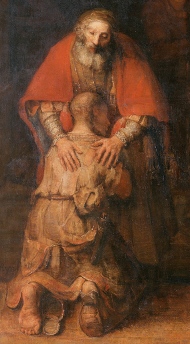
The Prodigal SonEvery reader of the Bible will sooner or later discover certain tensions that are hard to hold together. We discover just such a tension in this morning’s lectionary readings, a tension that has been with the church since its very beginnings. In Paul’s epistle to the Romans, we read one of those classic affirmations of Christian faith: “Who shall separate us from the love of Christ? . . . I am sure that neither death nor life, nor angels nor rulers, nor things present nor things to come, nor powers, nor height nor depth, nor anything else in all creation, will be able to separate us from the love of God in Christ Jesus our Lord.” (Rom. 8:35, 38-39).

Yet when we read the Old Testament readings, it seems that there are lots of things that can separate us from God’s love. The two Old Testament readings are shortened selections from longer accounts of God’s dealings with the people of Israel. In the Psalm we are told that after the Israelites questioned God, “when the Lord heard, he was full of wrath; a fire was kindled against Jacob; his anger rose against Israel, because they did not believe in God and did not trust his saving power.” (Ps. 78:21-22). The lectionary reading omits a good deal of what the Psalm says later, which tells over and over of how Israel kept sinning, and how God responded to Israel’s sin: “[T]hey tested and rebelled against the Most High God and did not keep his testimonies . . . When God heard, he was full of wrath, and he utterly rejected Israel.” (Ps. 78:56, 59). In a later section of the Nehemiah reading, we read about Israel: “they were disobedient and rebelled against you and cast your law behind their back.” And Nehemiah describes God much as did the Psalm: “Therefore you gave them into the hand of their enemies, who made them suffer.” (Neh. 9:26, 27). The Psalm and the passage from Nehemiah seem to say that at least some things can separate us from God’s love.

Certainly there seems to be some kind of tension here between God’s love and God’s justice, and people have often found it difficult to hold both together. In the second century, a heretic named Marcion concluded that there were actually two different Gods – a New Testament God of love who was good, and an Old Testament God of justice who was evil. Marcion’s solution to the problem was to throw out the Old Testament completely. There have been modern Christians who have come to the same conclusion. When I was doing my doctoral studies, I once heard the wife of an Episcopal priest say that the God of the Old Testament is the devil in the New Testament, and she was quite serious. If most Christians don’t go quite so far, there are many Christians who, if they were honest, would admit that the God of the Old Testament sometimes makes them uncomfortable.

But if, as Christians, we take the Bible seriously, then we have to take the whole Bible seriously. In the second century, Irenaeus of Lyons was the church’s first great theologian, and he insisted against Marcion that there is only one God, that there is one Bible with two parts, an Old Testament and a New Testament, and that the God who is the God of Israel in the Old Testament is the same God who is the Father of Jesus Christ in the New Testament. In fact, Irenaeus was the first writer we know of to use the terms Old and New Testament to describe the Bible. As Anglicans, we show that we stand with Irenaeus and not Marcion by using a lectionary that includes readings from both the Old Testament and the New Testament.

How then do we hold this tension between God’s love and God’s justice together? (more…)

July 6, 2017

Robert Jenson on Revisionary Metaphysics

Filed under: Metaphysics,Theology — William Witt @ 7:31 am

Recently, I wrote a book review of a collection of Robert Jenson essays entitled Theology as Revisionary Metaphysics for The International Journal of Systematic Theology.1 Unfortunately, IJST considered the first version of the review to be too long; they wanted a short review, not a review essay. The following contains the bulk of what I omitted, focusing on Jenson’s understanding of “revisionary metaphysics,” and, particularly, on questions of divine immutability and impassibility. I affirm the traditional position, and some might find helpful my interaction with Jenson’s challenge.

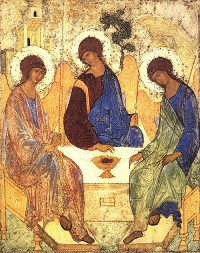
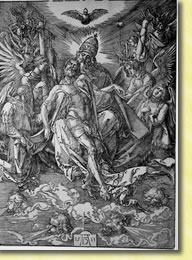
TrinityThere is a dominant sub-theme that pervades Robert Jenson’s book, Theology as Revisionary Metaphysics and provides its title: revisionary metaphysics.2 What does Jenson mean by “revisionary metaphysics”? In the preface, Jenson affirms that insofar as the question “What is it to be?” continues to be asked, Christian theology necessarily has to do with metaphysics; classical Christian theology necessarily interacted with and revised pagan Greek metaphysics to “fit the gospel.” The resulting Christian metaphysics is above all trinitarian and Christological. Jenson’s acknowledged conversation partners include the Cappadocian fathers, Cyril of Alexandria, Thomas Aquinas, “certain Lutherans,” Karl Barth, and Jonathan Edwards (pp. vii-viii).

However, Jenson is also convinced that traditional Christian metaphysics has been influenced too much by Greek metaphysics; in particular, he rejects notions that God is impassible and timeless, doctrines of God that he considers implicitly unitarian or binitarian rather than trinitarian, and Christologies that are adoptionist or Nestorian.3 Several of the essays in this book emphasize these themes. In “Ipse pater non est impassibilis (The Father Himself Is Not Impassible),” Jenson points to the Hellenistic roots of impassibility: Parmenides, Plato, Aristotle, and the Stoics did not know about the incarnation or the biblical distinction between Creator and creature; for them, the fundamental distinction was between the temporal world and a timeless divine realm (p. 94); Jenson insists that if the christological notion that one of the Trinity suffered in the flesh is true, “then the God here referred to by ‘the Trinity’ is not impassible . . . in any sense of impassibility perceptible in the face of the world, it will not do as an attribute of the God of Scripture and dogma.” (pp. 95, 96).

(more…)

June 14, 2017

Bad Rulers and Worse Judges: A Sermon About Our Current Political Situation

Filed under: Sermons — William Witt @ 3:11 am

Deuteronomy 16:18-20; 17: 14-20
Psalm 50
Luke 18:1-8

CrossAs a country, we have been living for the last several years in a political situation that is as divisive as anything I can remember in my lifetime, and things have only become more divisive in the few months since the presidential election. The news media make comparisons to the Vietnam era and to the Watergate scandal, to the cultural and social divisions of the Civil Rights era. I do agree that we’re living through that kind of division again. It’s also true that on the different sides of whatever political divisions we’re facing today, there seems to be a palpable disappointment in the leaders of our country, a kind of feeling among a lot of people that our leaders have failed. But also a loss of faith in the ability of politicians to make any difference.

Despite the angry divisions, there is at least one other commonality. All sides in the current divisions seem to share a common grievance, an outrage over injustice. All sides seem to think that their side has been the victim of outrageous injustices committed against them by the other side.

In this social context, I find this morning’s lectionary readings to have a kind of poignant relevance. The themes of good and bad rulers, and of justice and concern about injustice are common to all three lectionary readings.

The setting of the Deuteronomy passage is Moses’s farewell speech to the people of Israel as they prepare to enter the land of Canaan. In the speech, Moses gives instructions for appointing judges and kings. In both cases, the requirements are primarily negative. They explain what is not to be done. Judges are not to show partiality; they are not to take bribes. Positively, they are to care only about justice. (more…)

May 9, 2017

Why I Don’t Take the New Atheism Seriously, Or Penn Jillette on the Bible

Filed under: The New Atheism — William Witt @ 6:04 am

SpaceshipIt turns out that I have a lot in common with Penn Jillette. Because I had watched some YouTube videos on science, the YouTube Bots assumed that I would be interested in (and recommended to me) a YouTube channel called “Big Think.” Big Think advertises itself as “the leading source of expert-driven, actionable, educational content . . . [W]e help you get smarter, faster. We aim to help you explore the big ideas and core skills that define knowledge in the 21st century, so you can apply them to the questions and challenges in your own life.” Sounds impressive. What Big Think actually seems to be is a bunch of videos largely by popular media scientists like Bill Nye (the “Science Guy”), Neil de Grasse Tyson (Nova, Cosmos), Michio Kaku, and “public intellectuals” of the “New Atheist” variety.

If I were to express the underlying logic of many of the videos on Big Think, it would go something like this:

1) We’re scientists and we’re really smart (or maybe we’re not scientists, but we’re still really smart, and we think that scientists are smart too).

2) We don’t believe in God.

Therefore,

3) If you want to be smart (like a scientist) or at least have people think you’re smart (like those of us who aren’t scientists), you won’t believe in God either.

Anyway, YouTube recommended a Big Think video in which Penn Jillette (the magician) explained how he became an atheist. As I said, it turns out that Jillette and I have a lot in common. Both of us were raised in “generic” Protestant churches – what he calls the church of the “covered dish supper.” (I’m assuming that Jillette’s church was generic Liberal Protestant, while mine was generic [very] conservative Evangelical. He was raised Congregationalist; I was raised Southern Baptist.) Both of us were actively involved in high school youth groups connected with our church, and we were both influenced by a “cool” youth group leader. Jillette claims that when he was in high school that he read the Bible “cover to cover.” So did I. Jillette claims that he took theological questions “very seriously,” and read most of the theology books in his local library. I also took theology “very seriously” and I read a lot of books, although I certainly did not read most of the theology books in my local library.

Here’s where the similarities end. Jillette tells his listeners that he made a deal with his parents that he would not have to go to church services if he went to the High School youth group instead. Jillette claims that it was reading the Bible that turned him into an atheist, and that eventually he was asked to leave the youth group because he was using his new-found knowledge to convert other members of the youth group to atheism. Not only did I not leave either my youth group or my church, but for awhile I was the president of the youth group. Far from making me an atheist, reading the Bible became a life-long passion. I continue to read it every day and have read it “cover to cover” numerous times. After high school, I majored in philosophy in college, and later earned both an MA and a PhD in theology. None of this made me an atheist.

So what are the actual arguments that Jillette raises in this video? What about reading the Bible turned him into an atheist? (more…)

February 18, 2017

Division and Reconciliation: A Sermon

Filed under: Sermons — William Witt @ 12:57 am

The following is perhaps the closest I’ve ever gotten to preaching a political sermon. It is also a good example of what to do if you misread the lectionary reading. The epistle text was actually from 1 Cor. 2, which I misread as 1 Cor. 12. Lesson? If you make a mistake, just keep on going. I had the reader read from 1 Cor. 12, and proceeded as if it was supposed to be that way. It turns out that 1 Cor. 12 works just fine as the epistle reading along with the OT passage from Isaiah and the gospel from the Sermon on the Mount.

Isaiah 58:1-12
Psalm 112
Matthew 5:13-20
1 Corinthians 12:1-16

chalice If it is not already obvious, we live in a divided culture these days. Whatever else you might think of Hillary Clinton’s presidential campaign, her motto “Stronger Together” did not seem to work out very well. Although it was not his official campaign slogan, the guy who won had a slogan that seemed to work better: “We’re going to build a wall, and (I’ll paraphrase), somebody else is going to pay for it!” In his inauguration speech, Donald Trump said repeatedly “America First!,” which really means “Us First!,” and obviously implies that someone else is not us, and has to be second. Racial divisions in the last couple of years have been marked by the two contrasting slogans “Black Lives Matter” and “All Lives Matter.” Is it ironic that those claiming that “All Lives Matter” would not likely be caught dead holding a sign that read “Stronger Together”?

The problem of division is not a new problem. It has to do with the question of the “other.” That is, what do we make of the person who is not like me, or the group that is not part of our group? It is also not the simple problem that slogans like “Stronger Together” or “Our Group First” would lead us to believe.

This problem of group identity and group difference, of how we relate to the “other,” is a key theme in two of today’s lectionary readings: the Old Testament passage from Isaiah as well as the epistle reading from 1 Corinthians. Both passages deal with a discrepancy between the worship practice of the covenant community – either Israel or the church – and its actions; both have to do with the problem of the “other.” How do we as Israel or we as a church relate to those who are not members of our community, and how does or should this affect our worship? (more…)

December 18, 2016

A New Page: A Guide to My Essays on Women’s Ordination

Filed under: Theology,Women's Ordination — William Witt @ 10:53 pm

Over on my “Pages” section, I have added a A Guide To My Essays About Women’s Ordination. This likely will prove helpful in navigating the forest.

October 6, 2016

Defeat, Shame, Memory: A Sermon

Filed under: Sermons — William Witt @ 3:04 am

Lamentations 1:1-6
2 Timothy 1:1-14
Psalm 137
Luke 17:5-10

This morning’s lectionary readings contain two of the most difficult passages in all of Scripture. How does the preacher respond to a passage in which the final verse reads “Blessed shall he be who takes your little ones and dashes them against the rock”? (Ps. 137: 9). Certainly the preacher cannot suggest that this is an example to be emulated? “As we go forth this morning, let us remember these words from our Psalm: ‘Blessed shall he be who takes your little ones and . . .’ Uh, Never mind. Let us stand and say the words of the Nicene Creed.” Turning to the Lamentations passage does not make things any easier. Lamentations is probably the most depressing book in the entire Bible. At least the book of Job has a happy ending! There are lots of thoughtful commentaries and theological reflections on the Book of Job. Not so much on Lamentations. Can you imagine someone saying to a seminary student on the day of graduation “Congratulations! I’d like you to give you this commentary on the book of Lamentations to help you with your ministry”?

When we come across passages like this in Scripture, I think it helps to remember that the Bible is not a book, but a collection of books. The Bible does not speak with a single voice, but with many voices. I think it also helps to remember that these are voices in a dialogue. Voices in Scripture ask questions to which sometimes we have to turn to other passages in Scripture to hear the answers. I think that reading the Bible in this way is preferable to the kind of static view that imagines Scripture as a kind of database of theological propositions all of which are speaking with a single voice and saying the same thing. I think it is also preferable to the opposite view that says that the Bible is full of contradictions and so we can pick and choose what we like. Neither approach gives us a clue as to how the church might derive theological or spiritual insight from passages like this morning’s readings.

So I would ask my listeners this morning to hear the morning’s lectionary readings as voices in a dialogue. I am going to focus on three readings: the Psalm, the Lamentations reading, and the epistle reading from 2 Timothy. I would suggest that it is helpful to read each of these passages as asking the single question “Where is God?”

(more…)

July 25, 2016

Abounding in Thanksgiving: A Sermon on Prayer

Filed under: Sermons,Spiritualty — William Witt @ 3:53 am

Genesis 18:20-33
Psalm 138
Colossians 2:6-15
Luke 11:1-13

angelusThis morning’s lectionary readings focus on prayer. The Genesis passage continues the story of three travelers who visit Abraham and promise that he will have a son. One of the visitors is identified to be God, and Abraham has a discussion with God. In fact, Abraham actually argues with God; he haggles with him like someone in a Middle Eastern market. In the Psalm (as in many Psalms), we have a specific example of a prayer: “I give you thanks, O Lord, with my whole heart . . . I bow down toward your holy temple and give thanks to your name.” (Ps. 138: 1-2) In the gospel reading, Jesus teaches his disciples how to pray in Luke’s version of the Lord’s prayer; the next paragraph in Luke contains Jesus’ well known promise about prayer: “And I tell you, ask, and it will be given to you; seek, and you will find; knock, and it will be opened to you. For everyone who asks receives, and the one who seeks finds, and to the one who knocks it will be opened.” (Luke 11:9-10)

In my sermon this morning, I am going to try to answer the question, “What is prayer?” I am going to begin, however, with three examples of misunderstandings of prayer to help make clear what prayer is not.
(more…)

February 14, 2016

I Don’t Get Mail or Anticipatory Responses to My In Persona Christi Argument

Filed under: Theology,Women's Ordination — William Witt @ 8:09 am

The following is a response to some (not recent) criticisms of my argument against the “Catholic” position that women cannot be ordained because only a male priest can represent Christ. To get to my actual response, you’ll need to read past the list of argumentative propositions.

Melancholy In the most recent post in my series on women’s ordination, I addressed the definitive new Catholic argument against women’s ordination, which can be summarized as follows:

If

(a) the priest represents Christ in celebrating the eucharist (acts in persona Christ),

then

(b) the priest must be male

because

(c) Jesus Christ is male

and

(d) only a male priest can represent a male Christ.

Or, conversely

(di) a woman priest cannot represent a male Christ.

However

(ai) the priest does represent Christ in celebrating the eucharist (acts in persona Christi);

Therefore

(dii) a woman cannot be a priest.

Note that in order for the argument to work, each one of the above propositions must be true. However:

If

(a) it is not the case that a priest exclusively or necessarily represents Christ in celebrating the eucharist

or

(d) it is not the case that only a male priest can represent Jesus Christ

because

(c) what is important in representing Christ is something besides his masculinity;

then

(dii) it does not follow that a woman cannot be a priest.

My response to the new Catholic argument can be summarized as follows:

(a) the priest does not necessarily or at least exclusively represent Christ in celebrating the eucharist

because

(ai) on the Eastern model (which has increasingly been adopted in recent ecumenical discussion and revised eucharistic rites), the priest represents the church and so acts in persona ecclesiae.

However if

(ai) the priest represents the church

then either

(b) the priest must be female

because

(c) as the bride of Christ, the church is feminine

and

(d) only a female priest can represent the female bride of Christ;

Or, conversely

(di) a male priest cannot represent a female church.

Alternatively, if

(di) it is possible for a male priest to represent the female bride of Christ

then

(dii) it must be equally possible for a female priest to represent a male Christ

because

(ci) what is important about representing either Christ or the church must be something besides the sexual identity of the priest

or else

(di) is false.

Or, if sexual identity is still crucial, then

(diii) both men and women should be ordained

because,

(div) insofar as the priest represents both Christ and the church, men best represent the male Christ and women best represent the female bride of Christ.

As the argument stands, it is valid. (more…)

December 17, 2015

The King in a Manger: An Advent Sermon

Filed under: Sermons — William Witt @ 6:13 pm

Micah 5:2-5
Psalm 80
Hebrews 10:5-10
Luke 1:39-56

annunciationEvery generation has its crises, and my generation certainly had its share. I grew up on the tail end of the baby boom, and here are some of the things I remember from my childhood: the assassination of a president and his brother. The murders of black people with names like Emmet Till and of three civil rights workers in Mississippi. The burnings of black churches, and police dogs turned loose and fire hoses opened up on black marchers. The assassination of Martin Luther King, Jr. Riots in Watts, Los Angeles. A decade long war in Southeast Asia, and students burning draft cards and chanting “hell, no, we won’t go.” Videos of soldiers and helicopters and machine gun fire in the jungle, and coffins wrapped in flags on the news every night. Students shot dead by national guards troops at Kent State, Ohio. A president who resigned from office in disgrace.

Looking back on all of this, it is quite surprising to think about the kinds of songs that we heard on the radio at the time. Despite deep divisions in the culture, and crisis after crisis that was truly depressing, some of the most popular songs were filled with hope: songs with lyrics like “What the world needs now is love, sweet love.” “This is the dawning of the Age of Aquarius, Harmony and understanding, Sympathy and trust abounding.” “I’d like to teach the world to sing in perfect harmony.” This was not just the left wing hippie counter-culture either. There was a singing group called “Up With People,” who were the short-hair polyester-slacks wearing alternative, but the message was the same – despite all of the bad news that was going on in the culture, there was hope for a better future. This optimism lasted for a couple of decades. As late as 1985, a huge group of popular singers got together to sing about the “world coming together as one” in a charity raising video called “We are the world.”

It would be hard to imagine anything like this optimism in contemporary popular culture. Ever since terrorists drove two airplanes into the World Trade Towers on September 11, 2001 and the economy collapsed in 2008, there has been a massive cultural shift. If there is a single mood that dominates culture today, it would seem to be that of fear. 1 John states that “perfect love casts out fear,” but the converse is true as well. Perfect fear casts out love. (more…)

« Newer PostsOlder Posts »

Non Sermoni Res — William G. Witt is proudly powered by WordPress