
Grace as Participation: Justification and Sanctification
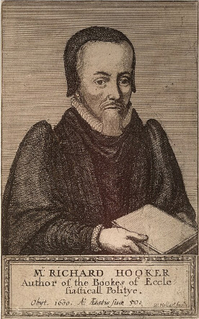
The means by which Richard Hooker understands Christians to participate in the incarnate, crucified, risen and ascended Jesus Christ would seem to be a “real mission” of the Holy Spirit (as opposed to an “appropriation” in which the common work of all three divine persons is ascribed to the Spirit). The anointing by Jesus by the Holy Spirit (at his baptism?) was not for himself only but so that we ourselves through the Spirit might share in that anointing:
Thus much no Christian man will deny, that when Christ sanctified his own flesh, giving as God and taking as man the Holy Ghost, he did not this for himself only but for our sakes, that the grace of sanctification and life which was first received in him might pass from him to his whole race as malediction came from Adam unto all mankind. Howbeit, because the work of his Spirit to those effects is in us prevented by sin and death possessing us before, it is of necessity that as well our present sanctification unto newness of life, as the future restoration of our bodies should presuppose a participation of the grace, efficacy, merit or virtue of his body and blood, without which foundation first laid there is no place for those other operations of the Spirit of Christ to ensue. So that Christ imparteth plainly himself by degrees. (Laws V.56.10)
The “whole church” is united to the “whole Christ” (in his humanity and divinity). The risen Christ is in every part of the church, which lives by his life through “participation.” Hooker writes:
And because the divine substance of Christ is equally in all, his human substance equally distant from all, it appeareth that the participation of Christ wherein there are many degrees and differences, must needs consist in such effects as being derived from both natures of Christ really into us, are made our own, and we by having them in us are truly said to have him from whom they come, Christ also more or less to inhabit and impart himself as the graces are fewer or more, greater or smaller, which really flow into us from Christ.
Christ is whole with the whole Church, and whole with every part of the Church, as touching his Person, which can no way divide itself, or be possessed by degrees and portions. But the participation of Christ importeth, besides the presence of Christ’s Person, and besides the mystical copulation thereof with the parts and members of his whole Church, a true actual influence of grace whereby the life which we live according to godliness is his, and from him we receive those perfections wherein our eternal happiness consisteth. (Laws V.56.10)
There are two ways in which we participate in Christ, partly by imputation (justification), but also partly by infusion (sanctification). We are not only justified or accounted righteous by faith, we also share in the risen Christ’s resurrection life. “Thus we participate Christ partly by imputation, as when those things which he did and suffered for us are imputed unto us for righteousness; partly by habitual and real infusion, as when grace is inwardly bestowed while we are on earth, and afterwards more fully both our souls and bodies made like unto his in glory.” Hooker states that the first thing “infused” into our hearts is the “Spirit of Christ,” from which everything else follows. The Spirit unites us to Christ our head thus enabling the church to become Christ’s body:
From hence it is that they which belong to the mystical body of our Saviour Christ, and be in number as the stars of heaven, divided successively by reason of their mortal condition into many generations, are notwithstanding coupled every one to Christ their Head, and all unto every particular person amongst themselves, inasmuch as the same Spirit, which anointed the blessed soul of our Saviour Christ, doth so formalize, unite and actuate his whole race, as if both he and they were so many limbs compacted into one body, by being quickened all with one and the same soul. (Laws V.56.11)
Hooker makes a clear distinction between justification and sanctification that had not yet appeared in Thomas Cranmer’s theology. Cranmer instead distinguished between “lively faith” and a “dead faith.”1 Hooker more helpfully uses the terminology that he found in John Calvin. He writes:
There is a glorifying righteousness of men in the world to come; and there is a justifying and a sanctifying righteousness here. The righteousness wherewith we shall be clothed in the world to come is both perfect and inherent. That whereby we are justified is perfect, but not inherent. That whereby we are sanctified, inherent, but not perfect. (Learned Discourse on Justification)
Hooker thus distinguishes between three kinds of righteousness. Eschatological righteousness, the righteousness of the world to come, will be perfect and inherent. When Jesus Christ returns and there is a new heaven and a new earth, we will be made inherently and completely righteous.
Concerning our present righteousness, Hooker distinguishes between justification and sanctification. The righteousness whereby we are justified by faith is perfect, but it is not an inherent righteousness because we continue to sin. The righteousness whereby we are sanctified is inherent, but it is not yet perfect. Sanctification thus involves a real ontological change, which is a progression in righteousness. We move forward, we fall back, we sin, we repent.
Concerning justification, Hooker writes:
Then, although in ourselves we be altogether sinful and unrighteous, yet even the man who in himself is impious, full of iniquity, full of sin, him being found in Christ through faith, and having his sin in hatred through repentance, him God beholdeth with a gracious eye, putteth away his sin by not imputing it, taketh quite away the punishment due thereunto, by pardoning it, and accepteth him in Jesus Christ as perfectly righteous, as if he had fulfilled all that is commanded him in the law: shall I say more perfectly righteous than if himself had fulfilled the whole law? I must take heed what I say; but the Apostle saith, “God made him who knew no sin to be sin for us, that we might be made the righteousness of God in him” [2 Cor. 5:21]. (Learned Discourse on Justification)
This is a Reformation understanding of justification as imputation. Hooker is saying that in God’s sight, when we exercise faith in Christ, God accepts us and considers us as righteous even though we are not (inherently) righteous in ourselves.
Such we are in the sight of God the Father as is the very Son of God himself. Let it be counted folly, or phrensy, or fury, or whatsoever. It is our wisdom and our comfort; we care for no knowledge in the world but this: that man hath sinned and God hath suffered; that God hath made himself the sin of men, and that men are made the righteousness of God. (Learned Discourse on Justification)
This is Hooker’s way of saying that justification by faith is really about justification by Christ (alien righteousness).
But then Hooker adds concerning sanctification, which is a real and inherent infused righteousness:
Now concerning the righteousness of sanctification, we deny it not to be inherent; we grant that, unless we work, we have it not; only we distinguish it as a thing in nature different from the righteousness of justification: we are righteous the one way by the faith of Abraham, the other way, except we do the works of Abraham, we are not righteous. (Learned Discourse on Justification)
Martin Luther made a distinction between two kinds of righteousness, which is similar to the point Hooker makes here.2 If justification is forensic alien righteousness, there nonetheless is also an inherent transforming righteousness in sanctification.
Predestination
The issue of predestination is controversial in Anglican theology because of Article 17 in the Thirty-Nine Articles, which some evangelical Anglicans have interpreted to mean that Anglicans are necessarily committed to a Calvinist predestinarian soteriology. To the contrary, the theology of predestination is not clear-cut in Anglicanism.3 The seventeenth article speaks only of positive, not double predestination. It says nothing about those who are not predestined, or whether predestination is conditional or unconditional. Historically, Anglicans have been similar to post-Reformation Roman Catholics in this regard. There have been historical disagreements in Roman Catholicism between Dominicans and Jesuits concerning predestination, but the official position of the Roman Catholic church is that both hold acceptable positions.
Hooker affirmed Article 17, but he was not a Calvinist. He did affirm the following.4
Concerning the relationship between necessity and contingency, divine foreknowledge and human free will, Hooker affirmed a position similar to that of Thomas Aquinas. Some things are possible; some things are necessary. Some things are contingent in themselves, but become necessary given certain prior conditions. For example, stubble is contingently flammable, but necessarily burns given the presence of flame – unless God’s omnipotent power overwhelms the course of nature. That a human being can walk is contingent in itself in that it is not necessary. The same person could also not walk.
God’s foreknowledge is certain in the sense that God foreknows all things, whether necessary or contingent in themselves. However, God’s foreknowledge knows things in the manner in which they exist – as either contingent or necessary. God’s foreknowledge does not then make the contingent to be necessary. God foreknows both the betrayal of Judas and the denial of Peter, but it does not make either to be have been necessary. While God “foresees” the existence of sin, God’s foreknowledge does not make sin necessary. Otherwise, God would be the author of sin.5
Concerning predestination itself, Hooker affirmed first that Jesus Christ is the primary object of predestination.6 Ephesians 1 is the biblical referent, but Hooker’s view is parallel here to that of the Dutch theologian Jacob Arminius (1549-1609), and anticipates the views of Karl Barth, the major Reformed theologian of the twentieth century.
Second, Hooker puts himself at odds with Calvinist “limited atonement” by affirming the universality of the atonement. Hooker insisted that Christ died for all sinners, and God sincerely wills the salvation of all: “God being desirous of all men’s salvation, according to his own principal or natural inclination, hath in token thereof for their sakes, whom he loved, bestowed his beloved Son” (“Fragments,” Laws, vol. 2:523).
Third, Hooker insisted that “sufficient grace” has been given to all that they might be saved. Hooker agreed with Calvinism (against Pelagianism and semi-Pelagianism) that faith is a gift of God, and that apart from God’s grace, we cannot have faith. Where Hooker disagreed, at least with traditional Calvinism, is that the grace which is necessary and sufficient to exercise faith is something that everyone receives in order that they might be saved: “In sum, the grace of God hath abundantly sufficient for all. We are by it that we are, and at the length by it we shall be that we would. What we have, and what we shall have, is the fruit of his goodness, and not a thing which we can claim by right or title of our own worth” (“Fragments,” Laws, vol. 2:502).
Hooker’s fourth point, in which he would disagree both with Calvin and with Luther in The Bondage of the Will is that this grace can be refused. It is not irresistible. The difference between the elect and those who are not elect does not then concern whether or not they receive grace, but with whether or not they refuse the grace that they have received: “For seeing the natural will of God desireth to impart unto all creatures all goodness . . . . in that respect his desire is, that all men were capable of inward grace, because without grace, there is no salvation. Now there are those that . . . have resisted the Holy Ghost, that the grace which is offered, they thrust from them . . .” (Fragments, Laws vol. 2: 537). Hooker would agree with Prosper of Aquitaine, an important church father shortly after the time of Augustine, “That some are saved is the gift of God. If any perish, it is because of their own fault.”
A quotation from the Appendix to the Hooker’s Laws of Ecclesiastical Polity, summarizes his position:
[W]e have seen the general inclination of God towards all men’s everlasting happiness notwithstanding sin: we have seen that this natural love of God towards mankind, was the cause of appointing or predestinating Christ to suffer for the sins of the whole world: we have seen that our Lord, who made himself a sacrifice for our sins, did it in the bowels of a merciful desire that no man might perish: We have seen that God nevertheless hath found most just occasion to decree the death and condemnation of some: we have seen that the whole cause, why such are excluded from life, resteth altogether in themselves: we have seen that the natural will of God being inclined towards all men’s salvation, and his occasioned will having set down the death but of some in such consideration as hath been shewed; it must needs follow, that of the rest there is a determinate ordinance, proceeding from the good pleasure of God, whereby they are, and have been, before all worlds, predestinated heirs of eternal bliss. (“Fragments,” Laws, vol. 2:531)
Given Hooker’s significance, and that he does not represent a strict Calvinist position, he makes clear that there has been (and can be) more than one position concerning predestination among Anglicans.7
Sacraments
The notion of union with and participation in the permanent humanity of the risen Jesus Christ is key to Hooker’s understanding of the sacraments.
Hooker rejects as “offensive” the Zwinglian notion that sacraments have no other purpose than to “teach the mind.” If the sole purpose of the sacraments were instruction, the proclamation of the Word would be more effective (Laws V.57.1). Sacraments are indeed signs, but they effect what they signify. They are “means” of grace:
For we take not baptism nor the eucharist for bare resemblances or memorials of things absent, neither for naked signs and testimonies assuring us of grace received but (as they are indeed and I verity) for means effectual whereby God when we take the sacraments delivereth into our hands that grace available unto eternal life, which grace the sacraments represent or signify. (Laws V.57.5)
Sacraments serve many functions and this diversity in part accounts for disagreements in the church. Sacraments serve as “bonds of obedience to God,” memorials of Christ’s benefits, warrants for the security of belief, marks by which the church is distinguished from those who are strangers to Christ (Laws V.57.2).
However, the chief “force and virtue” of the sacraments consists in that they are “marks” (“plain and visible token[s]”) by which we know that God imparts “invisible” grace, and “conditional means” that God requires of those who receive grace. Hooker uses the terminology of “instrumental causality” (parallel to language used by Aquinas) to describe the function of sacraments.8 Sacraments are “necessary” not in the sense that water or bread and wine in themselves have any “vital force or efficacy,” but that it is God’s will to “ordinarily” bestow grace through the sacraments. Sacraments are not “physical,” but “moral instruments” of salvation (Laws V.57.4). Hooker summarizes the necessity and purpose of the sacraments:
This is therefore the necessity of sacraments. That saving grace which Christ originally is or hath for the general good of his whole Church, by sacraments he severally deriveth into every member thereof. Sacraments serve as the instruments of God to that end and purpose, moral instruments, the use whereof is in our hands, the effect in his; for the use we have his express commandment, for the effect his conditional promise: so that without our obedience to the one, there is of the other no apparent assurance, as contrariwise where the signs and sacraments of his grace are not either through contempt unreceived, or received with contempt, we are not to doubt but that they really give what they promise, and are what they signify. For we take not baptism nor the eucharist for bare resemblances or memorials of things absent, neither for naked signs and testimonies assuring us of grace received before, but (as they are indeed and in verity) for means effectual whereby God when we take the sacraments delivereth into our hands that grace available unto eternal life, which grace the sacraments represent or signify. (Laws V.57.5)
Hooker uses the traditional Aristotelian distinction between form and matter to describe the nature of sacraments in line with the Augustinian definition of sacraments as external signs of inward grace. The “essential form” of sacraments consists of “sacramental words”; the “matter” consists of the physical “sacramental elements.” The “substance” of the sacrament consists of the “grace” that is offered, of the “element” that signifies the grace, and of the “word” that expresses what is done in the sacrament. In addition, there is the “known intent of the church.” These are the four necessary conditions of a sacrament (Laws V.58.2-3).
Baptism
In a manner similar to Cranmer, Hooker both coordinates and distinguishes between the sacraments of baptism and the Eucharist:
We receive Christ in baptism once as the first beginner, in the eucharist often as being by continual degree the finisher of our life. By baptism therefore we receive Christ Jesus, and from him that saving grace which is proper unto baptism. By the other sacrament we receive him also, imparting therein himself and that grace which the eucharist properly bestoweth. (Laws V.57.5)
Drawing on Jesus’ statement to Nicodemus in John 3:5 that it is necessary to be born of “water and the Spirit” to enter the kingdom of God and other New Testament passages such as Eph. 5:26 and Titus 3:5, Hooker concludes that the two things “plainly and expressly specified” concerning baptism are water and the Spirit: “Water as a duty required on our parts, the Spirit as the gift that God bestoweth” (Laws V.59.1, 4; 60.1).
The rite of baptism does not in itself possess any “natural” or “supernatural” power. However, the grace given in baptism is that it is not only a “sign” of what we receive, but also the “instrument” by which we “receive grace.” Those who (rightly) receive baptism are “incorporated into Christ” and obtain both the “saving grace” of imputation that removes guilt, but also the “infused divine virtue of the Holy Ghost” (Laws V.60.2). Baptism is the “door” of our entrance into God’s house, the beginning of new life, a seal of the grace of election, and the first step to sanctification (Laws V.60.3).
Hooker addresses a number of what could be called “side issues” in the discussion. In response to those who challenge the sacramental interpretation of the New Testament passages to which he refers, Hooker appeals to the primacy of the “literal interpretation. ” Where a literal reading makes sense, the reading furthest from the literal is the worst (Laws V.59.1-3). While using the language of “necessity” in reference to baptism, Hooker grants the historical exceptions for those whose baptism has been prevented (martyrs), to infants of Christian parents (no limbo) and others who would have received baptism if they could: “[T]hose sentences which make sacraments most necessary to eternal life are no prejudice to their salvation that want them by some inevitable necessity, and without any fault of their own” (Laws V.60.7).
The Eucharist
Hooker begins his discussion of the Eucharist by making a distinction that has relevance for current controversies concerning an interpretation of “open communion” that invites reception by the unbaptized: “The grace which we have by the holy Eucharist doth not begin but continue life. No man therefore receiveth this sacrament before Baptism, because no dead thing is capable of nourishment. That which groweth must of necessity first live” (Laws V.67.1).
As already mentioned in essays on Thomas Cranmer and John Jewel, the theology of the Eucharist was controversial between Protestants as much as between Protestants and Roman Catholics. Hooker addressed the question of sacramental reconciliation between different church bodies by suggesting that it should be possible to reach confessional unity concerning the Eucharist based on the following points of agreement.
First, “this sacrament,” meaning the Eucharist, “is a true and a real participation of Christ, who thereby imparteth himself even his whole entire Person as a mystical Head” unto all that receive him, and that everyone who receives incorporates or unites himself or herself into Christ as a “mystical member” of Christ (Laws V.67.7).
Second, in the same sacrament, Christ also gives the Holy Spirit to those whom he communicates himself that they might be sanctified even as the Holy Spirit sanctified Christ their head (Ibid). In the essay on Thomas Cranmer’s eucharistic theology, I discussed the Eastern Orthodox understanding of the epiclesis as the prayer by which the presiding minister invokes the Holy Spirit to descend on the elements of bread and wine, and asks the Spirit to transform the elements and the gathered community in order unite the worshiping church to the risen Christ. Hooker’s understanding is different – not that the Spirit unites us to Christ, but that through Christ’s presence, he gives the Holy Spirit to the church.
Third, “what merit, force or virtue soever there is in his sacrificed body and blood, we freely, fully, and wholly have it by this sacrament” (Ibid). Here we see Hooker’s use of sacrificial language in reference to the sacrament.
Fourth, the effect of the sacrament is a “real transmutation” (or change) “of our souls and bodies from sin to righteousness, from death and corruption to immortality and life” (Ibid).
Fifth, since bread and wine in themselves are not capable to bring about these effects, we are to trust in the strength of Christ’s “glorious power who is able and will bring to pass that the bread and cup which he giveth us shall be truly the thing he promiseth” (Ibid).
Hooker is not endorsing a particular theory about how the risen Christ is present in the elements of bread and wine, but he is saying that the elements become an instrumental cause by which we are united to the resurrection life of the risen Christ. In participating in the Eucharist, we receive the Holy Spirit, and we receive all the blessings of union with Christ in the Spirit, As a result, we are changed and sanctified, we become the church as the body of Christ (by participation) through union with Christ’s risen humanity (as the actual body of Christ) through the instruments of bread and wine.
It has been suggested that Hooker does indeed endorse a theory – that Hooker is a “receptionist” because he states that “The real presence of Christ’s most blessed body and blood is not therefore to be sought for in the sacrament, but in the worthy receive of the sacrament” (Laws V.67.6).9 There are reasons to question this interpretation.
First, Hooker seems to challenge any particular theory of explanation: “[S]hall I wish that men would more give themselves to meditate with silence what we have by the sacrament, and less to dispute of the manner how?” (Laws V.67.3). Given that all sides agree that the “soul of man is the receptacle of Christ’s presence,” Hooker suggests that the dividing question concerns whether in the sacrament Christ is “wholly within man only” or whether Christ’s body and blood are “externally situated” in the consecrated elements themselves. Hooker challenges both Lutheran “consubstantiation” and Roman Catholic “transubstantiation” on the grounds that they compromise the integrity of Christ’s two natures as well as the integrity of the elements. Lutheran ubiquity “incorporates” Christ with the sacramental elements; transubstantiation changes their substance into his. In consubstantiation, Christ is combined with the substance of the elements; in transubstantiation, the substance of the elements is abolished and replaced by the substance of Christ (Laws V.67.2).10
Hooker’s own approach is to use the language of “instrumental causality” to draw a parallel between baptism and the Eucharist. All agree that the grace received through baptism is neither present “in” the water nor the water turned into it. The Eucharist is a “participation” in the body and blood of Christ, but Scripture does not say that in order for this to happen Christ’s body and blood are “in” the elements or the sacrament is “converted” into them (Laws V.67.6). Hooker interprets the Words of Institution to mean “My body, the communion of my body, My blood, the communion of my blood”: “The bread and cup are his body and blood because they are causes instrumental upon the receipt whereof the participation of his body and blood ensueth” (Laws V.67.5).
Positive Law and Hermeneutics
Having laid out Hooker’s understanding of the relation between the doctrines of creation and providence (as expressed in his account of law) and the incarnation as laying the foundation for his understanding of participation in grace through participation in Christ’s risen humanity, it is now necessary to turn to application. How does Hooker understand his doctrines of law and Christology to be lived out in the church’s ethics, spirituality, and worship?
In addition to natural law and moral (rational) law, Hooker refers to positive law. Hooker distinguishes between natural law, which is based on God’s intentions for humanity and creation (ontology), and positive law as a given command which may or may not be in accord with natural law. Natural (moral) law binds everyone everywhere at all times, universally (Laws III.1.7). Positive law is intended for the good of human society, but is not necessarily universally binding (Laws I.10.7; 15.1, 3).11
Positive laws can be permanent or they can be changeable. Whether they are changeable or not depends on their subject matter. According to Hooker, the judicial law that God gave to Israel in the Old Testament is an example of a positive law that can be rooted in the moral law but is not necessarily so. Old Testament positive laws connected with morality cannot change. We cannot for example change the Second Table of the Ten Commandments (Laws I.15.3).
However, there may be positive laws in Scripture that could change. Scripture might specify certain punishments for certain sins, and these might vary from culture to culture. Hooker distinguishes between laws that promote the inherent good of humanity, laws that would obtain even if human beings had never sinned, laws that exist only as consequences of fallen human nature, and laws following from the fall, laws that restrain evil in a fallen world (Laws I.10.4, 13).
Finally, Hooker’s final category includes “supernatural” laws (Laws I.15.2). These are laws that are oriented towards salvation and demand grace for their fulfillment. (One such supernatural law would to be the command “believe on the Lord Jesus Christ, and you will be saved.”) Laws concerning what Hooker calls supernatural duties are positive in the sense that they cannot be known naturally, and they thus require divine revelation. If Jesus of Nazareth had never lived, we would not know that we have to have faith in Jesus. Even assuming that the Son of God had become incarnate as Jesus Christ, if there had been no Word from God, if there had been no apostles, if no Scripture had been written, we would not know about Jesus and we would not know about having faith in Jesus. Supernatural laws cannot be known unless God reveals them to us. There is thus both an ontological and a noetic aspect to salvation.
Hermeneutical Application
Hooker’s distinction between different kinds of law lays the ground for principles of discernment. How do we decide how to apply Scripture in our current setting? Hooker lays out some basic principles of discernment. The first distinction is between moral, judicial, and ceremonial law. Hooker claims that divine laws, whether natural laws or supernatural laws, are unchangeable, even if they are positive laws, unless God himself changes them. Biblical laws made for human beings or societies or churches can be changed, however, if the organization to which the law is addressed is itself not permanent. For example, the judicial and ceremonial laws of ancient Israel are not permanently binding on the Christian church (Laws I.15.1-3).
For example (not mentioned by Hooker), in Mark’s Gospel, we are told that Jesus declared all foods clean, which is why Christians can now eat shellfish and pork despite Old Testament prohibitions. In the Epistle to the Galatians, Paul writes that circumcision is no longer binding on Christians because Jesus Christ has set us free. The issue of male circumcision was a key issue when the early church was trying to decide whether or not Gentiles should be admitted to the church, and if so whether they were required obey Jewish laws about circumcision in order to become Christians. The church decided at the Council of Jerusalem in Acts 15 that this would not be the case.
Not only OT ceremonial law, but also judicial law, having to do with how Israel was ruled, can change. That Israel had a king does not mean that every society has to have kings. However, the moral principle behind a judicial government that evildoers should be restrained, for example, that murder and theft should be restricted, does not change.
On the other hand, the gospel itself is unchanging and is eternal. In Hooker’s own words, the gospel is “eternal,” “whereas the whole law of rites and ceremonies, although delivered with so great solemnity, is not withstanding clean abrogated, inasmuch as it had but temporary cause of God’s ordaining it” (Laws I.15.3).
In applying these principles to the Christian church, Hooker is clear that the moral law does not change. When Hooker writes of those laws that the church can change he is not speaking of moral principles. He writes: “As for those virtues that belong unto moral righteousness and honesty of life, we do not mention them, because they are not proper unto Christian men, as they are Christian, but do concern them as they are men” (Laws III.1.7) The Second Table of the Ten Commandments is always binding.
It is also important to recognize that Scripture contains some things that are merely descriptive accounts. Not everything that is mentioned in Scripture is about law, whether eternal, natural, or positive. Some matters in Scripture are simply historical, the recording of events that took place, but are not intended as permanent legal proscriptions. According to Hooker, it is a serious error to presume that a passage in Scripture that records a merely historical event should be presumed as a permanently binding positive law. Hooker writes: “When that which the word of God doth but deliver historically, we construe without any warrant as if it were legally meant, and so urge it further than we can prove that it was intended; do we not add to the laws of God, and make them in number seem more than they are?” (Laws 3.5.5).
How might the church apply this last principle today? It would seem that slavery would be just such a case of a historical matter in Scripture. Scripture acknowledges the existence of slavery as an historical institution that existed in the ancient world, including both Israel and the Greco-Roman world of the New Testament church. However, Scripture does not suggest that slavery is a divine institution or that it was either God’s original intention for humanity or that it was a necessaril y permanent institution.
How then would Hooker’s principles of biblical interpretation apply to the current issue of controversy, the practice of same-sex sexual relations? Hooker does not of course address the issue of homosexual activity. However, what Hooker says about heterosexual marriage is relevant. It is clear that for Hooker, while there are positive laws and customs associated with [heterosexual] marriage, marriage is itself a matter not of positive, but of divine law. So on the question of consanguinity in marriage, and whether first cousins should be allowed to marry, Hooker says that the church must follow the natural law as expressed in Scripture. To the extent that Scripture does not speak, the church is allowed to makes its own laws so long as they do not conflict with Scripture’s positive teaching (Laws III, 9.2).
Similarly, over against Puritan objections, Hooker endorses the exchanging of wedding rings (though not mentioned in Scripture) as a symbol of faith and fidelity because marriage itself is founded in the necessity to propagate the human race. “Now that which is born of man must be nourished with far more travail, as being of greater price in nature and of slower pace to perfection, than the offspring of any other creature besides. Man and woman being therefore to join themselves for such a purpose, they were of necessity to be linked with some strait and insoluble knot. The bond of wedlock hath been always more or less esteemed of as a thing religious and sacred” (Laws V.73.3). It is clear that for Hooker, life-long exclusive heterosexual marriage is rooted in natural law – God’s intentions for man and woman in creation—and cannot be abrogated or altered as to its essential structure.
It is this connection between marriage and the begetting of children that calls for the permanence and stability of marriage, and distinguishes marriage from a sexual contract that would not necessarily be permanent, for example, cohabitation or fornication. Thus, according to Hooker, the words of the marriage ceremony – “With my body I thee worship” – affirm that the husband and wife honor and worship one another with their bodies and deny any impediments, such as unlawful intercourse. Married parties no longer have power over themselves, but each has an interest in the other’s person. Worshiping with the body is conveying an interest in the body unto another which no one else had before except one’s very self. If the purpose of a sexual relationship were only companionship (as in cohabitation), there would be no need for this mutual worship. By declaring exclusive worship, the husband declares his partner to have the exclusive dignity of a wife, and her children as legitimate and free. Finally, the wife is given an interest in his person. Thus it is only fitting that something so holy should be solemnified with the Eucharist (Laws V.73.7).
Ecclesial Law
How do these principles relate to the practices of the church? How does Scripture guide the church in the making of its own laws? According to Hooker, Scripture gives us both examples and laws, some natural and some positive. These laws and examples do not cover every single case, but they do provide precedence. Natural law is always binding: “Natural laws direct in such a sort that in all things we must forever do according unto them.” The positive law contained in Scripture is also binding, unless, however, God has abrogated it by revelation as, for example, concerning the Old Testament food laws and circumcision. Finally, when the church makes its own positive laws, these can not be contrary to either the natural law or the principles laid down in the positive laws contained in Scripture (Laws III.9.1).
Hooker quotes Aquinas to the effect that “human laws are measures in respect of men whose actions they must direct; howbeit such measures they are, as have also their higher rules to be measured by, which rules are two, the law of God, and the law of nature. So that laws human must be made according to the general laws of nature, and without contradiction unto any positive law in Scripture. Otherwise they are ill made” (Laws III.9.2).
The Worship of the Church
Given Hooker’s hermeneutic and his distinctions between natural and positive law, what are some contributions concerning worship and polity that Hooker draws based on his understanding of how to interpret Scripture?
In contrast to the Puritans, Hooker insisted that the Word of God in worship is not restricted to preaching, but also refers to the liturgical reading of Scripture, the lectionary (Laws V.22). While the Puritans were opposed to the reading of the Apocrypha (or what Roman Catholics refer to as the Deuterocanonical books), Hooker defends the mediating position that the church does not recognize the Apocrypha as canonical Scripture, but Anglicans include them historically in the lectionary because they contain edifying material. The Puritans complained that some of the materials in the Apocrypha are not edifying, to which Hooker responded in essence that those are not the passages that we read (Laws V.19-21).
Hooker also addressed the problem of what could be called “Roman” practices. The Puritans complained that some Anglican practices were shared with Roman Catholics, for example, reading Scripture from a fixed lectionary, the use of a liturgical calendar, and the wearing of vestments. Hooker responded that it is not enough to refuse to do something simply because Rome does it.
To say that in nothing they may be followed which are of the church of Rome were violent and extreme. Some things they do in that they are men, in that they are wise men and Christian men in some things, some things in that they are men misled and blinded with error. As far as they follow reason and truth, we fear not to tread the self-same steps wherein they have gone, and to be their followers. Where Rome keepeth that which is ancienter and better, others whom we much more affect leaving it for newer and changing it for worse; we had rather follow the perfections of them whom we like not, than in defects resemble them whom we love.” (Laws V.28.1)
In some cases, Protestants have abandoned things that should not have been abandoned. Insofar as the Roman Catholic church has retained better practices, in these cases Anglicans prefer to retain them also even though we are more in agreement with Protestants about other issues like papal authority or justification by faith.
In criticism of the Regulative Principle, Hooker replied that all churches add to Scripture: “who seeth not what sentence it shall enforce us to give against all Churches in the world, inasmuch as there is not one, but hath had many things established in it, which though the Scriptures did never command, yet for us to condemn were rashness?” (Laws III.5).
Concerning the use of written liturgical prayers, specifically as found in The Book of Common Prayer, Hooker’s position is similar to that of John Jewel. Hooker believed that common prayer provides more benefit than private praying because it benefits the entire church. The principle of community edification is then a key theme in Hooker’s defense of the Prayer Book.
When we publicly make our prayers, it cannot be but that we do it with much more comfort than in private, for that the things we ask publicly are approved as needful and good in the judgment of all, we hear them sought for and desired with common consent.
Hooker concludes:
[T]he good which we do by public prayer is more than in private can be done, for that besides the benefit which here is no less procured to ourselves, the whole Church is much bettered by our good example; and consequently whereas secret neglect of our duty in this kind is but only our own hurt, one man’s contempt of the common prayer of the Church of God may be and oftentimes is most hurtful unto many. (Laws V.24.1-2)
Despite the inadequacy of our own private prayers, the common prayer of the church guides our prayers and corrects our inadequacies.
Concerning ceremonies attached to the sacraments, Hooker distinguished between the essential “substance” and “accessory” additions: “Concerning all other orders, rites, prayers, lessons, sermons, actions, and their circumstances whatsoever, they are to the outward substance of baptism but things accessory, which the wisdom of the Church of Christ is to order according to the exigence of that which is principal” (Laws V.58.4)
Hooker took a “middle” position concerning the role of bishops, one of the main controversies with the Puritans. In so doing, he disagreed with both Puritans and Roman Catholics but with later Anglo-Catholics as well. The Puritan position was that bishops were absolutely forbidden. The Roman Catholic position, to the contrary, was that bishops were demanded, and if the church did not have bishops in the apostolic succession, it was not a true church.
Hooker’s position is sometimes summarized as the notion that bishops are not of the esse, that is (in Latin) the very being of the church, but they are of the bene esse, or “well-being” of the church. Hooker refused to unchurch Presbyterians or Lutherans who did not have bishops ordained in the apostolic succession. According to Hooker, bishops are not absolutely necessary, but it is better for a church to have than not have them. They are part of good order. They are permissible, but not necessary.
In defense, Hooker appealed to the church’s earliest tradition, claiming that bishops are part of the church’s ancient history. In disagreement with the Puritans, Hooker believed that episcopacy could be traced to the period of the apostles. Key to his argument is the necessity to distinguish between the reality to which the word refers (res) and the language used to describe the reality.12 Hooker acknowledges that the New Testament does not make a clear distinction between bishops and presbyters, but claims that the distinction is nonetheless found through a careful reading of the New Testament. He writes:
The first bishops in the church of Christ were his blessed apostles. . . . They which were termed apostles, as being sent of Christ to publish his gospel throughout the world, and were named likewise bishops, in that the care of government was also committed unto them, did no less perform the offices of their episcopal authority by governing, than of their apostolical by teaching. . . .
Hooker appealed to the Pastoral Epistles of 1 and 2 Timothy and Titus to make the case that the apostles gave episcopal power unto others to exercise as “agents only in their stead.” The apostles were sent as special chosen eyewitnesses of Jesus Christ, “from whom immediately they received their whole embassage and their commission to be the principal first founders of a house of God.” These apostles now have successors upon earth in the episcopal function “whereby they had power to sit as spiritual ordinary judges, both over laity and over clergy, where Christian churches were established” (Laws VII.4-5).
While there are now no apostles in the sense of eyewitnesses who saw the earthly Jesus, who walked with Christ during the years of his ministry in Galilee and Jerusalem, there are successors to the apostles in that there are clergy who have authority over other clergy, and these are bishops, episkopoi, “overseers”:
The apostles of our Lord did, according unto those directions which were given them from above, erect churches in all such cities as received the word of truth, the gospel of God. All churches by them erected, received from them the same faith, the same sacraments, the same form of public regiment. The form of regiment by them established at first was, that the laity of people should be subject unto a college of ecclesiastical persons, which were in every such city appointed for that purpose. These in their writings they term sometimes presbyters, sometimes bishops.” (Laws VII.4-5)
Hooker acknowledged, as the Puritans claimed, that the New Testament uses the terminology of presbyteros and episkopos interchangeably, but if a presbyter has authority over other presbyters, the presbyter is functioning as a bishop.
Another Reformation controversy concerned whether clergy should be designated as “priests.” Anglicans preserved the historic name for the office. Other Reformation churches did not. The Prayer Book continued to use the word “priest,” of which Puritans disapproved.
Hooker appealed (correctly) to etymology. The English word “priest” derived originally from the Greek presbyteros, presbyter or elder. However, according to Hooker, the title itself is not important. “Whoever,” he says, “to pass by the name, let them use what dialect they will, whether we call it a Priesthood, a Presbytership, or a Ministry it skilleth not: Although in truth the word Presbyter doth seem more fit, and in propriety of speech more agreeable than Priest with the drift of the whole Gospel of Jesus Christ” (Laws V.78.3) For Hooker, to use the word “priest” is to think “presbyter.” We should not fuss over the use of a mere word.
A correlated issue of controversy between the Puritans and the Church of England concerned the wearing of ecclesial vestments. Hooker considered this pragmatically:
The attire which the minister of God is by order to use at times of divine service being but a matter of mere formality . . . we think not ourselves the holier because we use [vestments], so neither should they with whom no such thing is in use think us therefore unholy, because we submit ourselves unto that, which in a matter so indifferent the wisdom of authority and law hath thought comely. To solemn actions of royalty and justice their suitable ornaments are a beauty. Are they only in religion a stain? (Laws V.29.1).
Hooker’s point is that people dress up when they celebrate. Even today, graduating students wear caps and gowns, a practice derived from the medieval universities. There are times when people celebrate and they dress in unusual ways; they act and speak in what we would not consider the ordinary way of doing things, or they decorate a space in various ways out of the ordinary. Given that worship is a solemn occasion, Hooker claimed that it was only appropriate to dress in a manner suitable to celebrate the occasion.13
Conclusion
In an earlier essay, it was claimed that Anglican identity lies in a specific way of interpreting the Protestant Reformation – that Anglicanism identifies itself not as something new, but as both a reforming movement in the Western Catholic church as well as a resourrcement movement, a church in continuity with the patristic Catholic church while correcting late medieval errors in light of the Reformation themes of the primacy and sufficiency of Scripture (Sola Scriptura) and justification by grace alone through faith alone. Richard Hooker embraced these themes of Evangelical Catholicism, and arguably brought them to their definitive formulation in his On the Laws of Ecclesiastical Polity.
Hooker’s Puritan opponents endorsed a different understanding of reformation – not as a corrective of the late medieval church but as a rejection of “popery” and all of its features. Crucial to the Puritan cause was a different understanding of the Protestant Scripture principle. The regulative hermeneutic meant that the church had to reject as forbidden anything not specifically commanded in Scripture.
Arguably, Hooker’s “normative principle” of Scripture interpretation was not only a different understanding of how to apply Scripture to church practice but was symptomatic of a different understanding of how to do theology. The primacy and sufficiency of Scripture did not mean that a simple reading of the Bible could provide one with an immediate application for every theological and practical concern in the sense of a list of “dos and don’ts.” “Reason” and “tradition” were not “supplements” to the content of Scripture, but they were necessary hermeneutical tools to assist in the interpretation and application of Scripture. This was not a departure from but a clarification of the Reformation Scripture principle.
Similarly, Hooker defended the Reformation understanding of justification by grace alone through faith alone, using the terminological distinction between justification and sanctification that he found in John Calvin. However, Hooker insisted not only that justification was a legal declaration (imputation), but he also interpreted sanctification as a real moral and ontological transformation, which he described using the Catholic terminology of “infusion.”
Hooker was thus not only “Evangelical” or Reformational, but Catholic in a manner that echoed key contributions of not only the patristic, but also the early medieval church. Hooker’s resources included the church fathers Irenaeus, Athanasius, Cyril of Alexandria, the Cappadocians, Hilary of Poitiers, the Orthodox theologian John of Damascus, but also medieval figures like Thomas Aquinas.
What was distinctively new in Hooker’s approach (at least within Anglicanism) was a recovery of creation and ontology that had arguably been lost in the late medieval period. A crucial theological distinction is that between the ordo cognoscendi (order of knowledge) and the ordo essendi (order of being), reflecting both noetic (epistemology = what we know) and ontological/metaphysical (what exists; what is the case) dimensions of reality. The theologian can start from either direction, beginning for example, with Scripture, revelation, the tradition of the church, worship and the spiritual life as sources of our knowledge of God, and ending with the nature of realities in themselves: the triune God, the incarnate Christ, creation, anthropology, grace, the sacraments, etc. Or vice versa, the theologian can begin with ontology – the doctrine of God as One and Three – and move from there to other key themes in theology. Arguably the move from epistemology to ontology was behind the developments of patristic theology as the Fathers moved from what has been called the “economic” Trinity (the Father, Son, and Holy Spirit in the history of redemption) to the “immanent” Trinity (the Trinitarian persons in themselves) as formulated in the creeds and ecumenical councils. Whether the theologian begins with epistemology or ontology, the move is essential in order to affirm that the God revealed in Jesus Christ is a true revelation of God’s own character, that is, God is in himself who he has revealed himself to be in the history of revelation and redemption.
At the heart of Hooker’s theology in the Laws of Ecclesiastical Polity is a correlation between the noetic and ontological dimensions of theology. Hooker’s noetic starting point is the “sufficiency and primacy of Scripture” because Scripture is the writing of prophets and apostolic witnesses to the life, death, and resurrection of Jesus Christ – not however Scripture understood as a merely cognitive source of information with accompanying commands and prohibitions, but Scripture necessarily interpreted by reason as known within the context of the worship and practices of the church.
If Hooker’s noetic starting point was the sufficiency and primacy of Scripture, his ontological starting point was neither the doctrine of sin nor a doctrine of justification, but the nature of God’s own Being as Trinity, the hypostatic union as the ontology of the incarnation, and the notion of “participation” as the communication of God’s triune love to creatures, both in creation and redemption. Hooker’s understanding of “law,” of creation, of anthropology, of sin, redemption and grace, of the sacraments, and of eschatology as the teleological goal of the union between God and humanity, all flow from this correlation between the noetic and ontological dimensions of theology.
Crucial to Hooker’s notion of redemption as “participation” was his understanding of the permanent humanity of Christ. Grace was not only imputation and forgiveness, but also union with the crucified and risen Christ, a participation in the anointing with the Holy Spirit that Christ received as human. As did all the Reformers, Hooker rejected Roman Catholic transubstantiation, but Lutheran ubiquity as well as incompatible with the distinction between Christ’s divine and human natures. Nonetheless, in his eucharistic theology, Hooker insisted that partaking of the Lord’s Supper was a real “participation” in the risen Christ’s humanity.
It is this theological vision that also lies behind Hooker’s defense of Prayer Book worship and distinctive features of Anglican polity such as episcopacy. Hooker’s Trinitarian and Incarnational focus accompanied by a renewed emphasis on the doctrine of creation will anticipate distinctives in the developments of later Anglican theology and spirituality.
1 Thomas Cranmer, “Homily of Lively Faith,” Miscellaneous Writing and Letters of Thomas Cranmer, The Works of Thomas Cranmer, Edited by John Edmund Cox for the Parker Society (Cambridge: Cambridge University Press, 1846), 2 vols. II:135-141.
2 Martin Luther, “Two Kinds of Righteousness.”
3 For the history of the disagreement in the Elizabethan period, see Peter McCullogh, “Avant-Garde Conformity in the 1590s,” The Oxford History of Anglicanism: Volume 1 Reformation and Identity c. 1520-1662, Anthony Milton, ed. (Oxford: Oxford University Press, 2017), 380-393; Nicholas Tyacke, Anti-Calvinists: The Rise of English Arminianism, c. 1590-1640 (Oxford: Oxford University Press,1987); Peter White, Predestination, Policy and Polemic: Conflict and Consensus in the English Church from the Reformation to the Civil War (Cambridge: Cambridge University Press, 1992).
4 See “Appendix to Book V No 1 Fragments of an Answer to the Letter of certain English Protestants,” in Laws of Ecclesiastical Polity, (Dent & Sons), vol. 2: 490-543.
5 Hooker seems to endorse Aquinas’s model of foreknowledge as God’s eternal presence to created realities. That is, God does not strictly “foreknow” what will happen, but knows contingently future events as they are present to him in an “eternal now.” However, Hooker also writes of God’s knowledge of “what might be and is not, as what is or shall be” in a manner that could be read as an endorsement of Luis de Molina’s “middle knowledge.”
6 “There is an act of God ‘s most favouable determination, which the Apostle usually termeth the good pleasure of Almighty God, by which good pleasure the first chosen to eternal life is Jesus Christ, for his own worthiness sake . . .” “Fragments,” Laws, vol. 2: 525.
7 In light of the above, we could rightly ask the question “Was Hooker an Arminian?” Unfortunately, popular Arminian theology sometimes justifies Reformed criticisms of Arminianism as kind of semi-Pelagian theology focused on human free will. Significantly, although Hooker was likely ignorant of the views of Jacob Arminius, himself, the four positions outlined above parallel fairly closely the main themes of Arminius’s own theology as it appears for example in his Declaration of Sentiments.
8 Aquinas uses the notion of “instrumental causality” to speak of both Christ’s humanity as the “instrumental cause” of salvation and of the sacraments; Summa Theologiae III.8.1, 19.1, 62.1. Hooker similarly uses the language of “instrumental causality” in reference to both Christ’s humanity and the sacraments; Laws V.50.4, 53.2, 57.5.
9 Bradford Littlejohn and Patrick Timmis state that “Hooker’s eucharistic theology is unambiguously receptionist.” They interpret Hooker’s use of the language “moral instrument” to mean that “there is [not] anything in the sacraments themselves that makes them effectual . . . but simply because God has chosen them as prerequisites, as it were for, for pouring out his grace.” They provide the example of a child who performs chores and receives a reward in consequence. “Introduction,” Richard Hooker, The Word Made Flesh For Us: A Treatise on Christology and the Sacraments from Hooker’s Laws (Landrum, SC: Davenant Press, 2024), xxxiv, xxvi.
This does not seem to me to take seriously enough Hooker’s use of the parallel language of “instrumental causality,” both in reference to Christ’s humanity and to the sacraments, which he seems to borrow from Aquinas. The sacraments are not merely “prerequisites” to receiving grace. They are created things through which God acts (instruments) when faith is present to bestow grace. As an example, a piano is an instrumental cause through which a musician creates music. For Aquinas, in the incarnation Jesus Christ’s humanity is the created instrument through which his deity acts. Similarly, sacraments are “instruments” not as mere prerequisites, but as created physical “means” through which God communicates grace. Although not embracing Aquinas’s theory of transubstantiation, Hooker seems to be following his understanding of instrumental causality both in reference to the incarnation and to the sacraments.
10 Charles Gore similarly criticized transubstantation as “nihilianism” in “Transubstantiation and Nihilianism,” Dissertations on Subjects Connected with the Incarnation, 2nd edition (London: John Murray, 1895, 1896), 229-286.
11 As an example of positive law, any society that has automobiles has traffic laws determining whether to drive on the left or right side or the road. Whether people drive on the left or right side of the road is arbitrary, but a positive law declaring one or the other is necessary for public safety. The moral law that prohibits unsafe driving reflects the natural law, but the positive law to enforce the principle varies from country to country may differ.
12 “Non sermoni res, sed rei sermo subiectus est,” Hilary of Poitiers, De Trinitate, Book 4; in English, “The word is subject to the reality, not the reality subject to the word.”
13 One can speculate that Hooker would say that historic debates between “low church” and “high church” Anglicans as to the wearing of either “cassock and surplice” or “chasubles” is disagreement not worth having.

[…] put him at odds with Hooker’s eucharistic theology. Hooker insisted [as discussed in a previous essay] that in the Eucharist, we are united to Christ’s human nature.) Distinctive to Wesley’s […]
Pingback by Non Sermoni Res — September 21, 2026 @ 10:33 am