
August 1, 2025

Icons of Christ: A Sermon

Filed under: Sermons — William Witt @ 1:26 am

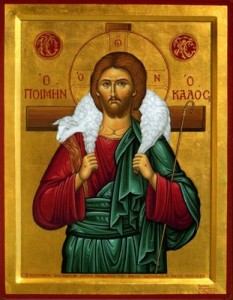
Sheperd IconBefore I begin I want to thank the graduating seniors for asking me to speak to them at what would normally be baccalaureate but because of the dedication of the Trophimus Center has been shifted to Wednesday chapel. Since I am retiring, this is a sermon to mark not only your own graduation from Trinity, but also in some sense mine. It has been a great honor to teach and to get to know hundreds of seminary students in these last eighteen years. It has been my great pleasure to get to know those of you who are graduating as well as those of you who will not graduate this year, but will be here awhile longer. I will miss you.

I also want to express my appreciation to my fellow faculty and to the staff. One of the wonderful things about teaching at Trinity has been the people who have dedicated themselves to what we do here. I especially want to express my appreciation to Don Collett, who arrived the same year I did, and to my fellow author Joel Scandrett for his collaboration on our book on the atonement. I just wish more people would buy it.

Two of the faculty, my dear friends the Rev. Drs. Martha Giltinan and Rod Whitacre, have now joined the celestial choir, where Rod no doubt plays ukelele, and Martha sings. By now I assume that they have resolved their disagreements about women’s ordination. Bishop Grant LeMarquand who was here when I arrived, and Dr. David Yeago, our first Lutheran theologian, have recently retired. Three of my dearest friends the Rev. Dr. Leander Harding, the Rev. Dr. Wes Hill, and the Rev. Tina Lockett are now serving the church elsewhere.

I also want to thank those who to me will always be the new faculty, Jack Gabig, David Ney, Brad Roderick, and Jacob Rodriguez. I cannot forget our Lutheran friends David Luy and Alex Pierce or our Presbyterian Rich Herbster. And of course, without our librarian Susanah Wilson, neither of my two books would have been written.

I have known four Dean Presidents and numerous Board Members, and there would be no seminary without them, so thank you to Dean Presidents and the Board. But the heart of seminary life is the faculty, the staff, and the students, and they are the ones I will remember with the greatest joy. Thomas Aquinas famously reinterpreted the virtue of charity as friendship, friendship with God and friendship with our fellow Christians. I am immensely grateful for the friends I have found at Trinity.

I am a layperson, which means that I am a sheep, not a shepherd. In what follows, I’d like to give some advice to those of you who as shepherds are about to be turned loose on the flock. The Anglican Divine George Herbert In The Country Parson defines your future role this way: “A Pastor is the Deputy of Christ for the reducing of Man to the Obedience of God.” Herbert goes on to say that, after Christ’s resurrection and ascension, “Christ being not to continue on earth, but after he had fulfilled the work of Reconciliation, to be received up into heaven, he constituted Deputies in his place, and these are Priests.” In typical Anglican fashion, Herbert gives us the titles of both “pastor” and “priest.” What is important for Herbert is not the title, whether “pastor” or “priest,” but what he means when he says that a pastor is a “deputy” of Christ.

Another way of saying that a pastor is a “deputy of Christ” is to compare the pastor to an icon of Christ. I preached an earlier version of this sermon at an ordination when I first came to Trinity, which was published in The Living Church. That sermon later led to my publishing a book about ordination. In both cases, it was the publishers who chose to give the sermon and the book the title Icons of Christ.

(more…)

July 6, 2025

Believing Thomas: A Sermon

Filed under: Sermons — William Witt @ 7:19 pm

I gave the following sermon in chapel the Wednesday following the Second Sunday of Easter, where the Gospel reading is always the story of Jesus’ appearing to the apostle Thomas in John’s Gospel. Trinity Seminary also annually celebrates a “high church” service, with incense, bells, and chanting. Since Trinity is an “evangelical” seminary, some students would not be familiar with this kind of worship, usually associated with Anglo-Catholicism. I confess that I have spent my entire adult life since becoming Episcopalian/Anglican worshiping in “high church” congregations. I would identify as “Evangelical Catholic” or “Catholic Evangelical” rather than Anglo-Catholic.

John 20:19-31

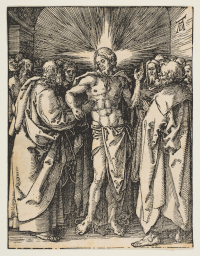
Durer Thomas

The second Sunday of Easter is known as “Low Sunday.” I find myself with a bit of liturgical whiplash this morning as we celebrate our “High Church” service with the readings from “Low Sunday.” I thought about asking the experts at Nashotah House if this was okay, but I imagine they’d just respond “What’s a low Sunday”? No one knows quite why the second Sunday of Easter is called “Low Sunday,” although it is speculated that “Low Sunday” contrasts with the “High Sunday” of Easter itself. It is not called “Low Sunday” because of the low attendance in church the Sunday after Easter, although perhaps it should be. The Sunday is also known as “Thomas Sunday” because of the Gospel reading for the Second Sunday of Easter, which is the selection we heard this morning, the story of Jesus’ resurrection appearance to Thomas the apostle.

Poor Thomas has received a bit of a bad rap because of this familiar story. He is known as “Doubting Thomas,” although no one uses names like “Denying Peter” or “Overly Ambitious James and John.” Despite his bad nickname, there are sermons that turn Thomas into a kind of apology for our own questionings. “Do you sometimes have doubts about whether this Christianity thing is true or not? That’s okay. Jesus’ disciple Thomas had doubts too.”

I once heard a sermon on Easter Sunday (not Low Sunday) where the Episcopal priest reassured those of us who were attending: “If you’re here this morning, and you’re not sure whether you really believe in the Easter stories, don’t worry. Modern biblical scholars assure us that we do not really have to believe that Jesus rose bodily from the dead.” So that was the good news of Easter. We don’t have to believe that Jesus rose from the dead after all. That was the last Sunday I attended that church.

I am going to focus on the Gospel story for my sermon this morning, but I want to claim that it is a misreading of the story to assume that the story is a story about Thomas’s doubt or even about Thomas at all. First, the name “Doubting Thomas” is misleading because the English translations are misleading. In the NIV translation, Jesus says to Thomas “Stop doubting and believe” (John 20:27). The NRSV reads “Do not doubt but believe.” However, there is no Greek word for “doubt” in the text. The actual contrast is not between doubt and believing, but between believing and not believing. The ESV translation actually gets this right. When Jesus appears to Thomas, he does not say to him “Do not doubt,” but “Do not disbelieve, but believe.”

In addition, Thomas’s position is not all that different from the other disciples. In each case, the movement of the appearances is from not believing to seeing to believing. When Jesus appears to Mary Magdalene, she does not recognize him at first, but thinks he is the gardener. It is only after he speaks to her that she recognizes him. She then goes to the disciples and announces “I have seen the Lord” (John 20:11-18).

(more…)

July 4, 2025

Sermon the Feast Day of George Herbert

Filed under: Anglicanism,Sermons,Spiritualty — William Witt @ 12:36 am

Preached on February 27, 2025

George Herbert

I

t is my normal policy when I preach to focus on the lectionary readings. I am going to make an exception today because this is the Feast Day for George Herbert, and I want to say a few things about Herbert. As a theologian, my favorite Anglican authors are from the period in which the Church of England began to settle into its identity following the English Reformation and the Elizabethan Settlement: Richard Hooker and his Laws of Ecclesastical Polity and the period of the Caroline Divines following Hooker: John Donne, Lancelot Andrewes, Thomas Traherne, and, of course, George Herbert. I have more than once used the period of Lent to read through some of John Donne’s sermons or Herbert’s poetry. As Lent begins, I might encourage you to spend some time doing the same.

Who was George Herbert? Herbert was an Anglican priest who was born in 1593 and died of tuberculosis in 1633 at the age of only thirty-nine. He is an example of how to live a meaningful Christian life in the midst of troubled times. Herbert spent his early years trying to pursue a career in politics, and he even served in Parliament for a time. However, with the death of King James, Herbert became disillusioned with politics, and he abandoned the world of public influence to serve in a small village church. Herbert spent the last three years of his life as the rector in the rural parish of St. Andrews, Bemerton, and it is these three years Herbert spent as a priest for which he is remembered four hundred years later. Izaak Walton summarized his life: “Thus he lived and thus he died like a saint, unspotted of the world, full of alms’ deeds, full of humility, and the examples of a virtuous life.”

If I were to summarize the chief characteristic of these Anglican writers known as the Caroline Divines, I would say that they brought together a combination of theology and spirituality. Herbert left us two writings: a guide for priests entitled The Country Parson, and a collection of poems titled The Temple. In a short sermon, I cannot do more than give you a brief introduction to the theology and spirituality of George Herbert, but I will mention what I will call four pillars of the spiritual life according to George Herbert.

The first two pillars are a combination of word and sacrament in contrast to a spirituality that centers only on Scripture – the Word without the sacrament – or only on worship – the sacrament without the Word. One of the characteristics of Anglican spirituality of this period was that it was a way of prayer and worship that was informed by two books – first, the English Bible that appeared as the Great Bible of Henry VIII 1539 and later the Authorized Version of King James translated under the leadership of Lancelot Andrewes published in 1611, and, second, the third Elizabethan edition of the Book of Common Prayer of 1559.

This two-book spirituality is found throughout Herbert’s prose and poetry. First, the Bible. Herbert writes in The Country Parson that the chief source of the pastor’s knowledge is the “book of books, the storehouse and magazine of life and comfort, the Holy Scriptures. There he sucks and lives” (The Country Parson, 4). The lights of Scripture shine not only individually, but form constellations of the one Christian story. In Herbert’s poem, “The Holy Scriptures,” he writes:

Oh that I knew how all thy lights combine,
And the configurations of their glory!
Seeing not only how each verse doth shine,
But all their constellations of the story (“The Holy Scriptures II”).

(more…)

November 2, 2024

Justice, Truth, Reconciliation: A Sermon

Filed under: Sermons — William Witt @ 10:57 pm

Isaiah 59:9-20
Psalm 13
Hebrews 5:11-6:12
Mark 10:46-52

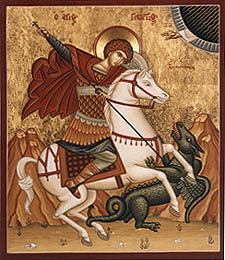
St. George

The Old Testament reading and the epistle reading this morning seem made to order to make both the preacher and the congregation uncomfortable. In the Old Testament passage, the prophet focuses on the problem of injustice and puts the blame squarely on his hearers: “For our transgressions are multiplied before you, and our sins testify against us; for our transgressions are with us, and we know our iniquities” (Is. 59:12).

The Hebrews passage threatens about the dangers of apostasy. The apostle warns that in the case of those who have fallen away “it is impossible to restore them to repentance . . . since they are crucifying once again the Son of God to their own harm and holding him up to contempt” (Heb. 6:4, 6). Should I preach a sermon to a chapel full of seminarians in which I accuse you of injustice whose “transgressions are multiplied” before God? Or rather should I go down the path of suggesting that you might be apostates who are guilty of crucifying the Son of God to your own harm? Best to stick to the Gospel story of Jesus giving sight to Blind Bartimaeus.

However, I think that both the Old Testament passage and the epistle are on target for where we find ourselves in contemporary culture. The problem of injustice is a concern that plagues not only the culture but the church. We approach a political election in a matter of days in the midst of what feels like the most politically divided period in my lifetime. And the rabid disagreements between both political parties are primarily moral. The resentment of both sides of the electorate against one another stems out of a kind of moral outrage that is rooted in mutual accusations of injustice.

And of course, the church itself has had to deal with issues of injustice in the past couple of decades, particularly connected to issues of clerical abuse, primarily sexual abuse but also leadership abuse that has led to the scandals of clergy being defrocked, but also disagreement about the nature of Christian morality that has led to denominational splits among the mainline churches.

Concerning apostasy, we are living in the midst of an abandonment of Christian faith in the last several decades that seems unprecedented. The brief religious revival of the Jesus Movement and the charismatic renewal of the 1970s was followed almost immediately by the rise of the New Age phenomena in the following decades, of the cultural popularity of the New Atheists in the early twenty-first century, and the recent phenomenon of Christian Deconstruction in the last decade.

If you are hoping that I will resolve any of these problems this morning, you are expecting far more than a seminary professor can offer in a chapel sermon. I am not going to tell you how to vote next week, how to resolve the disagreements that have divided the mainline churches in the last two decades, or how we can reverse the numbers of people who are leaving the church.

I do think however that the lectionary passages from Isaiah and Hebrews can tell us something about what the Bible has to offer concerning the issues of injustice and apostasy. (more…)

June 21, 2024

Deconstruction (and Reconstruction) on the Road to Emmaus

Filed under: Deconstruction,Sermons — William Witt @ 6:57 pm

Acts 3:1-10
Ps 105:1-8
Luke 24:13-35

DeconstructionI hope you will forgive me this morning if my topic is not exactly what you might expect for an Easter week sermon. As I understood until about a year ago, deconstruction is a kind of post-modern rejection of the notion that literary texts have any inherent meaning in themselves, but rather that meaning is imposed by readers. This was a philosophical movement associated with the French writer Jacques Derrida. However, in the last few years,“Deconstructing Christianity” has become a kind of movement among mostly former evangelical young people to describe their process of re-examining and usually abandoning their Christian faith. Just in the last couple of weeks, a book entitled Exvangelicals: Loving, Living, and Leaving the White Evangelical Church has become a runaway best-seller.

Some have suggested that a kind of reverse “Great Awakening” is taking place in American culture, and this movement is being compared in significance to the revival movements of the nineteenth century or the Jesus Movement of my own generation – except, again, in reverse. Given the sheer scope and influence of this movement, I think that it is something that Christians, especially those of you who are going to be ordained clergy, and seminary professors like myself, need to be aware of. To ignore it would be like a missionary setting out for India who knew nothing about Hinduism or Islam or Sikhism.

What I know about deconstruction at this point is sketchy, and largely derived from YouTube videos supplied by young people – former evangelicals – who have deconstructed their faith. There seems to be a pattern: they are young (usually in their twenties or early thirties), they describe growing up within the culture of American Evangelicalism. They were members of youth groups; they were home schooled; they went on mission trips. The churches they describe seem to be mostly Baptistic or Pentecostal, and the theology they left seems conservative or traditionalist to the point of being Fundamentalist. They understand Christian faith to be in conflict with modern science, with modern historical method, and with modern psychology.

And they regularly describe a conflict between faith and reason, in which Christian faith seems to be opposed to rationality rather than the traditional Christian understanding of theology as faith seeking understanding. They seem largely ignorant of historic Christian theology or serious contemporary biblical scholarship. I have yet to come across one of these young people who claimed that they deconstructed their faith because they had read Augustine or the Cappadocians, Aquinas, Luther or Calvin, Karl Barth or Dietrich Bonhoeffer, N. T. Wright or Brevard Childs.

We might be tempted to dismiss deconstruction as a cultural movement specific to North American revivalism and pietism that has nothing to do with the kind of historic Reformation Christianity represented here at Trinity: Anglicanism, Lutheranism, Presbyterianism. We may call ourselves Evangelicals, but we’re not that kind of Evangelical! I think that would be a mistake. (more…)

October 19, 2023

Luke’s Guide for Christians Living in a Divided Culture

Filed under: Sermons — William Witt @ 3:25 am

Sirach 38
Psalm 147
2 Timothy 4:1-12
Luke 4:14-19

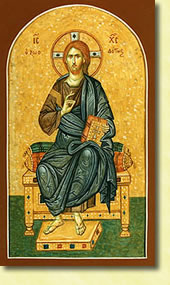
Christ EnthronedII would be surprised if I were the only one here this morning who has found the last few weeks to be particularly discouraging. As of last week, there are now two major wars going on in the world – one in Ukraine, and one in the Middle East. The attack on Israel last week deliberately and cruelly targeted non-combatants, including women, children, and old people. Those who did this certainly should have realized that Israel would respond in kind, and Israel’s response has already resulted in the death of over two thousand Palestinians, many of whom were themselves women, children, and old people. The United Nations estimates that 4,200 people have been killed, and over a million displaced in the last ten days. Meanwhile, here in the United States, political division is so intractable that one of the major parties cannot even agree among themselves to elect a leader, let alone work with the other party, and, at a time when strong US leadership is certainly needed, there is no functioning Congress.

Christians also experience these divisions in our own churches. A former student of mine recently posted on Facebook that his church had been able to purchase some land to build a new building after they had lost their old building in the church wars. A well-known older combatant in the church wars commented in response that this was a waste of time because when the Baby Boomers in the congregation die in the next few years, the new building would be empty, and Generation Z are all abandoning the church. There will not be any need for church buildings in the future.

Any sober description of the world today would have to acknowledge that human beings are divided from one another. Indeed, various groups hate one another. And the only solutions we seem to be able to come up with are attempts to settle disagreements through coercion. If one side wins, the other has to lose.

The lectionary readings for today are for the feast day of St. Luke the Evangelist. Commentators regard Luke 4:14-30 – the story of Jesus reading from the Isaiah scroll in the synagogue in Nazareth followed by a short sermon – as the key to Luke’s entire Gospel. The passage contains all of the themes that Luke will develop, not only in his Gospel, but also in his sequel, the Book of Acts. I am going to focus this morning not simply on this Gospel passage, but on how these themes fit together in both Luke and Acts. Since I cannot talk about everything in the Gospel of Luke and the Book of Acts, I intend to focus on one issue, what Luke says about the role of the church within a hostile culture. To make it a sermon rather than a Bible study, my title will be “Luke’s Guide for Christians living in a divided culture.”

(more…)

April 14, 2023

It is Not that Life Ends in Death, but that Death Leads to Life: An Easter Sermon

Filed under: Sermons — William Witt @ 9:42 pm

A live version of this sermon can be found here.

.

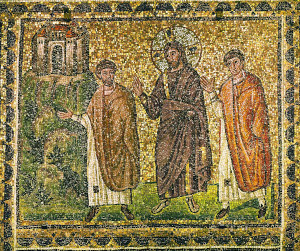
EmmausPsalm 105:1-11
Acts 3:1-10
Luke 24:13-35

After I graduated from college, I was the only Southern Baptist who was studying for a Master’s degree in theology at the local Roman Catholic seminary. I took an unusual course while I was there that was simply titled “Death.” I remember almost nothing from that course, but I do remember an idea that comes from the German philosopher Martin Heidegger. Heidegger claimed that a unique characteristic of human beings is what he called in German Sein zum Tod, or, in English translation “Being Toward Death.” According to Heidegger, one of the things that makes human beings unique is that we alone of all other animals are conscious that we are someday going to die, and this knowledge functions as a kind of background awareness behind everything that we do. To be a human being is to be aware that we are “being toward death.” Paradoxically, the ultimate outcome of our living is that someday we are no longer going to be alive. We do not know when or how it will happen, but we know that death is inevitable. In the end, all life ends in death.

One of the most characteristic ways of dealing with this awareness of death is self-deception – to find some way of ignoring death, of attempting to stave it off, of pretending that death only happens to other people. Perhaps the three most typical characteristics of American culture today are money, sex, and power. If we think about it, each one of these is in its own way an attempt to deny the reality of death. If you have enough money, you can avoid all those things that might threaten you or cause you to fear for your safety – to fear death. In a culture in which people do not believe in much of anything beyond their immediate awareness, sexuality is the one thing that provides the closest thing to a kind of transcendent experience, something that can at least distract us from our eventual mortality. Power has lots of equivalents. If we don’t seek power over others, perhaps we seek status or a sense of identity as part of some larger group. But power, status and identity are all ways of saying “I matter. I’m important.” For now, at least, I can ignore the inevitability that some day I won’t matter. Some day I’ll just be one more headstone in the cemetery. Despite all of our attempts at denial, the one thing that we can be absolutely certain of is that all life ends in death – that death is the ultimate outcome of life.

And that is why the message of Easter is so radical. Easter is completely contrary to the one thing that we know with certainty is absolutely true. As we read the story this morning of Jesus’ appearance to two of his disciples on the road to Emmaus, we hear a radical claim, a claim that goes directly contrary to something we all know to be true. In what follows, I am going to look at three themes in this morning’s Gospel reading.

The first theme is that if there is a God who created the entire universe, a universe in which it is indeed true that all living things eventually die, nonetheless, it is also true that in this universe where death prevails, the God who has created this universe has also raised his Son Jesus from the dead. What that means is that it is not the case that all life simply ends in death. The Christian claim is not that life ends in death, but that life comes out of death. (more…)

January 20, 2023

The Light Shines in Darkness: An Epiphany Sermon

Filed under: Sermons,Uncategorized — William Witt @ 9:00 pm

A sermon I preached at Trinity School for Ministry chapel. The videoe version can be found here.

Exodus 12:21-28
Psalm 40:1-11
1 Corinthians 1:1-9
John 1:29-42

Almighty God, whose Son our Savior Jesus Christ is the light of the world: Grant that your people, illumined by your Word and Sacraments, may shine with the radiance of Christ’s glory, that he may be known, worshiped, and obeyed to the ends of the earth; through Jesus Christ our Lord, who with you and the Holy Spirit lives and reigns, one God, now and for ever. Amen.


Lamb of God

I begin this sermon by talking about a couple of reasons why I don’t trust the liturgical season of Epiphany.

First, the season of Epiphany seems like a contradiction. The word Epiphany comes from the combination of two Greek words: epi meaning “on” and phainen meaning “to show” or “appear,” or, more literally, “shine on.” According to my Greek lexicon, in pagan writings, the word epiphaneia had to do with the visible manifestation of a hidden divinity. So it makes sense that in the liturgical year, Epiphany marks the season following the celebration of the feast of the Magi – the wise men who came from the East to bring gifts to the child Jesus – and it commemorates the first appearance of Jesus to the Gentiles.

The etymology of the word Epiphany comes from a word meaning “to shine,” and it is significant that the season of Epiphany is marked by light imagery. The Magi follow a star that leads them to Bethlehem. The Psalm from the fifth Sunday of Epiphany begins with the words “The Lord is my light and my salvation: Whom Shall I fear?” (Psalm 27:1) This morning’s Psalm is full of imagery of deliverance: “I waited patiently for the Lord; he inclined to me and heard my cry . . . He put a new song in my mouth, a song of praise to our God. Many will see and fear, and put their trust in the Lord” (Psalm 40:1, 3).

So a central theme of the Season of Epiphany has to do with the shining of the light, with images of celebration, and deliverance, of new beginnings. It is a kind of continuation of the celebration of Christmas. Yet Epiphany season takes place in the gloomiest time of the year, especially in Western Pennsylvania, but elsewhere as well. January through March. Gray day after gray day. The name for a chronic depression that affects many people during this time of the year is Seasonal Affective Disorder. The lack of light day after day leads to depression. Why would the church choose to celebrate the Good News of Jesus’ manifestation to the world during a time of year in which it is so hard to see God’s presence anywhere? It doesn’t seem to make sense.

Second, Epiphany feels like a false promise. This season after Christmas commemorates various ways in which God’s incarnation in Christ was manifested: the baptism of Jesus; Jesus’ call of his first disciples; the Sermon on the Mount; the presentation of the baby Jesus in the temple. This morning’s Gospel reading speaks of John the Baptist recognizing Jesus as the “lamb of God who takes away the sin of the world” and the calling of some of Jesus’ first disciples, including Simon Peter (John 1:29, 35-41). It’s a big party! Yet we know what is right around the corner. Epiphany is like a poor step child in the liturgical year. It marks a kind of place marker on the calendar. We need something to do before the Season of Lent, so we just extend Christmas a bit with some “feel good” stuff, “happy stories” about Jesus. And Epiphany is ephemeral. It does not even last a set number of weeks. Sometimes it’s long; sometimes, it’s short. At least for me, one of the consequences is that while I am hearing all of these wonderful stories about Jesus’ baptism and the calling of his disciples, I am looking over my shoulder. I am not going to get too excited or celebrate too much because I know Ash Wednesday is going to be here before I know it, and Lent is going to land on me like a pile of bricks.

Of course, what I just said is deliberately facetious. It reflects a misunderstanding of what is actually going on in the liturgical year. (more…)

October 10, 2022

Law and Gospel According to St. Matthew: A Sermon

Filed under: Sermons — William Witt @ 9:35 pm

Proverbs 31-12
Psalm 119: 33-40
2 Timothy 3:1-17
Matthew 9:9-13

St. Matthew

T

he readings this morning are not the usual Sunday lectionary readings, but the readings for the Feast Day of St. Matthew. Matthew is both an Apostle and an Evangelist. He is identified with Matthew the tax collector or publican, mentioned in today’s Gospel reading (Matt. 9:9). Matthew is also traditionally identified as the author of the Gospel identified by his name, the first book in the New Testament. Many modern scholars question Matthew’s authorship, but for the convenience of this sermon, I am going to assume that both the converted tax collector and the writer of the Gospel are the same person. I’ll be focusing on the first Gospel because it is the book that has really given Matthew his influence in the church.

Matthew’s Gospel was the most popular of the four Gospels in the early church, and it has continued to be influential, both in the history of the church, and even in modern secular culture. After hearing the Gospel reading from Matthew on the Commissioning of the Twelve Apostles at a Sunday mass in February 1208, Francis of Assisi decided to devote himself to a life of poverty, and composed a simple “Rule” for his mendicant order – to follow the teachings of Jesus and to walk in his footsteps. Thomas Aquinas claimed that the entirety of Christian ethics could be summarized in Jesus’ Sermon on the Mount in Matthew’s Gospel. At the time of the Reformation, Mennonites found their inspiration for pacifism in Jesus’ commands in the Sermon on the Mount to not resist evil and to turn the other cheek. Anglican and founder of Methodism John Wesley found his doctrine of Christian perfection or “entire sanctification” in Jesus’ command in the Sermon on the Mount: “You therefore must be perfect, as your heavenly Father is perfect” (Matt. 5: 48). Mahatma Gandhi found the inspiration for his philosophy of non-violence in the Sermon on the Mount.

Even modern secularists have found themselves coming back again and again to Matthew’s Gospel. In 1964, Italian film director Pier Paolo Pasolini made a film titled in its English translation, The Gospel According to St. Matthew. In 1971, John-Michael Tebelak wrote a script that became the off-Broadway musical and later Hollywood film Godspell, based on Matthew’s Gospel. Jesus of Montreal is a 1989 Canadian film about a group of actors who stage a modern version of the Passion Play. As they continue to enact the play, the actors lives are transformed as they begin to resemble Jesus and his followers. The Jesus of Jesus of Montreal is clearly the Jesus of Matthew’s Gospel.

For most Christians, Matthew’s Gospel is likely the one with which we’re most familiar. When we think of the Christmas story of the Magi, we think of Matthew’s Gospel. When we think of the Beatitudes, the Sermon on the Mount, and the Lord’s Prayer, we usually think of Matthew’s version, not the parallel versions found in Luke. So in addition to the writings of Paul, Matthew’s Gospel is perhaps the most influential book of the New Testament. It is through Matthew’s Gospel that most people have come to know the story of Jesus.

Despite the average Christian’s love for Matthew’s Gospel, it has sometimes been problematic for theologians, and we see the reasons why in today’s lectionary readings. (more…)

December 10, 2021

Eschatology, the Universal and the Particular: A Sermon

Filed under: Sermons,Theodicy — William Witt @ 10:11 pm

A video of this sermon can be found here.

Mal 3:3-5
Psalm 126
1 Cor. 4:4-21
Luke 3:1-6

ship

I will begin my sermon with an outrageous statement. Advent is the season of the church year that focuses on what theologians call the doctrine of eschatology – the last things – but in the last few decades we seem to be moving into an era without eschatology. If that is so, the Christian notion of eschatology seems to be increasingly irrelevant to contemporary culture.

What do I mean when I saw that the contemporary era is one without eschatology? This has not always been the case. In the mid-twentieth century, the philosopher Karl Löwith wrote a book called Meaning in History, in which he claimed that modern philosophies of history were secularized versions of a Christian theology of history.1 Hegelianism, Marxism, the secular notion of progress – all of these were basically secularized notions of the Christian understanding of divine providence. Modern secularism believed that history was moving in a single direction toward a goal; however, the goal was not a Christian new heavens and a new earth, but some version of a secular paradise. These were eschatologies in which humanity had taken the place of God.

All of this seems to have changed in the last couple of decades. I would suggest that this is because post-modernity is no longer living on borrowed memories. A belief in a secular eschatology was possible only so long as Christian notions of history, providence, and eschatology were still somewhat taken for granted without asking where such notions came from. The philosopher Charles Taylor has claimed that we now live in a Secular Age, an age marked by what Taylor calls the “immanent frame.”2 The “immanent frame” is the notion that everything in the world is part of a natural order without any reference to anything outside itself and an “immanent” causal order. The “immanent frame” is what happens when unbelief is the “default option” for how people live in post-modern culture. Within the immanent frame, secular notions of progress or any kind of optimistic vision of the direction in which history might be moving does not make real sense.

The shift from living in a world of secular progress to living exclusively in the immanent frame means that we now seem to be living in a world of “normal nihilism.” What do I mean by “normal nihilism?” (more…)

Older Posts »

Non Sermoni Res — William G. Witt is proudly powered by WordPress